

Audio By Carbonatix
A growing body of evidence shows a link between these products and some health disorders in Black women.
Straightened hair has long been the dominant societal standard of beauty for Black women, from the working class to those in government and corporate America to celebrities and even someone in the White House.
Michelle Obama said in 2022 that she felt she had to straighten her hair while serving as First Lady rather than wear a natural style. "Nope," she said. "They're not ready for it."
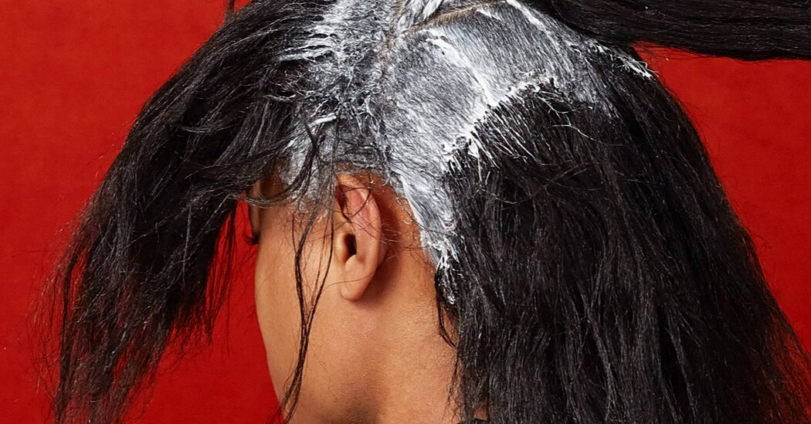
Hair can be straightened with heat, but a vast majority of Black women - an estimated 89 per cent - have used chemical relaxers, which are easier and more affordable, at some point in their lives, often beginning in childhood.
Yet there is a growing body of evidence, much of which hasn't reached the public that shows a link between these products, directly marketed to Black women and girls, and several health disorders in women.
Here's what to know about relaxers and your health.
A Growing Body of Evidence Links Relaxers With Health Disorders in Women more than Scientists have struggled for decades to explain why Black girls show signs of early puberty developing breasts and pubic hair twice as frequently as white girls and also earlier than girls of other ethnicities.
The early onset of puberty and menstruation is associated with a cascade of reproductive health disorders. Many of these hormone-health-related problems are more common in Black women than in other women, including an aggressive form of breast cancer that contributes to a death rate from the disease that is 28 per cent higher than the rate for white women.
The ingredients in chemical relaxers include a number that are known disruptors of the endocrine system.
Burns and abrasions, often caused when the products are applied to the scalp, give the endocrine-disrupting chemicals an efficient entry into the body, and research done over the last several years now shows that frequent use is linked to an elevated risk for both breast and uterine cancer.
The Products Are Underregulated
Chemical relaxers line shelves of beauty-supply stores and drugstores in Black communities, with packages targeted to kids featuring brightly colored boxes and adorable little girls with swingy straight hair. And the labeling can't be trusted: A 2018 report found dozens of chemicals that can disrupt hormones in hair products used by Black women, but a majority of the toxic ingredients weren't listed on the packaging.
Relaxers are marketed similarly in Europe and in the United States, though they contain different active ingredients, because the European Union regulates more than 1,300 substances for use in cosmetics while the F.D.A. prohibits or restricts only nine.
Hair relaxers marketed to children in the United States have been found to contain the highest levels of five of the chemicals prohibited in the European Union. The F.D.A. has proposed a ban on formaldehyde, an ingredient in many relaxers that the agency itself has linked to cancer - but no date has been set, and a ban on one ingredient wouldn't address the rest.
Despite Increasing Awareness of the Risks, the Products Remain Popular
After compelling new research was published in late 2022 linking chemical relaxers to uterine cancer, class-action lawsuits were filed, recruiting thousands of plaintiffs with messages on billboards, on the internet and television.
The cases were consolidated into one suit overseen by a federal judge. It names several companies as defendants and is now in the discovery phase.
In the meantime, the products have enjoyed something of a revival on social media, with TikTok videos hashtagged #relaxerisback receiving more than 24 million views and featuring young women smiling and showing off their straightened hair.
Latest Stories
-
From Campaign Propaganda to Gov’t Accountability: When the message-makers demand a seat at the table
8 minutes -
Ashanti Region Security Coordinator warns sand winners to stay off Accra–Kumasi Expressway site
12 minutes -
PZ Cussons Ghana promotes hand washing among schoolchildren through Camel campaign
36 minutes -
30 NDC aspirants file nominations in Upper West as regional election approaches
50 minutes -
UPSA launches laptop assembly plant, requiring new students to assemble their own devices
55 minutes -
UCC sociologist calls for action on gender inequality to end child marriage
57 minutes -
LSN questions Ghana’s proposed five-year presidential term and DCE election reforms
58 minutes -
AFCON 2027Q: Bjorkegren to lead Black Stars for Somalia doubleheader with Tanko and Attram as assistants
59 minutes -
AMA completes road repairs on Kwame Nkrumah Avenue
1 hour -
Law Students’ Network warns executive dominance could undermine constitutional review
1 hour -
Mahama to meet relevant stakeholders over concerns about the new Customs Act
1 hour -
CHASS demands a 20% increase in SHS funding and payment of outstanding debts
1 hour -
Investigation launched after male body found in County Cork
1 hour -
We have been scammed by NDC, government is only doing PR – Abanga Fuseini
1 hour -
Tamale Teaching Hospital records 44 new breast cancer cases in six months
1 hour