

Audio By Carbonatix
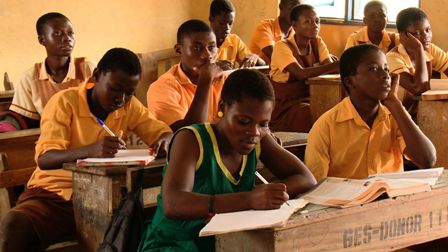
World Health Organization (WHO) and UNICEF has, urged governments in Africa to promote the safe reopening of schools while taking measures to limit the spread of the virus.
The organisations said the unprecedented and prolonged school closures aimed at keeping students safe from Covid-19 are harming them in other ways, therefore, governments must consider reopening of schools.
“We must not be blind-sided by our efforts to contain Covid-19 and end up with a lost generation. Just as countries are opening businesses safely, we can reopen schools," WHO Regional Director for Africa, Dr Matshidiso Moeti said.
This follows observations by UNICEF and WHO that there may be increased cases of teenage pregnancies, malnutrition among other factors that affect children negatively, while they continued to stay at home.
A WHO survey of 39 countries in sub-Saharan Africa found that schools are fully open in only six countries. They are closed in 14 countries and partially open (exam classes) in 19 others. Around a dozen countries are planning to resume classroom learning in September, which is the start of the academic year in some countries.
However, the impact of extended education disruption is significant. It includes among others: poor nutrition, stress, increased exposure to violence and exploitation, childhood pregnancies, and overall challenges in mental development of children due to reduced interaction related to school closures.
In Eastern and Southern Africa, UNICEF finds that violence rates against children are up, while nutrition rates are down with more than 10 million children missing school meals.
For girls, especially those who are displaced or living in low-income households, the risks are even higher. For example, following school closures triggered by the 2014 West Africa Ebola outbreak, pregnancy rates among teenagers in Sierra Leone doubled and many girls were unable to continue their education when schools reopened.
The long-term social and economic impact of extended school shutdown is also concerning. According to a World Bank modelling, school closures in sub-Saharan Africa could result in lifetime earning losses of US$ 4500 per child.
This, the organisations have predicted may be worsened by reduced earning of the parents who are forced to stay at home to take care of the children especially in households that cannot afford child care services.
“Schools have paved the way to success for many Africans. They also provide a safe haven for many children in challenging circumstances to develop and thrive.
"This decision [of reopening schools], however, must be guided by a thorough risk analysis to ensure the safety of children, teachers and parents and with key measures like physical distancing put in place,” Dr Matshidiso Moeti added.
WHO, UNICEF and the International Federation of Red Cross have issued guidance on Covid-19 prevention and control in schools.
The guidance includes recommendations for physical distancing measures such as staggering the beginning and end of the school day, cancelling school events that create crowding, spacing desks when possible, providing handwashing facilities, wearing masks, discouraging unnecessary touching and ensuring that sick students and teachers stay at home.
“The long-term impact of extending the school shutdown risks ever greater harm to children, their future and their communities,” UNICEF Regional Director for Eastern and Southern Africa, Mohamed M. Malick Fall also said.
“When we balance the harm being done to children locked out of schools, and if we follow the evidence, it leads children back into the classroom,” he added.
WHO and UNICEF also recommend a range of hygiene and disinfection measures for schools to reopen and operate safely, including regular handwashing, daily disinfection and cleaning of surfaces, basic water, sanitation and waste management facilities, and environmental cleaning and decontamination.
However, millions of children attend schools that lack water, sanitation and hygiene services. In sub-Saharan Africa, only a quarter of schools have basic hygiene services, 44% of them have basic drinking water and 47% cent have basic sanitation services, according to a WHO and UNICEF report assessing progress on drinking water, sanitation and hygiene in schools between 2000 and 2019.
As such, this is the moment to take an opportunity from a crisis, and for investment and innovative thinking. As we seek to get children back into school, WHO and UNICEF stress that there are quick solutions to handwashing in schools, such as a tap, bucket and soap.
Latest Stories
-
David Selassie Anthony declares bid for NDC Deputy National Organiser
52 minutes -
Amin Adam proposes 13 measures to strengthen Ghana’s debt transparency and market confidence
1 hour -
Mahama announces $2bn annual investment to accelerate industrialisation
1 hour -
Amin Adam urges monthly disclosure of Sinking Fund as Ghana prepares for DDEP repayments
1 hour -
Stronger banks will fuel business growth and jobs – ADB MD
1 hour -
Galamsey: ‘Rivers that fed our grandparents now run the colour of chocolate milk’ – Sam Jonah
2 hours -
We have been scammed by NDC, government is only doing PR – Abanga Fuseini
2 hours -
Republic Bank–JoyNews Habitat Fair opens in Ho today
2 hours -
BoG pledges stability to attract investment, urges stronger Africa–Asia partnerships
2 hours -
Amin Adam warns treasury bill dependence could expose Ghana to refinancing risks
2 hours -
Ghana better placed to withstand commodity price shocks – IMF
2 hours -
GAPTE intensifies efforts to increase bus availability for Aayalolo contra-flow
2 hours -
Amin Adam warns cedi depreciation could reverse Ghana’s debt relief gains
2 hours -
Fiscal discipline crucial for pension fund investments – Finance Minister
2 hours -
BoG Governor rallies IMF to back Africa’s digital sovereignty
2 hours