

Audio By Carbonatix
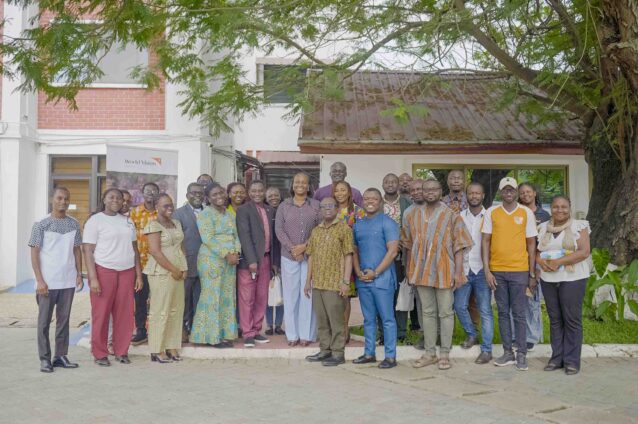
World Vision Ghana, in partnership with the United Nations Population Fund (UNFPA), the Ministry of Health, the Ghana Health Service, and other key stakeholders, has convened a validation meeting to review findings from an assessment of health facilities in disaster-prone areas across Ghana.
The meeting formed part of ongoing efforts to strengthen health system resilience and ensure that essential maternal health and sexual and reproductive health (SRH) services remain accessible during emergencies and humanitarian crises.
Delivering the statement of purpose, the Health and Nutrition Technical Specialist at World Vision Ghana, Madam Awurabena Quayeba Dadzie, said the assessment was undertaken to evaluate the functional capacity of health facilities to provide comprehensive SRH services in areas vulnerable to disasters.
She said the assessment sought to determine the readiness, resilience, and operational capability of health facilities to maintain the continuity, accessibility, quality, and safety of essential SRH services before, during, and after disasters.
According to her, the assessment examined several critical aspects of health service delivery, including the availability of skilled health personnel, essential medicines and commodities, functional infrastructure, emergency preparedness plans, referral systems, infection prevention and control measures, health information systems, and coordination mechanisms with local and national disaster management agencies.
She said the exercise also assessed the capacity of health facilities to provide key services during emergencies, including maternal and newborn care, family planning, adolescent sexual and reproductive health services, and responses to gender-based violence.
In addition, the assessment identified existing gaps, operational challenges, and promising practices influencing health service delivery during times of crisis.
Madam Dadzie said the findings would generate critical evidence to support policy development, strategic planning, resource allocation, and targeted interventions aimed at strengthening health system resilience nationwide.
"The ultimate goal is to enhance the capacity of health facilities to ensure uninterrupted, equitable, and quality sexual and reproductive health services for vulnerable populations affected by disasters," she said.
The assessment was conducted against the backdrop of increasing climate-related disasters, disease outbreaks, and other emergencies that can disrupt healthcare delivery and disproportionately affect women, children, adolescents, and other vulnerable groups.
During the validation meeting, participants reviewed the assessment findings, shared insights from their institutions and provided recommendations to strengthen the final report and ensure that the evidence generated accurately reflects realities on the ground.
Stakeholders underscored the importance of maintaining essential SRH services during crises, noting that disruptions in healthcare services could significantly increase the risks of maternal and newborn deaths, unintended pregnancies, gender-based violence and other adverse health outcomes.
Representatives of the Ministry of Health, the Ghana Health Service, UNFPA, development partners and implementing organisations reiterated the need for stronger emergency preparedness systems, improved coordination and increased investment in resilient healthcare infrastructure.
The meeting also highlighted the importance of integrating the Minimum Initial Service Package (MISP) into emergency response frameworks to ensure life-saving reproductive health services are available from the onset of crises.
World Vision Ghana reaffirmed its commitment to supporting the government and partners in strengthening health systems that can withstand shocks while continuing to deliver essential services to communities in need.
The validation of the assessment findings marks an important step towards building more resilient, responsive, and inclusive health systems capable of protecting the health and well-being of vulnerable populations before, during and after emergencies.
As Ghana continues to strengthen disaster preparedness and response systems, the evidence generated through the assessment is expected to play a critical role in informing actions to ensure that no woman, child or vulnerable person is left behind during crises.
Latest Stories
-
Young woman found dead at Kasoa Peace Town
6 minutes -
Livestream: The Law examines lawful arrest in Ghana
31 minutes -
Mahama urges African governments to treat healthcare as an investment, not budget cost
1 hour -
Bawumia congratulates John Boadu and new NPP executives, pledges support ahead of 2028
1 hour -
‘No talent should be left out’ – Bawumia pledges inclusive NPP campaign for 2028
1 hour -
Prof. Mike Oquaye recounts how he blocked Special Prosecutor’s attempt to arrest Bawku Central MP
1 hour -
Make health sovereignty a priority for Africa – Mahama
2 hours -
Dorimon Naa, Wa West DCE lead massive clean-up exercise; threaten sanctions against recalcitrant residents
2 hours -
Photos from Adom FM Y2K Jam
2 hours -
Praye Tiatia steals the show at Adom FM Y2K Jam [Watch]
2 hours -
Boakye Agyarko congratulates John Boadu, pledges support for NPP leadership
2 hours -
Antwi HiMight thrills fans with Antwi ne Antwi hits at Adom FM’s Y2K Jam [Video]
3 hours -
Amb. Edward Boateng congratulates Boadu, Kodua on election wins
3 hours -
John Boadu pledges to rebuild NPP from grassroots and restore ‘winning machinery’
3 hours -
Ashaiman Assembly deploys monitoring system to curb dumping in storm drain
3 hours