

Audio By Carbonatix
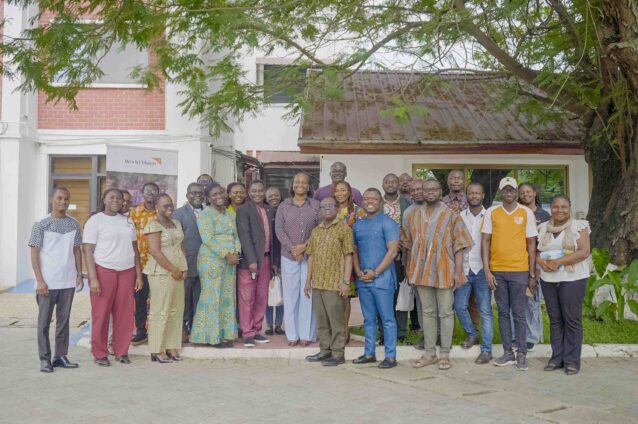
World Vision Ghana, in collaboration with the United Nations Population Fund (UNFPA), the Ministry of Health, the Ghana Health Service and other stakeholders, has validated findings from an assessment of health facility readiness in disaster-prone areas to strengthen emergency healthcare delivery across the country.
The validation meeting reviewed evidence gathered on the capacity of health facilities to sustain essential maternal health and sexual and reproductive health (SRH) services before, during and after disasters.
The assessment focused on the availability of skilled health workers, essential medicines, infrastructure, emergency preparedness plans, referral systems, infection prevention measures and coordination with disaster management agencies.
Speaking at the meeting, World Vision Ghana's Health and Nutrition Technical Specialist, Awurabena Quayeba Dadzie, said the exercise was designed to determine the resilience and operational readiness of health facilities in disaster-prone communities.
She explained that the assessment also evaluated the ability of facilities to provide maternal and newborn care, family planning, adolescent sexual and reproductive health services, and support for survivors of gender-based violence during emergencies.
According to her, the findings identified existing gaps, operational challenges and good practices that will guide future interventions.
"The ultimate goal is to enhance the capacity of health facilities to ensure uninterrupted, equitable, and quality sexual and reproductive health services for vulnerable populations affected by disasters," Ms Dadzie said.
Participants at the meeting, including representatives from the Ministry of Health, the Ghana Health Service, UNFPA and development partners, stressed the need for stronger emergency preparedness systems, improved coordination and greater investment in resilient health infrastructure.
They also called for the integration of the Minimum Initial Service Package (MISP) into emergency response frameworks to ensure life-saving reproductive health services remain available from the onset of disasters.
Latest Stories
-
Young woman found dead at Kasoa Peace Town
9 minutes -
Livestream: The Law examines lawful arrest in Ghana
34 minutes -
Mahama urges African governments to treat healthcare as an investment, not budget cost
1 hour -
Bawumia congratulates John Boadu and new NPP executives, pledges support ahead of 2028
1 hour -
‘No talent should be left out’ – Bawumia pledges inclusive NPP campaign for 2028
1 hour -
Prof. Mike Oquaye recounts how he blocked Special Prosecutor’s attempt to arrest Bawku Central MP
2 hours -
Make health sovereignty a priority for Africa – Mahama
2 hours -
Dorimon Naa, Wa West DCE lead massive clean-up exercise; threaten sanctions against recalcitrant residents
2 hours -
Photos from Adom FM Y2K Jam
2 hours -
Praye Tiatia steals the show at Adom FM Y2K Jam [Watch]
2 hours -
Boakye Agyarko congratulates John Boadu, pledges support for NPP leadership
2 hours -
Antwi HiMight thrills fans with Antwi ne Antwi hits at Adom FM’s Y2K Jam [Video]
3 hours -
Amb. Edward Boateng congratulates Boadu, Kodua on election wins
3 hours -
John Boadu pledges to rebuild NPP from grassroots and restore ‘winning machinery’
3 hours -
Ashaiman Assembly deploys monitoring system to curb dumping in storm drain
3 hours