

Audio By Carbonatix
One of the major ways governments generate revenue is through taxation. These revenues generated are used to provide essential public services for the benefit of the citizens. The concept of taxation is in two main forms.
These are direct or indirect taxes. The direct form of taxation occurs where the tax revenue is deducted at the source of an earned income like the income tax, corporate tax etc.
The indirect tax however includes examples like the sales tax, service tax, Value Added Tax (VAT), excise tax, tax on petroleum products among many others that are imposed on goods and services and deducted indirectly usually through the use of the affected products or services.
The Finance Minister, Ken Ofori Atta, has hinted of government's intentions on taxing petroleum products should the highly controversial E-levy not be passed by the Parliament. The move by the Minister will be a regressive form of taxation that will overburden the already stranded Ghanaians who struggles to find an appropriate three square meal daily.
Petroleum products are essential to human activities and do not have any substitute or alternatives that people can fall on in instances where they become economically difficult to purchase and use. The petroleum demand is inelastic hence not really responsive to prices changed because it has no alternative.
Therefore, for a government to tax petroleum products indirectly, a product for which demand for which is inelastic, one can only attribute such an action as a last name approach to taxation, taken without recourse to the rising cost of living in the country.
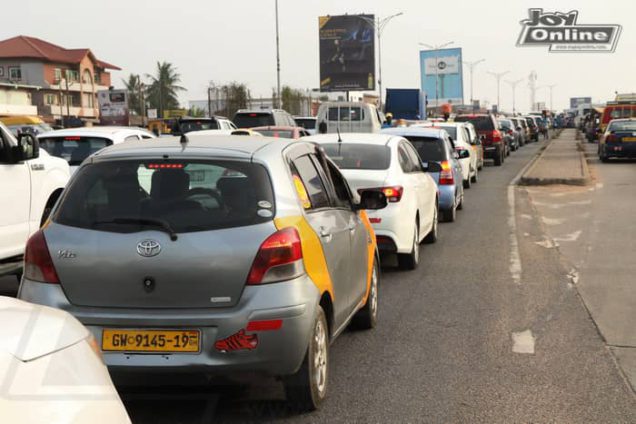
Raising taxes on petroleum products will have rippling effects on the entire economy as the increase of the price of fuel at the various pumps has the potential of affecting the prices of goods and services in the country. This, in the long run would cause transport fares to go up and that also has an indirect way of raising the cost of living.
The already overburdened Ghanaian is the one who suffers the most at the expense of the rich. This is because, both the poor and the rich buy the same fuel at the same price (more burden on low-income earners).
This is a direct opposite to the progressive principle of taxation where the rich pay more whiles the poor pay less. A regressive system of taxation like taxing petroleum products will be applied indirectly and is simply a very easy approach to raising revenue. The Ghanaian economy is very responsive to fuel prices as a slight adjustment upwards affects the prices of almost all other goods and services.
The Ghanaian citizen is already overburdened because of the continuous increases in the price of fuel that have been influenced by the rise in prices on the international market. Recall can be made of new tax components that were introduced into the Price Build Up (PBU) of a litre of petrol and diesel in 2021 that faced fierce critique from IES and other energy sector analysts.
These new taxes added up to all the 12 tax components in the PUB which include the energy debt recovery lexy, road fund levy, energy fund levy, price stabilization and recovery levy, sanitation and pollution levy, energy sector recovery levy, special petroleum tax, BOST Margin, primary distribution margin, fuel marking margin etc.
All these taxes cumulatively affect the prices of fuel significantly. In the wake of COVID-19 where lives and livelihood have been lost, it will be unfair for the government to tax petroleum products should the e-levy not be passed.
The government should engage more on alternatives to the e-levy should the e-levy fail to be passed. Alternatives like a tax on properties, a holistic view at our extractive Industry, reducing government expenditure, reviewing the tax exemption laws granted to foreign companies, as well as conscious efforts to fight corruption will provide long-lasting solutions of raising revenues that will be progressive in nature and not overburdened the poor Ghanaian.
*****
The writer is a Research and Policy Analyst with the Institute for Energy Security, IES
Latest Stories
-
The Ghanaian prophet and the mysterious death of his scottish wife Charmain Speirs
43 minutes -
Nearly 400 sentenced in Nigeria for links to militant Islamists
1 hour -
Ghana’s recovery supported by gold strength despite global oil price pressures – Standard Bank Research
1 hour -
‘Excellence is our inheritance’ – Nana Sam Brew-Butler hails Mfantsipim’s 150-year reign in leadership
2 hours -
Kwaku Azar writes: A-G vs OSP
2 hours -
Mfantsipim–Adisadel rivalry built excellence, not division – Sam Jonah
2 hours -
Vice President launches Mfantsipim’s 150 years of shaping Ghana’s greatest mind
2 hours -
I assure Otumfuo, Mahama will join him to commission KNUST Teaching Hospital by end of this year – Haruna Iddrisu
3 hours -
Barcelona dominate derby to extend La Liga lead
3 hours -
Gov’t to roll out free special education for persons with disabilities from July 1 – Education Minister
3 hours -
Importers and Exporters Association declares full support for Publican AI port system
4 hours -
“We used it to test our officiating officials’ readiness” – Bawah Fuseini after CAA Athletics event
4 hours -
Volleyball emerges as Ghana’s fastest rising sport
4 hours -
National Sports Fund needs strong leadership from the top – Administrator David Wuaku
4 hours -
JoySports Exclusive: Steve McLaren in talks with GFA after expressing interest in Black Stars job
4 hours