

Audio By Carbonatix
An international conflict resolution expert, Col. (Rtd.) Festus Aboagye has charged government to address the socio-economic inequalities to fight terrorism and attacks.
According to him, factors and circumstances that have led to military coups in other West African countries exist in Ghana; hence, government must put stringent measures to deal with the grievances of agitated groups and individuals.
Speaking to host Samson Lardy Anyenini on Newsfile, Saturday, the former army official warned that the country is susceptible to similar coups and attacks in other neighbouring countries if the socio-economic needs of the citizens are not fixed.
“All of us need to be worried. I belong to the school of thought that you don’t fight terrorism with only guns and bullets. Indeed, it will be more productive to address some of the socio-economic inequalities.”
“I don’t need to be a political scientist or an economist to argue that the Northern part of this country [is] bordering countries that are unstable, where there are gross socio-economic inequalities,” he stated.
“What is going on [in Burkina Faso] is a contagion; forget that the UN Secretary-General called it an epidemic. A contagion can spread in all manner of ways, especially if the conditions are right.
"Although there are some specificities of country context for these military coups, some of them can be found in West African democratic states, including our own.”
He further added: “We could find some of the grievances that have been used by the military in other countries in our own country and, therefore, we need to be very concerned.”
“Corruption is here as in Mali, Guinea, and Burkina Faso."
He noted that "political influence on the military or security services in those countries is also present in our country.”
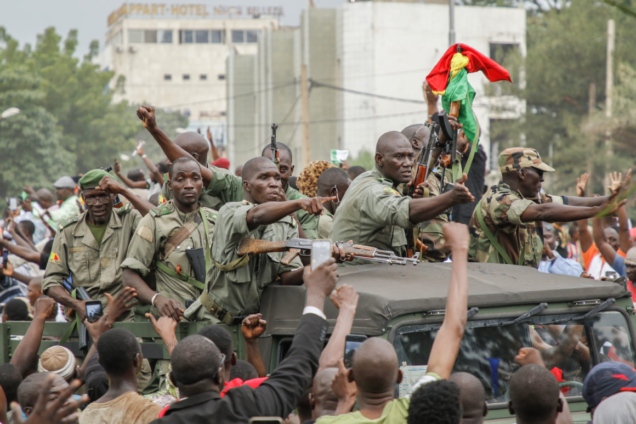
There was a military coup in Burkina Faso on Monday due to the deepening anger about President Roch Marc Christian Kabore’s response to violence by armed groups.
The 64-year-old was elected in 2015 following a popular revolt that forced out former President Blaise Compaore.
He was re-elected in 2020. But since last year, he has faced a wave of discontent about armed groups’ attacks that have claimed the lives of about two thousand people and forced a million and a half to flee their homes.
On Sunday, mutinies erupted in several army barracks a day after Police dispersed banned protests.
Latest Stories
-
LA 2028: Black Queens hold final training session ahead of second leg against Mauritius
30 minutes -
Standards are not Seasonal: What the EC appointments teach both sides
44 minutes -
King Mohammed VI urges private sector to create youth jobs and spread benefits of growth
45 minutes -
KGL U17 Colts 2026: Greater Accra win title after penalties win over Western Region
45 minutes -
UK Investment Roadshow opens in London to advance UK-Ghana growth partnership
56 minutes -
Assemblies of God requires pastors to resign before entering partisan politics – Rev. Wengam
1 hour -
Ghana targets 20% annual reduction in maternal deaths – Health Minister
1 hour -
Cyber attacks in Africa grow faster than global rate, report finds
1 hour -
Ghana signs UAE deal to create 5,000 overseas jobs
1 hour -
One Million Coders Programme targets 100,000 digital jobs in two years – Sam George
1 hour -
John Jinapor, Italian Ambassador explore opportunities for energy sector investment
1 hour -
NHIA seeks legal reforms to support Free Primary Healthcare
1 hour -
Beatrice Annan defends Afi Agbenyo’s EC appointment, cites record of gender advocacy
2 hours -
Ghana seeks investment deals in Bangkok amid global economic crises
2 hours -
IMF raises Ghana’s 2026 growth forecast to 5.7%, sees inflation falling to 4.8%
2 hours