


Audio By Carbonatix
A near-total ban on taking baby African elephants from the wild and selling them to zoos has been approved at a meeting in Geneva.
Parties to the Convention on International Trade in Endangered Species (Cites) decided to tighten the rules after days of debate.
The European Union decided to back the ban late in the day, despite concerns, and the move passed by 87 votes to 29.
But Zimbabwe, the main exporter, voted against, as did the United States.
Zimbabwe and Botswana, which have healthier elephant populations than other African nations, have been permitted to export elephants to "appropriate and acceptable" destinations.
Under that rule, the country has captured and exported more than 100 baby elephants to Chinese zoos since 2012, Humane Society International says.
Tuesday's decision significantly strengthens the restrictions on the elephant trade.
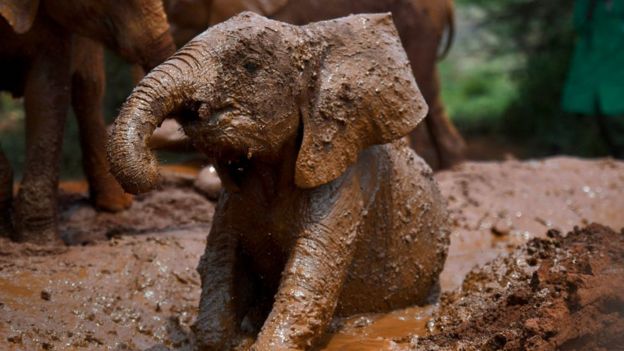 A baby elephant being washed and fed in Nairobi, Kenya, in January
Now elephants can only be taken from the wild and placed in "captive facilities" elsewhere in the world under exceptional circumstances - and subject to approval by a committee of Cites members.
The ban was approved by committee last week, but it was far from certain to pass a new vote at the end of the two-week conference. Zimbabwe had campaigned fiercely against the move, and the EU had initially opposed it because of concerns over genetic variation in zoos around the world.
But the EU changed its vote after some amendments were made to allow trade in exceptional circumstances, and once it was made clear that elephants already in zoos could be transferred between them.
"It doesn't mean that no elephant will ever be taken from the wild and put into a captive facility overseas," said Will Travers, president of the Born Free Foundation.
"But it's going to tighten it up so much that mass shipments of elephants to zoos in the Far East, for example, simply won't happen."
Humane Society International said it was "celebrating a momentous win".
"Despite compromise language being introduced by the EU, we are relieved by its passing," said Audrey Delsink, the group's Africa wildlife director.
She said the highly sociable animals found separations "incredibly traumatising".
"Speaking personally as an elephant field biologist, I am jubilant that we have secured this victory for all the elephants who will now be spared the ordeal of being ripped away from their families."
Some African nations had pushed for a re-opening of the ivory trade during the convention, arguing that existing stocks - confiscated from poachers or left over from already-dead animals - were worth vast sums of money that could be used for conservation.
A baby elephant being washed and fed in Nairobi, Kenya, in January
Now elephants can only be taken from the wild and placed in "captive facilities" elsewhere in the world under exceptional circumstances - and subject to approval by a committee of Cites members.
The ban was approved by committee last week, but it was far from certain to pass a new vote at the end of the two-week conference. Zimbabwe had campaigned fiercely against the move, and the EU had initially opposed it because of concerns over genetic variation in zoos around the world.
But the EU changed its vote after some amendments were made to allow trade in exceptional circumstances, and once it was made clear that elephants already in zoos could be transferred between them.
"It doesn't mean that no elephant will ever be taken from the wild and put into a captive facility overseas," said Will Travers, president of the Born Free Foundation.
"But it's going to tighten it up so much that mass shipments of elephants to zoos in the Far East, for example, simply won't happen."
Humane Society International said it was "celebrating a momentous win".
"Despite compromise language being introduced by the EU, we are relieved by its passing," said Audrey Delsink, the group's Africa wildlife director.
She said the highly sociable animals found separations "incredibly traumatising".
"Speaking personally as an elephant field biologist, I am jubilant that we have secured this victory for all the elephants who will now be spared the ordeal of being ripped away from their families."
Some African nations had pushed for a re-opening of the ivory trade during the convention, arguing that existing stocks - confiscated from poachers or left over from already-dead animals - were worth vast sums of money that could be used for conservation.
A baby elephant being washed and fed in Nairobi, Kenya, in January
Now elephants can only be taken from the wild and placed in "captive facilities" elsewhere in the world under exceptional circumstances - and subject to approval by a committee of Cites members.
The ban was approved by committee last week, but it was far from certain to pass a new vote at the end of the two-week conference. Zimbabwe had campaigned fiercely against the move, and the EU had initially opposed it because of concerns over genetic variation in zoos around the world.
But the EU changed its vote after some amendments were made to allow trade in exceptional circumstances, and once it was made clear that elephants already in zoos could be transferred between them.
"It doesn't mean that no elephant will ever be taken from the wild and put into a captive facility overseas," said Will Travers, president of the Born Free Foundation.
"But it's going to tighten it up so much that mass shipments of elephants to zoos in the Far East, for example, simply won't happen."
Humane Society International said it was "celebrating a momentous win".
"Despite compromise language being introduced by the EU, we are relieved by its passing," said Audrey Delsink, the group's Africa wildlife director.
She said the highly sociable animals found separations "incredibly traumatising".
"Speaking personally as an elephant field biologist, I am jubilant that we have secured this victory for all the elephants who will now be spared the ordeal of being ripped away from their families."
Some African nations had pushed for a re-opening of the ivory trade during the convention, arguing that existing stocks - confiscated from poachers or left over from already-dead animals - were worth vast sums of money that could be used for conservation.DISCLAIMER: The Views, Comments, Opinions, Contributions and Statements made by Readers and Contributors on this platform do not necessarily represent the views or policy of Multimedia Group Limited.
Tags:
DISCLAIMER: The Views, Comments, Opinions, Contributions and Statements made by Readers and Contributors on this platform do not necessarily represent the views or policy of Multimedia Group Limited.
Latest Stories
-
Hawa Koomson pledges experienced and mature leadership of NPP women’s wing
56 minutes -
Young woman found dead at Kasoa Peace Town
1 hour -
Playback: The Law examined lawful arrest in Ghana
2 hours -
Mahama urges African governments to treat healthcare as an investment, not budget cost
2 hours -
Bawumia congratulates John Boadu and new NPP executives, pledges support ahead of 2028
3 hours -
‘No talent should be left out’ – Bawumia pledges inclusive NPP campaign for 2028
3 hours -
Prof. Mike Oquaye recounts how he blocked the Special Prosecutor’s attempt to arrest Bawku Central MP
3 hours -
Make health sovereignty a priority for Africa – Mahama
3 hours -
Dorimon Naa, Wa West DCE lead massive clean-up exercise; threaten sanctions against recalcitrant residents
3 hours -
Photos from Adom FM Y2K Jam
3 hours -
Praye Tiatia steals the show at Adom FM Y2K Jam [Watch]
4 hours -
Boakye Agyarko congratulates John Boadu, pledges support for NPP leadership
4 hours -
Antwi HiMight thrills fans with Antwi ne Antwi hits at Adom FM’s Y2K Jam [Video]
4 hours -
Amb. Edward Boateng congratulates Boadu, Kodua on election wins
4 hours -
John Boadu pledges to rebuild NPP from grassroots and restore ‘winning machinery’
4 hours