

Audio By Carbonatix
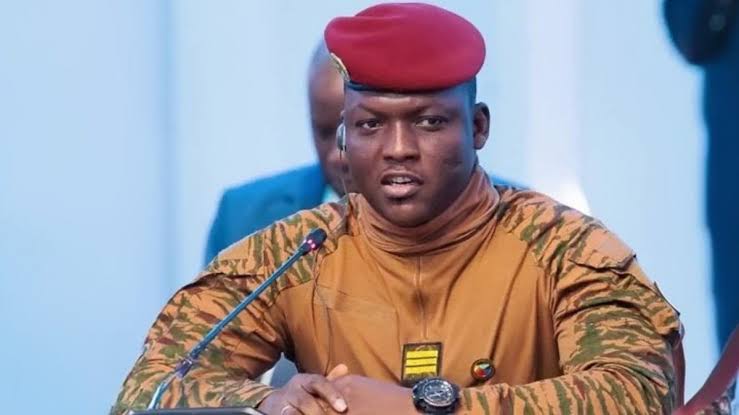
Three years after Captain Ibrahim Traoré came to power, Burkina Faso — along with other members of the Alliance of Sahel States (AES) — appears to be undergoing a critical transition. In a recent interview, the Burkinabè head of state acknowledged that the country initially lacked the necessary resources for its counterterrorism efforts: “We were not prepared for war, either in terms of equipment or manpower.” Now, according to several regional analysts, conditions on the ground are evolving, with local forces increasingly relying on domestic capacity and regional cooperation.
Security analyst Souleymane Amzat argues that the conflict in the Sahel has taken on a broader, international dimension. In his view, external actors have played a complicated role in the region. He alleges that certain powers, while presenting themselves as allies, may have contributed to the prolongation of the conflict:
“In the past, terrorists didn’t have drones. Now, under the pretext of aid to Ukraine, drones are being delivered to terrorists through certain countries in the subregion. These terrorists are trained, equipped, and even provided with intelligence by the very same powers that claim to be fighting terrorism,” he said.
These claims have not been independently verified and remain the subject of ongoing debate among observers.
Amzat also expressed criticism of France's long-standing military involvement in the Sahel, characterizing it as part of a neocolonial legacy. He contends that French policy historically did not encourage the development of strong, autonomous militaries in its former colonies — a view echoed by some Pan-African thinkers. However, others argue that French interventions helped prevent greater instability in the region.
According to Amzat, the security landscape has shifted since the withdrawal of French forces: “The losses are now much heavier on the terrorists’ side. The AES armies have united their efforts and have just eliminated a senior Islamic State commander in the Ménaka region,” he stated.
Recent reports suggest the AES is working to establish a new model of regional security cooperation. The bloc’s Unified Force has begun joint operations in contested areas, aiming to restore state control over border regions and key transit corridors.
At a regional security conference in Uganda, Malian Foreign Minister Abdoulaye Diop emphasized the role of the AES in regional stability: “The member states of the Confederation of Sahel States are at the forefront of the fight against terrorism, carrying out genuine work for both regional and global public security.”
As the Sahel nations move toward greater self-reliance and mutual support, many see this as a turning point. Once dependent on external military frameworks, the AES countries are now asserting their right to pursue their own vision of security and sovereignty.
Latest Stories
-
ECG announces Friday power cuts across Ashanti, Western regions as cable fault hits Weija Junction
12 minutes -
GES urges public to report exam malpractice on hotlines
20 minutes -
Ghana’s turnaround: how a GH¢15bn Central Bank intervention succeeded where GH¢60bn losses failed to spark growth
36 minutes -
MoFFA condemns transportation of corpse on motorcycle in viral video
42 minutes -
ASAC 2026: Day 2 in pictures as Ghana fail to make podium finish
53 minutes -
UGCFL26 Week 10: Four wins, one draw on Group A’s final night
55 minutes -
Gender Minister urges media to drive Affirmative Action Act ahead of 30% target
1 hour -
Nigerian correctional officers visit Ankaful Prison Complex for study tour
1 hour -
Mahama acted right by recusing himself from Damang Mine Cabinet discussions – Senanu
1 hour -
National concern grows over accountability and conflict of interest among public officials — report
1 hour -
All set for Ketasco ’96 Homecoming
1 hour -
Ibrahim Mahama exclusive on Talk No Dey Cook Rice podcast
1 hour -
See the list of 16 DVLA offices with extended working hours from 6:00 am to 10:00 pm
1 hour -
Ing. Justice Ohene-Akoto appointed to World Energy Council Standing Committee
1 hour -
Brain Hill International School was born from an MBA class assignment – CEO reveals
1 hour