

Audio By Carbonatix
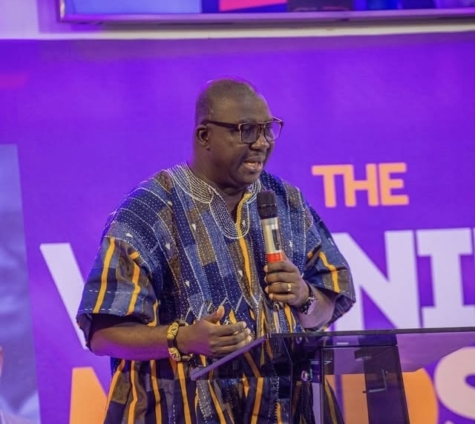
The Chief Executive Officer of Agri-Impact Limited, Mr. Daniel Fahene Acquaye, has raised concerns over the budgetary allocation to the agricultural sector in the 2025 national budget saying it is very insufficient.
Speaking at the 2025 Budget Digest organized by PwC in Accra, he complained that the current allocation is inadequate to drive the economic transformation envisioned by the government.
Mr. Acquaye highlighted that out of the total GH¢279 billion budget, only GH¢1.5 billion—representing 0.54%—has been allocated to agriculture.
In 2024, agriculture was allocated 2.2% of the total budget.
“The point I’m making is that the budget allocation to agriculture in this year’s budget is highly insufficient. If we see a decline in the government’s own budget allocation to agriculture—not donor funds—then we are definitely going to face challenges,” he stated.
While acknowledging the government’s introduction of the GH¢13.8 billion Big Push initiative, Mr. Acquaye questioned the absence of a detailed breakdown of allocations within the initiative.
He called for a dedicated "Big Push for Agriculture," focusing on critical areas such as irrigation, post-harvest systems, and large-scale agricultural infrastructure.
He further emphasized the need for investment in agricultural infrastructure, arguing that institutions like the Ghana Exim Bank, GIRSAL, and the Development Bank of Ghana are supporting agribusiness but are not addressing large-scale transformative infrastructure such as irrigation systems, warehouses, and road networks.
“We have sector-specific funds like GETFund for education and COCOBOD for cocoa, but there is no dedicated fund for agriculture,” he noted.
Touching on climate change, Mr. Acquaye highlighted the vulnerability of northern Ghana, where farmers rely on a single production season. He warned that delayed rainfall in 2023 led to crop losses exceeding 90% in some areas, leaving many farmers unable to replant until the following year.
He also underscored the need for “agri-enablers” to attract young people into the sector. While Ghana has implemented policies such as free tuition for first-year tertiary students, he stressed that there must be corresponding investments in creating opportunities for skilled graduates in agriculture.
Mr. Acquaye concluded by urging the government to reconsider its budget priorities, emphasizing that without significant investment in agricultural infrastructure and enablers, the country’s economic transformation would be incomplete.
Latest Stories
-
COCOBOD dismisses claims of international market exclusion, defends $1.4bn domestic financing shift
3 minutes -
Richmond Quarcoo appointed Ghana’s Chef de Mission for 2028 Olympics
38 minutes -
‘Our missing players are more important’ – Gambia coach fires shot at Ghana
2 hours -
Today’s front pages: Tuesday, September 29, 2026
2 hours -
Ghana ‘showing up differently’ on global stage – Joyce Bawah Mogtari
2 hours -
Ghana’s tuna industry in crisis as 20 hook-and-line vessels collapse
3 hours -
South Tongu MP launches apprenticeship programme for 159 young people
3 hours -
The Pusiga connection behind Gertrude Atongi’s work in New York
4 hours -
Teachers took promotion exams in December to beat government clearance deadline – GNAT
4 hours -
NPA launches 2026 staff welfare week with focus on teamwork and employee wellbeing
4 hours -
Ghana, Saint Kitts and Nevis sign labour deal to strengthen protections for Ghanaian nurses
4 hours -
Delayed promotions put teachers’ retirement benefits at risk – GNAT
4 hours -
No ‘Bawumia candidates’ in NPP executive elections – Anthony Karbo
4 hours -
Over 3,000 displaced as flooding overwhelms Hohoe communities
4 hours -
Sunyani East NPP executives begin reconciliation drive ahead of 2028 polls
4 hours