

Audio By Carbonatix
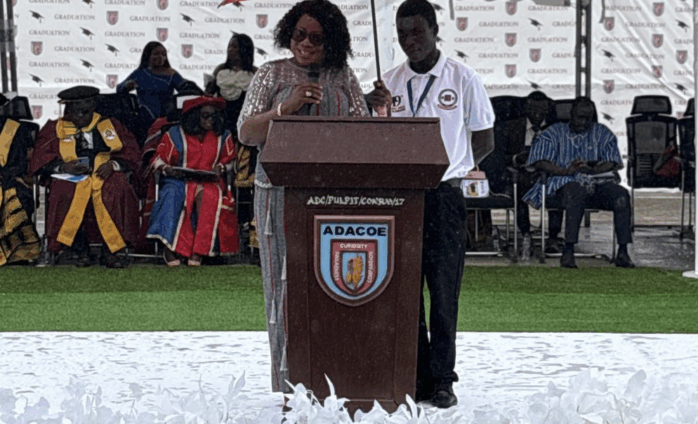
The Ghana Education Service (GES) Deputy Director-General, Prof. Smile Dzisi, says teachers need to adopt new approaches to teaching in line with the government’s 24-Hour Economy Policy and the demands of the digital age.
Speaking at the graduation ceremony for 316 graduates of the Ada College of Education in the Greater Accra Region, she said government’s call for a 24-hour economy and the rapid pace of digital transformation have redefined the teaching profession.
“Government’s ambitious call for a 24-hour economy and the relentless march of the digital age have fundamentally redefined your calling,” she told the graduates.
Prof. Dzisi urged teachers to see themselves not as transmitters of old knowledge but as innovators shaping a dynamic future.
“You are not graduating to be custodians of a static past; you are graduating to be architects of a dynamic future. The world needs teachers who are curators of curiosity, facilitators of critical thinking, and coaches of creativity,” she said.
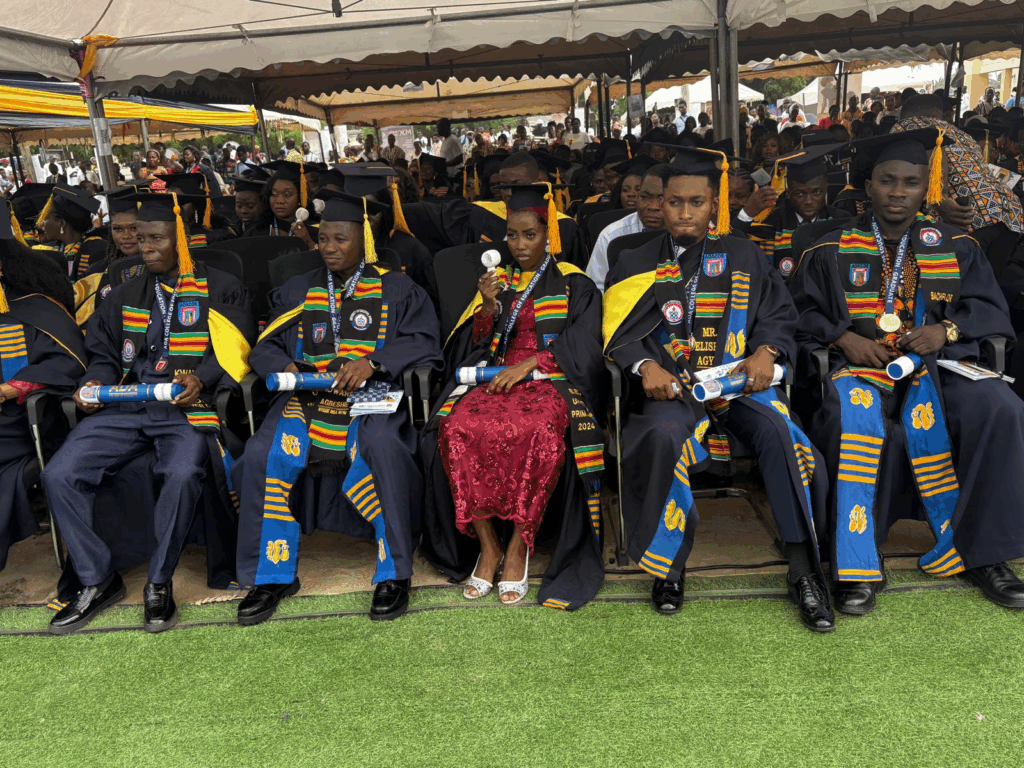
She challenged the newly trained teachers to lead the transformation of Ghana’s education system.
“Graduates of Ada College of Education must be the shining example of the modern-day teacher equipped for the digital age,” she added.
The government’s 24-Hour Economy Policy (24H+) seeks to encourage all sectors to operate continuously by leveraging digitalisation.
A key pillar of the programme, the Aspire24 Workforce Development and Cultural re-orientation initiative, aims to align education with the employment ecosystem by equipping citizens with digital fluency, ethical grounding, and industry-relevant skills.
Highlighting both the opportunities and challenges within today’s educational landscape, Prof. Dzisi noted that artificial intelligence, digital literacy, and global connectivity are transforming how people learn and teach.
She urged the graduates to use technology to enhance learning, not replace the human element.
“Use digital tools not as a distraction, but to make lessons more engaging, to connect your students in the remotest parts of Ghana to classrooms across the globe, and to personalise learning,” she said.
At the same time, she cautioned teachers not to lose the personal touch that defines the profession. “Remember that technology is merely a tool – the heart of education remains fundamentally human.
"No algorithm can replace the warmth of an encouraging word, the patience of a dedicated teacher, or the transformative power of believing in a child’s potential,” she added.
The event, themed “Empowering Educators: Enriching Communities,” also highlighted the broader role of teachers in society. Prof. Dzisi reminded the graduates that their responsibilities go beyond academics.
“I call upon you to be problem-solvers, innovators, and advocates. When you encounter challenges in your schools and communities, see them not as roadblocks but as opportunities to demonstrate the transformative power of education,” she urged.
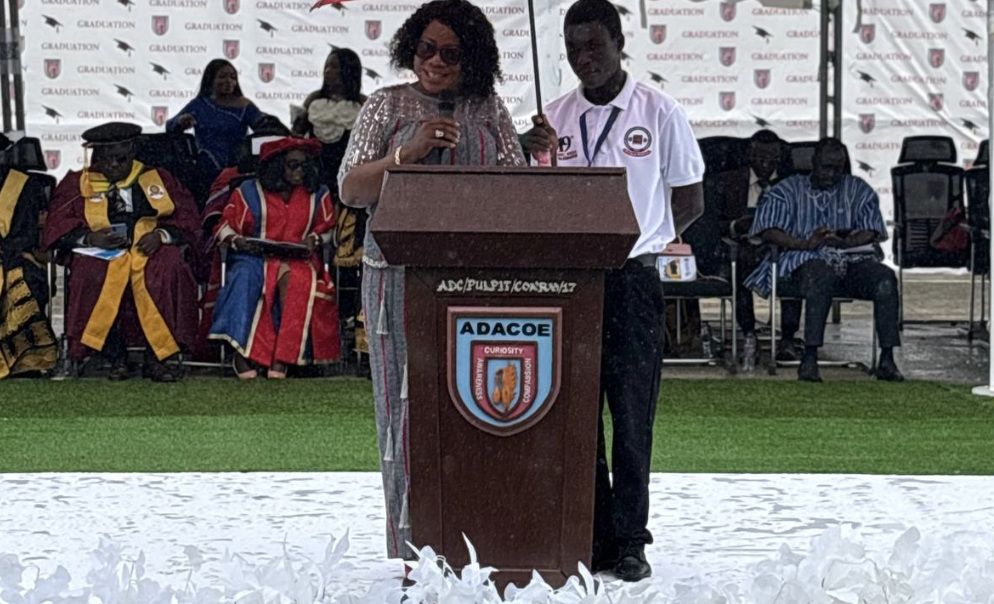
Prof. Dzisi assured the new teachers of government’s commitment to provide resources, professional development, and reforms to support their work.
“We are committed to working tirelessly so that, upon completion of your National Service, you can swiftly join the prestigious GES. We are also working on improving teacher training, enhancing educational infrastructure, and developing policies that support effective teaching and learning,” she said.
Out of the 316 graduates, 91 earned first-class honours.
The Principal of the College, Prof. Prince Boateng, congratulated them and reminded them that “your certificate is not an end; it is a key. How you use it will determine the doors that open for you.”
Prof. Boateng, however, expressed concern about the limited preparation of teachers for the Technical and Vocational Education and Training (TVET) sector.
He urged the Ghana Tertiary Education Council (GTEC), the Ministry of Education, and Colleges of Education leadership to designate certain colleges as specialised TVET teacher training centres.
“This strategic designation would not only address our immediate teacher shortage but also position these Colleges of Education as centres of excellence in technical education, attracting industry partnerships and enhancing their relevance in Ghana’s development agenda,” he said.
Latest Stories
-
Early presidential primary helped cool tensions in NPP – Prof. Mike Oquaye
5 minutes -
NDC congratulates new NPP executives, urges national interest above party interests
7 minutes -
NPP implementing 2024 election review recommendations in stages – Prof Mike Oquaye
8 minutes -
Ghana Rugby Union announces managerial changes
9 minutes -
US removes all bombers from RAF Fairford base
10 minutes -
France closes up to 500 schools Monday over student protests
10 minutes -
Girl, 12, fatally shot in US during ‘dispute over parking space’
11 minutes -
NPP is a party for all classes – Prof. Mike Oquaye
11 minutes -
Chief Justice urges Judiciary to strengthen foundations of justice
12 minutes -
Rescuers suspend search for survivors after plane went missing off US coast
12 minutes -
New NPP executives must unite party groups, address youth and women’s needs – Prof. Mike Oquaye
13 minutes -
Supporters of jailed ex-PM Imran Khan march to Pakistan capital
13 minutes -
Nyansapo Fellowship targets young policy advocates for Ghana’s development
13 minutes -
Teachers in Republic of Ireland begin industrial action
14 minutes -
NPP working towards a one-member-one-vote system – Mike Oquaye
15 minutes