


Audio By Carbonatix
Environment, Science and Technology minister Prof. Kwabena Frimpong Boateng has urged Accra residents not to panic following earth tremors Sunday morning.
Reiterating the scientific position that earthquakes are not predictable, the minister asked Ghanaians to trust God.
“We have to go on living our lives and trust God will protect us as he has done for years”, the minister told journalists Monday.
Tremors across areas in Accra on December 9, confirms warnings about possible earthquakes from Ghana Geological Survey Authority (GGSA) as recent as March 2018.
The GGSA noted, fault lines were active, “which means that an earthquake can occur at anytime”.
A tremor believed to have lasted up to 10 seconds has raised concerns about the country’s preparedness despite low investment in seismology.
Coincidentally, a Joy News report days before Sunday highlighted dangerous construction on cliffs at Weija in Accra.

Pictures: The looming Weija-Kasoa Ridge disaster
The report said the sedimentary nature of the rocks and persistent quarry activities have exposed sprawling buildings to landslides.
Weija is actually an earthquake-prone area, giving one more reason for concern. The last time Weija residents experienced a tremor was in March 2018.
It’s a quip among seismologists that “the longer it has been since the last major earthquake, the closer it is to the next one”.
Prof. Frimpong Boateng noted one of the ways to prepare for any eventuality is to obey building codes. “There are ways to build these things and make them earthquake proof”, he said.
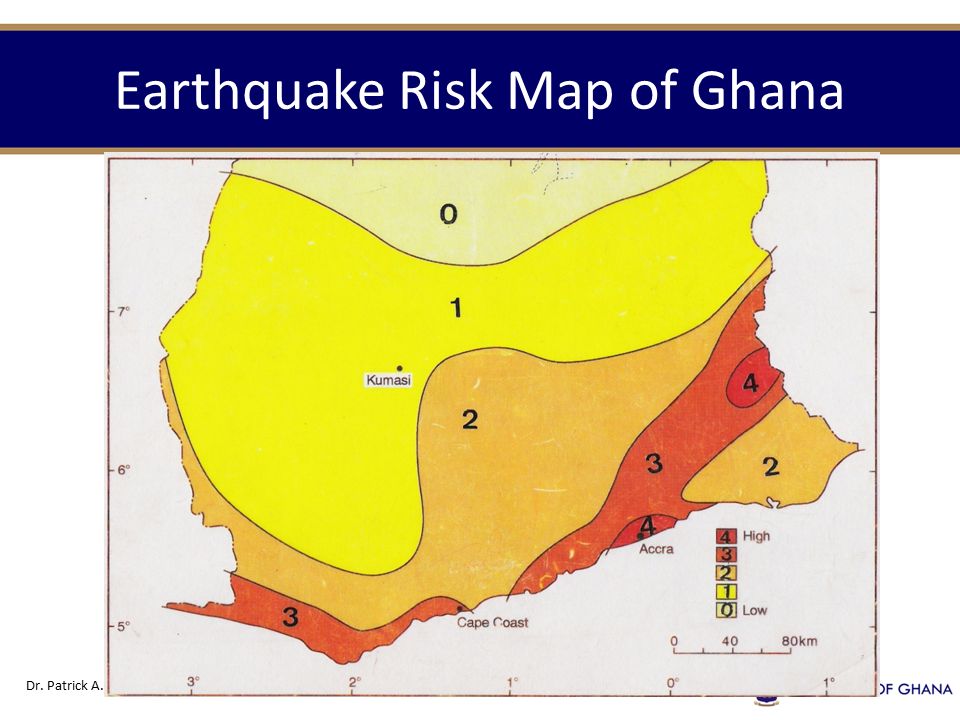
Photo: Ghana’s coastal belt is prone to earthquakes
Earthquakes don’t kill. It is buildings on the earhquake-prone areas that do.
That’s why a senior Seismologist Nicholas Opoku has called for structural integrity tests on buildings within the seismic prone areas which run from Accra, Ho, Axim, Elmina to Cape Coast.
He said it can be determined from the buildings fitness test whether the buildings can match the levels of tremors and quakes recorded in Ghana.
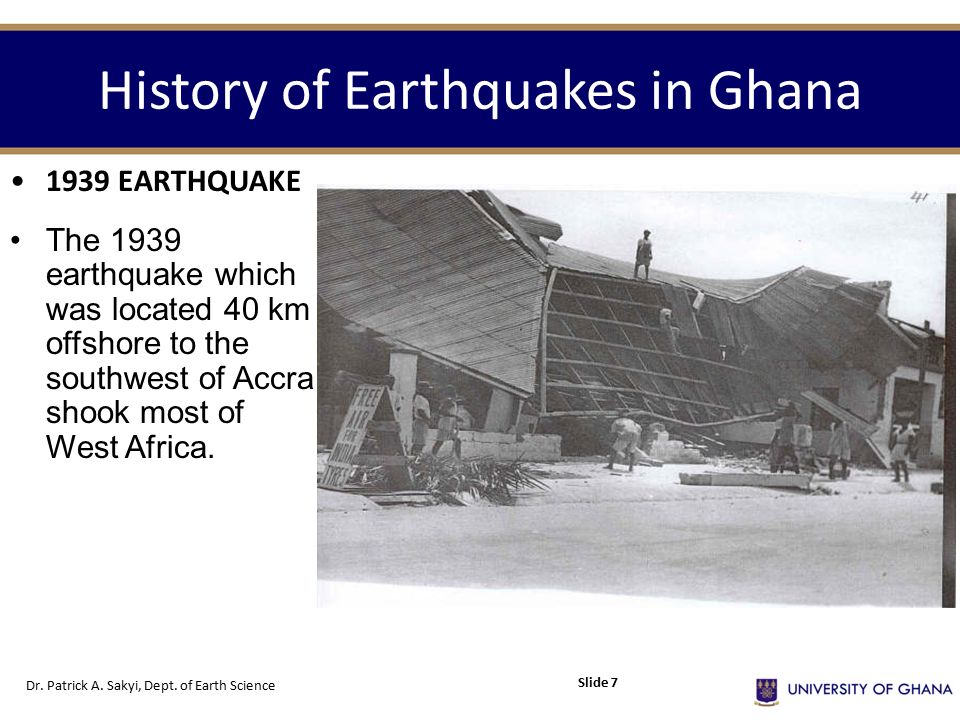
The highest earthquake in Ghana is believed to have occurred in 1862 and again in 1939 when a 6.5 magnitude on the Richter scale was recorded.
That quake on June 22, 1939 caused 17 deaths and 133 injuries plus destruction of properties.
Latest Stories
-
Bobby Banson condemns EOCO’s attempted arrest of Nana Agyei Baffour Awuah
4 minutes -
When Kumasi begins to look like somebody is in charge
4 minutes -
Parliamentary probe into cocaine seizure would be a waste of time – Inusah Fuseini
11 minutes -
Cocaine seizure: Focus on Ghana’s reputation, not partisan blame – Osae-Kwapong
17 minutes -
Two Invitations, Three Interrogations: Did Baffour Awuah tell the whole story?
26 minutes -
Drug cartels may be seeing Ghana as easy route – Lenin Anane Agyei
1 hour -
Ghana risks gaining notoriety as drug-trafficking hub – Bobby Banson
1 hour -
Government dismissed my drug trafficking warning, then tried to arrest me – Ntim Fordjour
2 hours -
Day Two: 3rd Republic Bank-JoyNews Habitat Fair Clinic underway at Junction Mall
2 hours -
NACOC addressing inherited gaps in fight against drug trafficking – Deputy Director-General
2 hours -
Taekwondo goes to school as GTF launches five-region youth campaign
2 hours -
The issues Mourinho is struggling to fix at Real Madrid
2 hours -
Hundreds throng EducationUSA College Fair in Kumasi in pursuit of abroad studies
2 hours -
Drug bust: NACOC should be part of port inspection team – Twum-Barimah
2 hours -
Ward appointed Liverpool’s sporting director
2 hours