


Audio By Carbonatix
A near-total ban on taking baby African elephants from the wild and selling them to zoos has been approved at a meeting in Geneva.
Parties to the Convention on International Trade in Endangered Species (Cites) decided to tighten the rules after days of debate.
The European Union decided to back the ban late in the day, despite concerns, and the move passed by 87 votes to 29.
But Zimbabwe, the main exporter, voted against, as did the United States.
Zimbabwe and Botswana, which have healthier elephant populations than other African nations, have been permitted to export elephants to "appropriate and acceptable" destinations.
Under that rule, the country has captured and exported more than 100 baby elephants to Chinese zoos since 2012, Humane Society International says.
Tuesday's decision significantly strengthens the restrictions on the elephant trade.
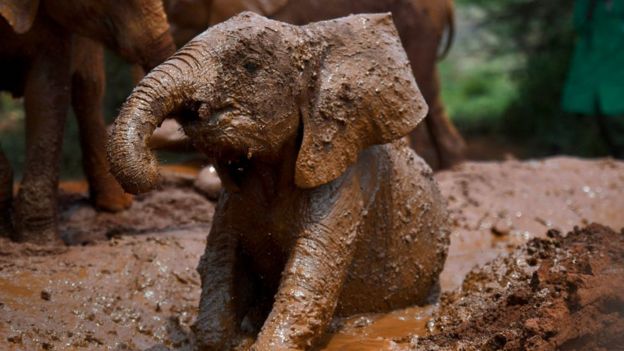 A baby elephant being washed and fed in Nairobi, Kenya, in January
Now elephants can only be taken from the wild and placed in "captive facilities" elsewhere in the world under exceptional circumstances - and subject to approval by a committee of Cites members.
The ban was approved by committee last week, but it was far from certain to pass a new vote at the end of the two-week conference. Zimbabwe had campaigned fiercely against the move, and the EU had initially opposed it because of concerns over genetic variation in zoos around the world.
But the EU changed its vote after some amendments were made to allow trade in exceptional circumstances, and once it was made clear that elephants already in zoos could be transferred between them.
"It doesn't mean that no elephant will ever be taken from the wild and put into a captive facility overseas," said Will Travers, president of the Born Free Foundation.
"But it's going to tighten it up so much that mass shipments of elephants to zoos in the Far East, for example, simply won't happen."
Humane Society International said it was "celebrating a momentous win".
"Despite compromise language being introduced by the EU, we are relieved by its passing," said Audrey Delsink, the group's Africa wildlife director.
She said the highly sociable animals found separations "incredibly traumatising".
"Speaking personally as an elephant field biologist, I am jubilant that we have secured this victory for all the elephants who will now be spared the ordeal of being ripped away from their families."
Some African nations had pushed for a re-opening of the ivory trade during the convention, arguing that existing stocks - confiscated from poachers or left over from already-dead animals - were worth vast sums of money that could be used for conservation.
A baby elephant being washed and fed in Nairobi, Kenya, in January
Now elephants can only be taken from the wild and placed in "captive facilities" elsewhere in the world under exceptional circumstances - and subject to approval by a committee of Cites members.
The ban was approved by committee last week, but it was far from certain to pass a new vote at the end of the two-week conference. Zimbabwe had campaigned fiercely against the move, and the EU had initially opposed it because of concerns over genetic variation in zoos around the world.
But the EU changed its vote after some amendments were made to allow trade in exceptional circumstances, and once it was made clear that elephants already in zoos could be transferred between them.
"It doesn't mean that no elephant will ever be taken from the wild and put into a captive facility overseas," said Will Travers, president of the Born Free Foundation.
"But it's going to tighten it up so much that mass shipments of elephants to zoos in the Far East, for example, simply won't happen."
Humane Society International said it was "celebrating a momentous win".
"Despite compromise language being introduced by the EU, we are relieved by its passing," said Audrey Delsink, the group's Africa wildlife director.
She said the highly sociable animals found separations "incredibly traumatising".
"Speaking personally as an elephant field biologist, I am jubilant that we have secured this victory for all the elephants who will now be spared the ordeal of being ripped away from their families."
Some African nations had pushed for a re-opening of the ivory trade during the convention, arguing that existing stocks - confiscated from poachers or left over from already-dead animals - were worth vast sums of money that could be used for conservation.
A baby elephant being washed and fed in Nairobi, Kenya, in January
Now elephants can only be taken from the wild and placed in "captive facilities" elsewhere in the world under exceptional circumstances - and subject to approval by a committee of Cites members.
The ban was approved by committee last week, but it was far from certain to pass a new vote at the end of the two-week conference. Zimbabwe had campaigned fiercely against the move, and the EU had initially opposed it because of concerns over genetic variation in zoos around the world.
But the EU changed its vote after some amendments were made to allow trade in exceptional circumstances, and once it was made clear that elephants already in zoos could be transferred between them.
"It doesn't mean that no elephant will ever be taken from the wild and put into a captive facility overseas," said Will Travers, president of the Born Free Foundation.
"But it's going to tighten it up so much that mass shipments of elephants to zoos in the Far East, for example, simply won't happen."
Humane Society International said it was "celebrating a momentous win".
"Despite compromise language being introduced by the EU, we are relieved by its passing," said Audrey Delsink, the group's Africa wildlife director.
She said the highly sociable animals found separations "incredibly traumatising".
"Speaking personally as an elephant field biologist, I am jubilant that we have secured this victory for all the elephants who will now be spared the ordeal of being ripped away from their families."
Some African nations had pushed for a re-opening of the ivory trade during the convention, arguing that existing stocks - confiscated from poachers or left over from already-dead animals - were worth vast sums of money that could be used for conservation.DISCLAIMER: The Views, Comments, Opinions, Contributions and Statements made by Readers and Contributors on this platform do not necessarily represent the views or policy of Multimedia Group Limited.
Tags:
DISCLAIMER: The Views, Comments, Opinions, Contributions and Statements made by Readers and Contributors on this platform do not necessarily represent the views or policy of Multimedia Group Limited.
Latest Stories
-
‘I am not a magician’ – Zdravko Logarušić on Nations FC exit from Africa
2 minutes -
Three nights. 28 titles. Ultimate history made
12 minutes -
Ghanaian delegates at IYF 2026 could become bridges for stronger Russia ties – John Aggrey
16 minutes -
Nigeria: Over 30 dead, 50 hospitalised after consuming alcoholic substance in Ondo State
19 minutes -
UK lawmakers demand new law to address AI threat to human rights
28 minutes -
WAFU B U-17 Girls Cup: Black Maidens depart Accra for tournament in Yamoussokro
28 minutes -
Sweden’s center-left bloc narrowly ahead as election remains too close to call
39 minutes -
GPL 2026/27: ‘We won ugly’ – Kotoko head coach unimpressed after Lions victory
42 minutes -
7 out of 10 human trafficking cases in Ghana never reach prosecution — JoyNews Research
58 minutes -
Music, football to converge at Music Meets Football Summit 2026 in Lusaka
1 hour -
Putin invites young global leaders to partner with Russia in shaping future world order
1 hour -
Putin calls for ‘just world’, says every nation must be free to choose its own path
1 hour -
IFY 2026 food festival to serve 20,000 meals showcasing global cuisines in Russia
1 hour -
Ghana has a Domestic Violence Act: But can a victim afford to use it?
1 hour -
Young artists from 100 countries showcase works at IFY 2026 in Russia
1 hour