

Audio By Carbonatix
For years, the origins of the Guanches have been a mystery, with some people speculating they could have been descendants of Atlanteans.
The Canary Islands’ subtropical climate, aquamarine waters and otherworldly volcanic and desert landscapes led more than 15 million people to visit the archipelago last year.
The islands are considered the southernmost region of Spain, with their easternmost point located just 100km west of Morocco.
But long before the first Spanish settlers arrived to the islands in the 1470s, another civilization was already thriving there: the Guanches.
The Guanches’ origins have long been debated and speculated by archaeologists and historians.
Some theorise they were descendants of the Celts, or perhaps the Vikings. Others believe they could even be descended from the mythical inhabitants of Atlantis.
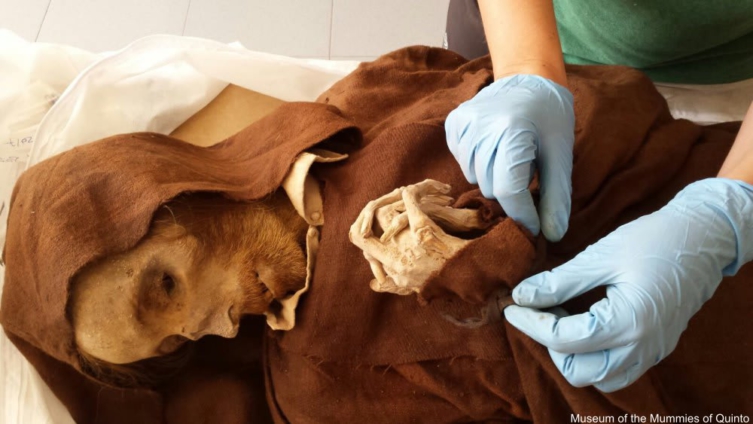
A 2019 study of the DNA from ancient mummies from the islands, however, revealed they were most likely Berbers from North Africa, who arrived there around 100AD or even earlier.
How exactly the Guanches reached the archipelago remains unclear. One theory suggests they crossed in small vessels, landing in the islands of Lanzarote and Fuerteventura.
And although the number of settlers also remains a mystery, studies estimate that 14 couples would have been enough to populate the archipelago.
Archaeological studies suggest the Guanches were organised in a tribal society, where chieftains or kings ruled almost absolutely.
They relied on farming, hunting and gathering, and their diet included milk, goat, pork and fruits.
They mainly dressed in goat-skin leather tunics and vests made of plaited rushes and lived in caves or simple low-stone houses.
They adapted caves and grottoes to be used as silos and temples.
Some of those structures have been preserved to this day and indicate the Guanches’ sophisticated astronomical knowledge: holes on the caves’ walls allowed sunlight in at certain positions during different times of the year, marking solstices and equinoxes.
One of the most noteworthy of those structures is Risco Caído, a settlement that consists of 21 caves excavated on a volcanic tuff about 100m high above the Barraco Hondo River in the island of Gran Canaria.
The site is believed to have been used as a silo, a temple and a place for astronomical observation, with holes that allowed sunlight and moonlight to enter the caves and illuminate symbolic drawings on the walls.
In 2019, Risco Caído became the first Unesco World Heritage site in the Canary Islands.
Latest Stories
-
Newborn baby found dumped in drain at Obuasi Old Estate
15 seconds -
Tunisia coast guard recovers eight bodies of migrants whose boat sank
1 minute -
One man diagnosed with prostate cancer in the UK ‘every eight minutes’
4 minutes -
After losing 2012 election, we couldn’t even afford prepaid credit – Obuobia Darko
8 minutes -
NSMQ 2026: Kpando SHS brush aside Abor, Jukwa to storm One-Eighth stage with 32 point gap
2 hours -
Duncan Amoah: Gov’t should create conditions for 24-hour economy, not build markets
2 hours -
JoyNews-Republic Bank Habitat Fair finale turns homeownership dreams into real possibilities
2 hours -
Bamiri chief commissions KG block, guest house to boost education and revenue
2 hours -
NSMQ 2026: Yaa Asantewaa Girls’ going ‘beck’ to Tanoso after Bishop Herman deals them early exit
3 hours -
Data Protection Commission acquires two vehicles to strengthen data protection enforcement
3 hours -
NSMQ 2026: Holy Child School storms back from two-year NSMQ absence to book One-Eighth ticket
5 hours -
GNFS dismisses reports of unpaid 2025 rent allowance
6 hours -
Gordon Asare-Bediako steps down from NPP Communications Director race, backs Dennis Aboagye
6 hours -
GES dismisses requirement for newly promoted teachers to submit documents for salary adjustments
6 hours -
Meko Bono 2026: Vice President pledges agricultural revival as Atebubu hosts grand homecoming
7 hours