

Audio By Carbonatix
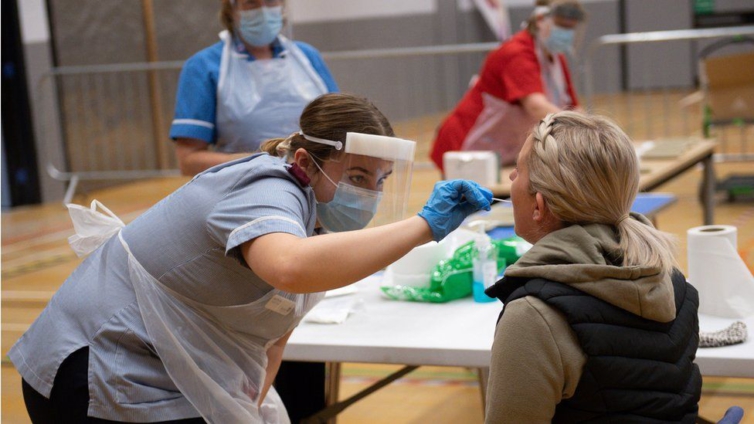
The mass use of rapid Covid tests has been defended by a senior NHS adviser, amid concerns over their accuracy.
Dr Susan Hopkins, chief medical adviser to NHS Test and Trace, said the lateral flow tests could identify many cases of infection in people without symptoms.
Speaking to BBC Radio 4's Today programme, she acknowledged there had been "false negatives" but stressed the policy was a "game-changer".
Mass testing is being introduced in England's tier-three "high-risk" areas.
It is also starting in one of the areas hardest-hit by Covid-19 in Wales.
And more than million rapid tests are being sent to care homes in England over the next month to allow safe indoor visits.
However, an article in the BMJ medical journal has raised concerns about the effects of rapid testing in Liverpool, where a pilot scheme was carried out. The lateral flow tests were reported to have missed half of all cases and a third of those with a high viral load who were likely to be the most infectious.
Dr Hopkins said the tests had "limitations" but stressed they were helping diagnose asymptomatic cases that would otherwise have gone undetected, adding: "What we are doing here is case detection. We are not saying people do not have the disease if their test is negative.
"We are trying to say [to people who test positive] 'You do have the disease and now we want you to go and isolate for 10 days.' That is a whole different game-changer."
Asked about concerns people who were declared negative could have a misplaced sense of reassurance, Dr Hopkins stressed mass-testing did not end the need for social distancing.
"We are also very clear that until we get a much lower prevalence of disease in this country that we shouldn't be changing our behaviours," she said.
Her comments came as the UK's chief medical officers warned the winter could be "especially hard" for the health service because of coronavirus.
Officials are preparing to begin using the Pfizer/BioNTech Covid-19 vaccine from as early as Tuesday.
But in a letter to colleagues, the chief medical officers of England (Prof Chris Whitty), Scotland (Dr Gregor Smith), Wales (Dr Frank Atherton) and Northern Ireland (Dr Michael McBride) said: "Although the very welcome news about vaccines means that we can look forward to 2021 with greater optimism, vaccine deployment will have only a marginal impact in reducing numbers coming into the health service with Covid over the next three months."
Latest Stories
-
Bawumia has the dignity to lead and the vision Ghana needs – Gabby
14 minutes -
GOC, GFA chart Olympic qualification roadmap for Black Queens, Black Meteors
15 minutes -
Absa InspireMe 2026 highlights opportunities for women-led business growth
16 minutes -
The only thing that flows regularly is THE BILL
21 minutes -
KGL U17 Colts 2026: Prempeh Elite Academy lead Group A as Western Region secures top spot in Group B
24 minutes -
‘You’ve never been touched by any scandal’ – Gabby celebrates Bawumia on his 63rd birthday
25 minutes -
WPL 2026/27: GFA unveils dates for start of new season as Ampem Darkoa Ladies begin title defence
34 minutes -
Ghana Embassy in Washington pays tribute to late academic Dr Kofi Akamani
34 minutes -
Ibrahim Mahama urges Ghanaians to overcome fear and venture into business
47 minutes -
2026 U-17 WWC: Black Maidens lose to China in pre-tournament friendly
50 minutes -
Who gave Gbande the EOCO remote control?
1 hour -
Ghana begins review of 1999 National Land Policy, targets new framework by 2027
2 hours -
Tiptoe Lane’s tech takeover: The story behind Ghana’s booming informal phone market
3 hours -
Abanga vows to use social media to counter NDC messaging ahead of 2028 elections
3 hours -
Okai Mintah seeks Sabah Zita Benson’s support for NDC National Youth Organiser bid
3 hours