

Audio By Carbonatix
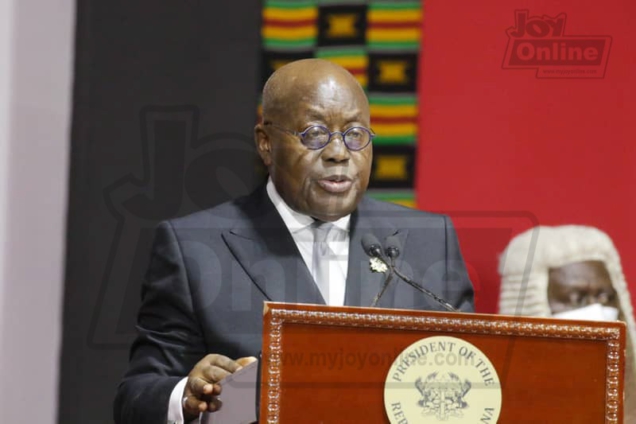
President Akufo-Addo has underscored the nexus between climate change, peace, security and development and called for global action.
He said socio-economic difficulties, political and economic exclusion, mismanagement, drought, corruption, nepotism, unemployment, religious extremism, transnational crime, drug trafficking and external political interference in the affairs of African countries were some of the factors identified by the African Union as the main causes of instability on the continent.
The President said this in speech read on his behalf by Madam Shirley Ayorkor Botchwey, the Minister of Foreign Affairs and Regional Integration, at the 984th Virtual Meeting of the Peace and Security Council at Heads of State and Government Level to Discuss Sustainable Peace in Africa: Focusing on Climate Change and its Effects on Peace and Security on the Continent.
He recalled that Mr Miroslav Jenča, the UN Assistant Secretary-General for Europe, Central Asia and the Americas, in calling on peace and security actors to play their role and help speed up implementation of the landmark Paris Agreement on Climate Change, described the climate emergency as a danger to peace.
"And that failure to consider the growing impacts of climate change could undermine global efforts at peace as well as risk trapping vulnerable countries into a vicious cycle of climate disaster and conflict."
The President said scholars and practitioners engaged in conflict resolution and management agree that the effects of climate change extended beyond the environmental impacts in a complex intersection with economics, social development and security.
“It, therefore, comes as no surprise that climate change today is defined as a threat multiplier and equally as no coincidence that seven out of the 10 countries most vulnerable and least prepared to deal with climate change, host a peacekeeping operation or special political mission,” he said.
The President. informed that across sub-Saharan Africa, South Asia and Latin America, climate-driven population displacement, migration, water and food insecurity had and could continue to undermine regional stability.
He called for stronger partnerships that would align ongoing efforts by the UN, Member States, regional organizations, to identify best practices to strengthen resilience and bolster regional cooperation.
He said at the sub regional level, the Economic Community of West African States (ECOWAS) in line with the Decision of the ECOWAS Authority of Heads of State and Government, in 2015, enhanced the capacity of Member States to better address the major risks ranging from security and terrorism, environment, crime and criminality, governance and health by setting up of National Early Warning and Response Mechanisms in each Member State.
“As of today, five centres in Burkina Faso, Cote D’Ivoire, Guinea Bissau, Mali and Liberia have been fully operationalized, whilst the remaining are at various levels of completion.”
He said Ghana in 2013 developed a National Climate Change Policy to serve as a springboard for initiating a climate-resilient economy that would accelerate her development efforts and enhance the well-being of our people without sacrificing the quality of the environment and its resources.
He said the National Climate Change Policy affirmed Ghana’s resolve to lessen the potential hardships that climate change impacts may pose to the sustainable development of the country.
President Akufo-Addo said "the policy seeks to provide strategic directions and coordinate issues of climate change in Ghana, bearing in mind its linkages with our development, adding that what was relevant for Ghana was to ensure the mainstreaming of the climate-proofing agenda into national development."
He said long lasting and enduring peace must of necessity become more climate-sensitive by assessing climate-related security risks, increase cross-agency knowledge exchange and learning, maximize synergies, engage with communities, strengthening the state’s ability to provide services and enabling climate-sensitive development.
He said such an approach, if properly implemented could aid conflict prevention by mitigating local grievances and reduce marginalization, which were becoming increasingly prevalent root causes of conflicts.
Latest Stories
-
Education Minister to outline GH¢3bn plan to end double-track system today
2 minutes -
Ghana secures resumption of egg exports to Burkina Faso after bilateral talks
6 minutes -
GRA urges owners of uncustomed vehicles to take advantage of amnesty
10 minutes -
Ashanti NPP elections: 35 aspirants file nominations; vetting set for July 20
13 minutes -
Tourism Ministry targets Volta Region as major eco-tourism hub – Gomashie
18 minutes -
Keta Port, Ho Airport projects on course – Transport Minister
22 minutes -
OmniBSIC Bank offers lowest household loan rate in May – BoG APR data
26 minutes -
Chief of Adidome repairs, hands over ambulance
39 minutes -
Public financial management compliance improves amongst MMDAs
43 minutes -
North Tema Cooperative Credit Union records 20% loan delinquency rate
46 minutes -
Let’s liberate African politics from the tyranny of money – Ibn Chambas
47 minutes -
GMTF administrator Obuobia Darko–Opoku briefs Majority caucus on Fund’s life-saving impact
50 minutes -
Kow Essuman urges Ablekuma West NPP members to attend Electoral Affairs Committee hearing
56 minutes -
Dangote Refinery raises $2.5 billion in private placement, executive says
1 hour -
Brent oil tops $90 as US, Iran expand strikes in the Middle East
1 hour