

Audio By Carbonatix
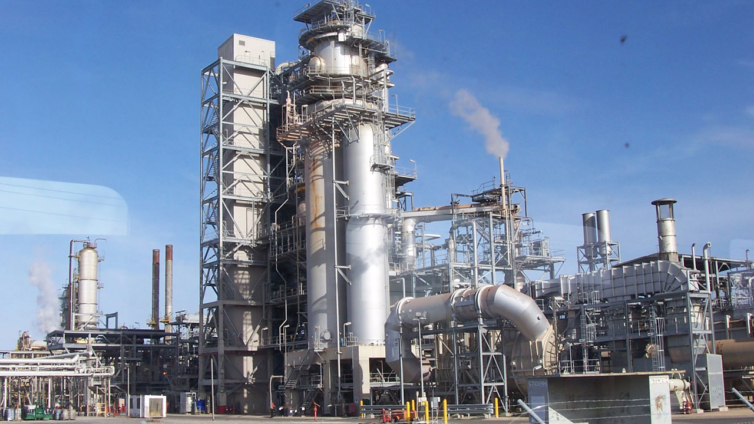
Dangote Refinery at Ibeju-Lekki area of Lagos, Nigeria will soon complete its 650,000 barrels per day (BPD) project leading to a cut down on the importation of petroleum products from abroad.
Aliyu Suleiman, the Group Chief Corporate Strategy Officer for the Dangote Group, disclosed this at a virtual press conference hosted by the Ghana Chamber of Bulk Oil Distributors.
The press conference was under theme ‘The Dangote Refinery-Project Update and Opportunities for Ghana.'
Present at the press conference were the Technical Advisor to the President of Dangote Group on refinery and petrochemicals, engineer Babajide Soyode, and various stakeholders in Ghana’s petroleum industry.
Mr Suleiman indicated that the refinery is 88% completed and is expected to be fully completed by 2022.
Giving further details he indicated that "the engineering aspect is 100% complete, procurement 99%, material delivery 96%, and construction 76%.”
“It will be ready for oil production in January 2022, whereas the stabilisation of production is expected to be in September, or October 2022,” he added.
He opined that the completion of the refinery and other modular refineries across West Africa will lead to the integration of the petroleum downstream industries in the sub-region.
He added that it will also stabilize the prices of petroleum products across West Africa.
The Dangote Petroleum Refinery
Dangote refinery is a 650,000 barrels per day (BPD) integrated refinery and petrochemical project under construction in the Lekki Free Zone near Lagos, Nigeria.
It is expected to be Africa’s biggest oil refinery and the world’s biggest single-train facility, upon completion in 2020.
Dangote Oil Refinery, a company owned by the Nigeria-based Dangote Group, is developing the project with an estimated investment of $12bn.
The Dangote refinery will process a variety of light and medium grades of crude to produce Euro-V quality clean fuels including gasoline and diesel as well as jet fuel and polypropylene.
The integrated refinery and petrochemical project is expected to generate 9,500 direct and 25,000 indirect jobs.
The Dangote refinery will increase Nigeria’s refining capacity two-fold and help meet the increasing domestic fuel demand, while generating foreign exchange through exports.
The Dangote refinery is expected to produce 10.4 million tonnes (Mt) of gasoline, 4.6Mt of diesel, and 4Mt of jet fuel a year.
It will also annually produce 0.69Mt of polypropylene, 0.24Mt of propane, 32,000t of Sulphur, and 0.5Mt of carbon black feed.
The refinery complex is situated on a 2,635ha site on the Lekki Free Zone near the Lekki Lagoon, along the coast of the Atlantic Ocean.
Latest Stories
-
Luex Healthcare launches children’s health education book series with Luey the Lion
56 seconds -
NAGRAT urges gov’t to communicate early if September deadline cannot be met
33 minutes -
We trust government to meet September deadline on teachers’ promotions – NAGRAT
44 minutes -
“We dare not fail” – Gov’t promises to honour teachers’ promotion pay deal
51 minutes -
The GH¢19.8 billion mirage: Inside Ghana’s state enterprise turnaround
59 minutes -
Luv FM High School Debate: KNUST SHS and Osei Adutwum SHS set up thrilling final after dramatic semi-finals
1 hour -
KNUST AI Coordinator urges structured adoption of AI in teacher education
1 hour -
Nepal rescuers blast hillside in search of hydropower workers as families wait anxiously
2 hours -
Teachers who pass promotional exam to get January 2026 start date after gov’t resolves promotion dispute – Dr Apaak assures
2 hours -
NSMQ 2026: St. John’s School rally from slow start to book semi-final spot
2 hours -
Promotion pay row: Gov’t gives teachers September 2026 to complete salary adjustments
2 hours -
Financial irregularities plummet by 62.9% as state tightens fiscal controls
2 hours -
DVLA to expand mobile services to underserved communities in Ghana’s Eastern Corridor of the Northern Region
2 hours -
GUTA urges GPHA to act swiftly to end Tema Port congestion to avert rising business costs
2 hours -
Port congestion could undermine 24-hour economy policy – GUTA
2 hours