

Audio By Carbonatix
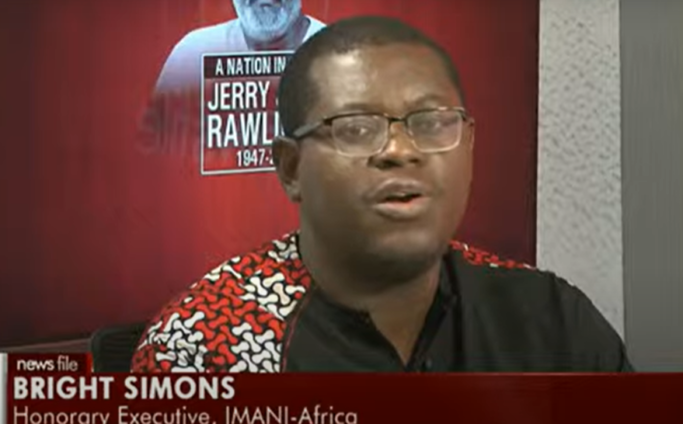
Honorary Vice President of IMANI-Africa, Bright Simons says Ghana is likely to go into default if pragmatic measures are not taken to address the country’s fiscal and economic dynamics.
This, according to him, is because the perceptions of foreign investors about Ghana’s creditworthiness keep worsening due to the country’s debt burden.
Speaking in an interview on Newsfile on Saturday, January 15, he revealed that Ghana’s creditworthiness has been lower than other African states, a development he attributed to borrowing.
“The economy is not considered sufficiently creditworthy. This is not something that is a Covid phenomenon, this is something we’ve been dealing with for quite a while. All the way from February 2020, we were already paying up to one and half per cent more than our African compatriots and today we are still paying more than a per cent more than African compatriots; so, for the average African borrower, our creditworthiness has been lower.”
“We’ve seen in the last couple of months seriously worsening perceptions from investors around the world about Ghana’s creditworthiness. We’ve also seen that long before this crisis, investors, generally, have been charging Ghana more to lend to Ghana,” Bright Simons noted.
“If your country is creditworthy, investors will typically charge you less to lend to you; if you are not creditworthy, they charge you more. One of the most objective ways of determining whether your country is creditworthy is often to look at how much investors will charge you in order to lend to you.”
Bright further explained that in the last quarter of 2021, Ghana’s bonds were the worst-performing as compared to other African compatriots, according to data from rating agencies Fitch and Bloomberg.
“Essentially, Ghana’s debt to GDP ratio is about 83% today and that is considerably above the African average. We are spending more than 45% of all the money that we make in the country on servicing our debts and a good chunk of the rest on paying government workers who may constitute 10% or so of the total workforce.”
“When we say we are B- in Fitch, we are just one step from being considered almost in default because we have substantial risks to our economy. 2022 is going to be one of those years where the revenue prospects of the government is going to assume outsized proportions,” he predicted.
An article published by Bloomberg cites the high debt to GDP ratio as well as government’s inability to secure passage of the e-transactions levy as an indication it may not have the political capital to pass revenue-raising measures in Parliament or rein in spending to reduce borrowing needs.
It also claims the situation is scaring away investors.
Investors are questioning whether Ghana – the region’s second-biggest economy – can sustain its debt levels if a surge in borrowing costs shuts it out of international markets.
Government debt climbed to 81.5% of gross domestic product at the end of last year, from 31.4% a decade ago, according to data compiled by Bloomberg.
That places Ghana among the most vulnerable credits to tighter U.S. monetary policy, despite strong economic growth.
Latest Stories
-
Power restoration fault suspected in Kumasi Central Market fire
40 minutes -
The 7-foot giant of Ngleshie Amanfro: Seven-foot Ghanaian Ephraim Saawa dreams of joining the national basketball team
1 hour -
Government promises support for Kumasi Central Market fire victims
1 hour -
Vibes The Movie: Big Ghun’s Ghanaian film earns five nominations at 2026 REFFA
2 hours -
MamaCare CEO warns unresolved conflicts among health workers could undermine maternal and neonatal care
2 hours -
Health professionals urged to translate medical knowledge into practice to save mothers
2 hours -
Conflicts among care providers linked to maternal, neonatal deaths – Expert
4 hours -
GIS marks 10th TIME conference, champions improved teaching practices
4 hours -
BRICS Or Balance? What Ghana’s bid really means
5 hours -
GPRTU wants full TRAFFITECH-GH implementation to start in 2027
5 hours -
Mahama announces plans to import electric wheelchairs for PWDs
5 hours -
KGL U17 Colts 2026: Western beat Prempeh Elite Academy to set up final final with Greater Accra Region
5 hours -
Late Solanke strike salvages 10-man Spurs draw at Man United
5 hours -
Gender Ministry to monitor welfare of Nana Akua Addo’s children amid domestic violence case
6 hours -
Benedict Okyere Yeboah: Ghana’s football problem goes beyond sacking a coach
6 hours