


Audio By Carbonatix
An economist at the Kwame Nkrumah University of Science and Technology is admonishing the government to extensively harness its existing tax sources, rather than introducing new taxes.
Professor Eric Oteng-Abayie observes the already imposed taxes have not generated the needed revenue because successive governments failed to effectively enact tax policies.
He believes the instability in tax implementation over the years has cost the country some whopping revenues.
“If the government is able to develop the permanent sources of taxes including the income tax and the property tax which has not been particularly focused on and actually target the right bases that have to pay these taxes.
“When the government withdraws taxes that it has already introduced, then it means the government is not really researching the places that need to be taxed and that is problematic,” said Prof. Oteng-Abayie.
The government’s passage of the Electronic Transaction Levy of E-Levy bill into law has received backlashes from the citizenry, including the academia.
Speaking at a public forum on E-levy at KNUST, Professor Eric Oteng-Abayie, indicated the issues encircling the implementation of the levy would affect its revenue mobilization.
According to him, the electronic transaction levy is problematic since it lacks neutrality.
“Because of the revenue assurance issues and delays in the e-levy implementation, it is believed that the target revenue may not be actually achieved.
“A good tax policy should have neutrality. That is, it should not only affect a certain group of people or business model, but it should have a broad base such as the Value Added tax,” he said.
The public forum organized by the Faculty of Social Welfare at the KNUST was on the theme “E-Levy and its Implication: A Multidisciplinary Perspective”.
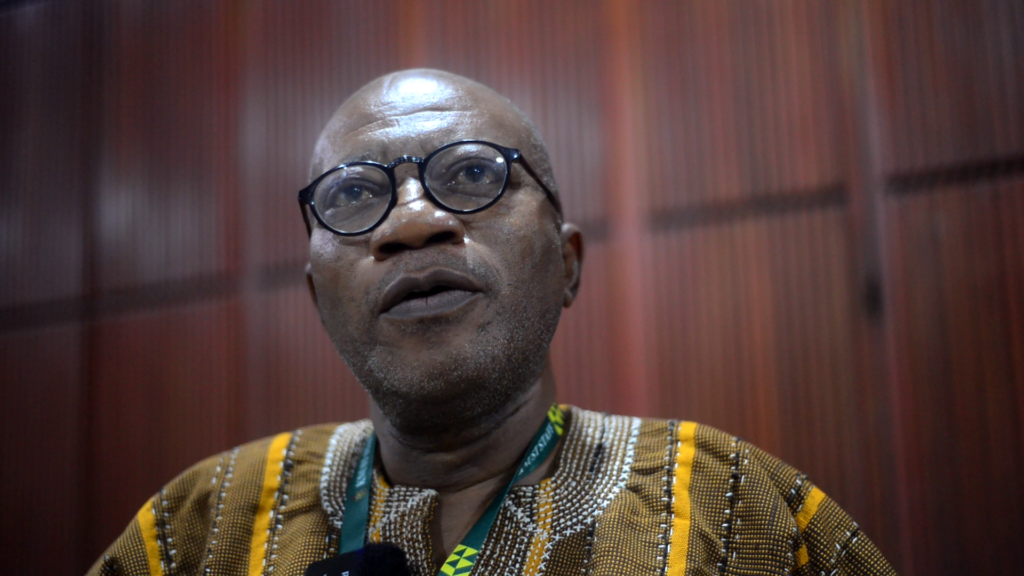
Meanwhile, Dr. Najim Ussiph, is imploring the government to be transparent in the collection of the levy when implemented.
He alluded to past incidents where Ghanaians are not privy to how much revenue is mobilized annually from taxes.
“Since this levy is going to be conducted digitally, the government can leverage the advantage of IT to make the implementation more transparent. With technology, the government can always report monthly on how much has been collected from the various stakeholders and make it known to the public,” he said.
However, Dr. Ussiph, does not consent to the government’s decision to outsource monitoring and assurance of the collection of the levy to a third party.
He believes such capacities could be built internally.
“The Finance Minister revealed a third-party company is going to be hired to monitor the collection but we could’ve used our local resources like the young graduates.
“The government should have planned the e-levy implementation properly by generating the capacity we need internally rather than contracting them to a third party,” he said.
Latest Stories
-
Save Nations Foundation donates learning materials to Nooria Islamic Basic School, calls for more support
29 minutes -
From selling food to solving problems: How Esther Owusu Nkwantabisah rethought entrepreneurship
43 minutes -
Explained: Ghana’s water plant deal that produced a $235m judgment debt instead of water for 500,000 people
55 minutes -
High Cost of Domestic Airline Fares: Can government do something about it?
59 minutes -
Inflation, cedi depreciation put BoG’s MPC under pressure as policy rate decision looms
1 hour -
Lawyer denies Salomey Baffoe received money from ‘Ghana Jollof’ account operator
1 hour -
Beyond politics: Why Kwame Nkrumah’s ideals still matter for today’s leaders
2 hours -
Top South African policeman charged with sexual offences
2 hours -
More than 170,000 respiratory cases recorded in haze-choked Indonesia
2 hours -
Narrowed space, intolerance – Sammy Crabbe says NPP is driving talented members away
2 hours -
We’re not analytical enough – Sammy Crabbe calls for data-driven decision-making
2 hours -
Tonto Dikeh celebrates Bobrisky as birthday tribute sparks online reactions
3 hours -
Peter Okoye tells court he received over $800,000 in P-Square royalties
3 hours -
I’ve never had problems with artistes – Rema addresses alleged fight with Davido
3 hours -
I was mocked for getting pregnant out of wedlock as pastor’s daughter – Davido’s baby mama
3 hours