

Audio By Carbonatix
Apple has announced it is discontinuing its music player, the iPod Touch, bringing to an end a device widely praised for revolutionising how people listen to music.
When the first iPod was launched in 2001, it could store 1,000 tracks. Today there are more than 90 million songs on Apple’s streaming service.
The iPod Touch was designed by the same team that later invented the iPhone, which quickly overshadowed the iPod.
Apple last updated the iPod in 2019.
There have been various iPod models over the years – including the Nano and Shuffle – but the iPod Touch, which was released in 2007 is the last model to be discontinued.
Apple says it will remain available to buy “while stocks last”.
The gadget had “redefined how music is discovered, listened to, and shared”, Greg Joswiak, the senior vice-president of worldwide marketing at Apple said.
iPod fans have taken to social media to share their thoughts on the news and their memories connected with the music devices.
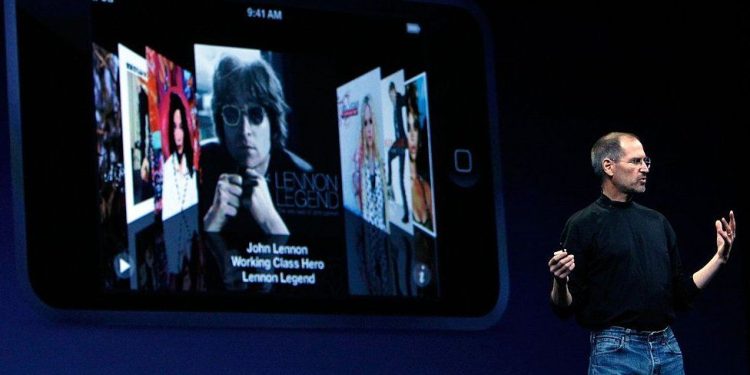
The first model of the iPod was revealed by Apple boss Steve Jobs in typical Apple style in 2001 – with much fanfare, anticipation and in his trademark jeans and black turtleneck.
There had been rumours the company was going to announce a new music player after the invitation for the launch event read: “Hint: It’s not a Mac.”
“Music’s a part of everyone’s life. Music’s been around forever. It will always be around,” Jobs said during his hour-long presentation.
The big headline for the night was simple: “1,000 songs in your pocket.”
Over the years, many celebrities have thrown their star power behind the iPod, including John Mayer, U2, and Oprah Winfrey. BMW introduced the first car entertainment system with a built-in iPod system, and within a few years, most car manufacturers followed suit.
But tech analysist say it was inevitable the iPhone would one day replace the iPod.
“When Apple created the iPhone it knew that it would ultimately mean the beginning of the end of the iPod,” Ben Wood, chief analyst at technology advisory firm CCS Insight, told the BBC.
Carolina Milanesi from Creative Strategies said the decline of iPod sales was connected to the rise of iPhone sales – like the move from digital sales to streaming.
“The demise of the iPod is probably the best example of Apple not being concerned about cannibalising its own products,” she said.
Latest Stories
-
Ghana High Commission to UK steps in as stranded musician Barosky considers returning home
2 hours -
Norway’s new king remembers ‘my dear father’ in first speech
2 hours -
Guinea-Bissau chosen to pilot ECOWAS community health policy
3 hours -
Health service support centres to give patients in 3 West African countries a stronger voice in healthcare
3 hours -
Akufo-Addo mourns late Ya-Naa Abukari II at Gbewaa Palace
4 hours -
The Mother’s secret: How Eni Akonobea turned motherhood into a philosophy for flourishing
4 hours -
JoySports Invitational 2026: Corporate Ghana wraps up a day of thrilling sporting action at Legon
5 hours -
Rotary Club of Accra-Airport, SCEF donate school supplies to over 200 street-connected children
5 hours -
NPP begins vetting of 47 national officer aspirants Monday
5 hours -
BoG inaugurates committee to probe seized foreign currency at Ghana’s borders
6 hours -
NPP internal elections: 47 out of 50 aspirants file nominations; three bow out
6 hours -
Fix Tema Port, roads to cut logistics costs and boost trade — Oro Oil CEO, Maxwell Commey
6 hours -
Undeclared forex undermines financial intelligence, formal market – BoG Governor
6 hours -
GIPA CEO calls for stronger coordination to provide a clearer picture of investment activity
7 hours -
Afenyo-Markin’s lawyers reject claims he is avoiding service on Sammy Gyamfi
7 hours