


Audio By Carbonatix
Some students of Weweso M/A Junior High School in Kumasi have revealed they save up portions of money given to them for food to purchase sanitary pads.
The students lament that the expensive cost of the hygienic pads on the market is worsening the discomfort associated with their monthly cycles.
Final-year female students of Weweso M/A JHS listened raptly to lessons on menstrual hygiene by a delegation of postgraduate students at the Kwame Nkrumah University of Science and Technology (KNUST).
As hygienically required, women or adolescent girls during their periods should at least change their sanitary pads three times in a day.

But the recent expensive cost of pads only makes room for them to breach the hygiene rules.
“At first, we were buying it at a lower price but now the price has increased. The fact that the price has increased we can’t get enough. For me, per se, I go home before I change my pad.
“But it shouldn’t be that way. It has to be changed regularly. The high cost of pad has really been a stress to the ladies,” one of the students, Janelle Nyamekye, said.
Disturbingly, the girls are forced to cut down their expenses at schools.
“Every day, if you have to buy food ¢2, you have to save some so that when it gets to the time for menstruation you can use that money that you saved to buy some,” another student, Lawrencia Danquah, revealed.
The headmistress, Priscilla Akohene Mensah, says the situation affects attendance at the school.
“They enter their menstrual period and then do not attend school because of the pad that they use. Sometimes, some of them fail to come to school. Because of the challenge, I always solicit help from other institutions,” she said.
Sales Manager of the northern sector of Sunda Ghana Limited, Thomas Ameah Jr, attributed the expensive cost to the skyrocketing cost of raw materials used for the pads.
“The cost of raw materials are increasing. Most of these raw materials are also imported. As the raw materials increases, obviously the dollar is used to buy the raw materials, cost of pads cannot be left out,” he said.
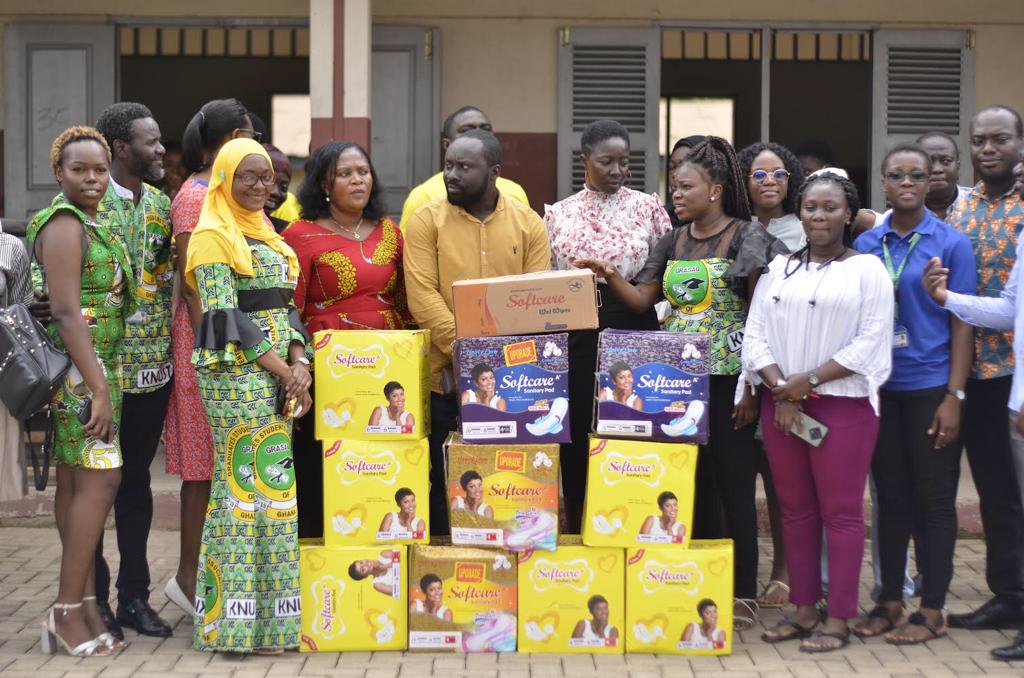
To ease their discomfort, the Graduate Students’ Association of Ghana-KNUST chapter donated some packs of pads to the schools.
Gender Commissioner, Edith Amponsah, says the increasing number of female students confronted by the challenge necessitated the gesture.
“60% of them are unable to buy pads and use it. It’s hygienically correct that they get the sanitary towels and use them properly in order to stay hygienic and study comfortably,” she said.
Unlike urban girls who are fortunate, the situation could be dire for those in rural areas.
Interventions from the Ministry of Gender, Children and Social Protection and, perhaps, reduction in taxes on hygienic pads could help lessen the woes of the Ghanaian girl.
Latest Stories
-
Stephen Kojo Adjei
6 minutes -
Govt building pathways for Ghanaian youth to compete across African markets – Opare Addo
15 minutes -
DCOP Rtr Kwaku Ayesu Opare-Addo
16 minutes -
Epiroc urges businesses to deepen support for education in mining communities
20 minutes -
Jay-Z rape accuser says her allegation was false
21 minutes -
KNUST SHS, OWASS, YAGSS progress to national stage of Public Speaking Competition
24 minutes -
10 rooms destroyed in Bebianiha house fire
27 minutes -
Government repatriates 180 Ghanaians from Libya
31 minutes -
GNAT demands independent probe into death of teacher at Gindabour
33 minutes -
Mark Carney says he has considered possibility of US military action against Canada
33 minutes -
Gindabour: GNAT demands GES statement on death of teacher
33 minutes -
6th Western Gospel Awards unveils nominees ahead of November ceremony
35 minutes -
GMTF, GNPC open talks on stronger support for specialised healthcare
36 minutes -
Adu-Boahene case: Atta Akyea files no-case submission, cites evidential gaps, inconsistencies and failure to call material witnesses
54 minutes -
Manchester City ‘found guilty of majority of 115 charges’
1 hour