

Audio By Carbonatix
The West African Science Service Centre on Climate Change and Adapted Land Use (WASCAL) and its partners are proposing a “clean, smart” green hydrogen economy.
This could potentially protect the continent from the harsh realities of climate change and provide enormous economic opportunities.
“This year we have been experiencing a lot of floods across West Africa…. At the same time, there is also a lot of droughts causing a lot of constraint on our food systems. We cannot continue to do same things and expect different results. We need to think of and identify appropriate solutions.
"One of them, Green hydrogen can play a vital role in contributing to alleviating poverty and at the same time contribute to minimizing gas emissions,” Executive Director of WASCAL Dr Moumini Savadogo said during a fact-finding and media engagement ceremony on Green Hydrogen.
World Bank Report
His comments come at a time when the World Bank’s new Country Climate and Development Report for Ghana is predicting that more than one million Ghanaians are expected to slide into poverty as a result of climate change shocks.
The report also indicates that incomes for poor Ghanaian households could also reduce by up to 40% by 2050.
But Dr Savadogo is convinced the Green Hydrogen technology would be the silver lining to mitigating the impact of climate change in West Africa.
“The Green Hydrogen potential is huge. The technology comes in as smart solutions that could improve agriculture production and develop eco-friendly industries and provide green jobs to many Ghanaians,” he stated.
According to him, there is enough scientific evidence of the presence of Green hydrogen technology across the 15 West African states which has been built into an atlas and which when harnessed in commercial quantities can help build a friendly and resilient climate environment.
Partnership and Implementation
As a way of fighting the common challenges facing countries across the globe, Chairman, Forschungszentrum Julich (FZJ) Board of Directors Prof Wolfgang said there is need to collaborate and share knowledge for the common good across continents and national boundaries.
He believes the Green Hydrogen technology is a great selling point for collaboration with its enormous potential to impact not just the energy portfolio but the general economies in the subregion.
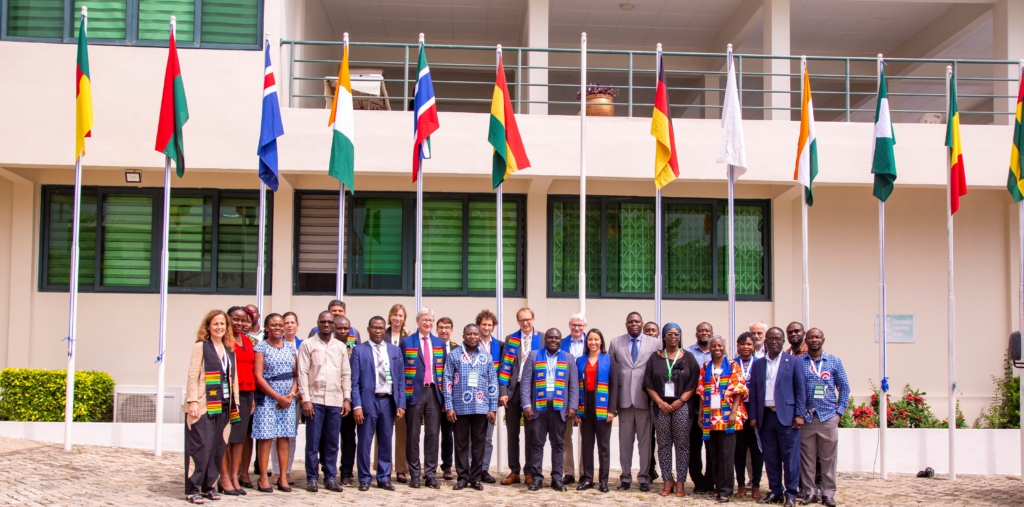
He was quick to add, that the partnership should not just end at capacity building but move into policy implementation as a way of making an impact and finding lasting solutions and transforming to global challenges.
“We industrialized countries made a lot of mistakes in the past. We were heavily reliant on fossil energy. Maybe our joint and diverse experiences will help you not to make the same mistakes. And we learn from you how we can cure the failures and problems we have produced ourselves in the industrialized countries,” he stated.
Green Hydrogen Technology
Explaining what the Green Hydrogen technology is all about, Dr Solomon Agbo, a scientist with Julich said it is the “energy you can generate from water,” adding “the production is clean and the utilization is clean. It is seen as the fuel for the future and has relevance in several sectors of development including transport and agriculture.”
Even though he was worried about the destruction of water bodies through illegal mining activities in Ghana and other parts of the sub-region Dr Agbo said through desalination processes the sea water can even be used in producing Green Hydrogen technology in large quantities.
He said there will soon be pilot projects across the sub-region to demonstrate the potential to generate green hydrogen in Africa which will later be scaled up.
MOU
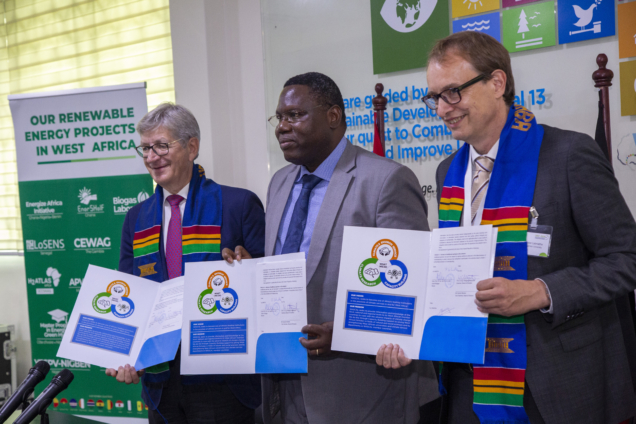
As a way of building capacity in the Green Hydrogen technology for students within the West African sub-region, a memorandum of understanding for a two-year Masters programme in Energy and Green Hydrogen was signed between WASCAL and two German-based universities (Julich and RWTH) with support from Germany’s Federal Ministry of Education and Research.
Providing details of the MOU, FZJ Board Chairman ED WASCAL, Prof Letmathe said the activities of the MOU would include but not be limited to the exchange of students and staff. Joint research activities, publications, joint PhD scholarships and Fellowships, the establishment of alumni exchange of academic information and materials in the fields of interest to all partners.
The Masters Programme is on a competitive scholarship basis and would be awarded to students within the West African sub-region.
Latest Stories
-
Luv Fm High School Debate: KNUST SHS and Osei Adutwum SHS set up thrilling final after dramatic semi-finals
3 minutes -
KNUST AI Coordinator urges structured adoption of AI in teacher education
16 minutes -
Nepal rescuers blast hillside in search of hydropower workers as families wait anxiously
33 minutes -
Teachers who pass promotional exam to get January 2026 start date after gov’t resolves promotion dispute – Apaak
36 minutes -
NSMQ 2026: St. John’s School rally from slow start to book semi-final spot
36 minutes -
Promotion pay row: Gov’t gives teachers September to complete salary adjustments
47 minutes -
Financial irregularities plummet by 62.9% as state tightens fiscal controls
48 minutes -
DVLA to expand mobile services to underserved communities in Ghana’s Eastern Corridor of the Northern Region
1 hour -
GUTA urges GPHA to act swiftly to end Tema Port congestion to avert rising business costs
1 hour -
Port congestion could undermine 24-hour economy policy – GUTA
1 hour -
NSA opens three-day window to resolve national service biodata mismatches
1 hour -
Abu Jinapor highlights increased gold exports after Domestic Gold Purchase Programme
1 hour -
NPP UK branch calls for independent audit into gold purchasing operations and parliamentary probe
2 hours -
Zanetor Agyeman-Rawlings pledges decisive action on climate change, galamsey and environmental degradation
2 hours -
Bawumia was brainchild behind Domestic Gold Purchase Programme – Samuel Jinapor
2 hours