

Audio By Carbonatix
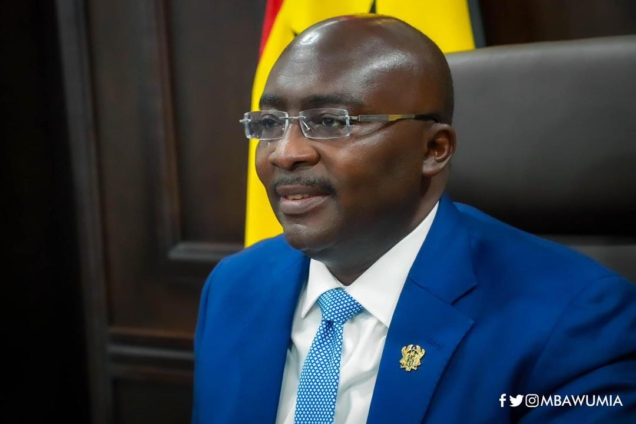
Vice President Mahamudu Bawumia on Thursday hinted that the National Health Insurance Scheme (NHIS) is willing to provide funding support to children with kidney disease due to the high cost of treatment.
Even though the Vice President did not provide any timelines for when the NHIS would start supporting children with kidney disease, he was of the view that Ghanaians should be willing to pay a little more to the Scheme to sustain it and function efficiently.
The government, he said, would support investors willing to manufacture dialysis consumables locally, like intravenous infusion, and other critical items needed for kidney therapy.
Vice President Bawumia announced this at a public symposium organised jointly by the Ghana Kidney Association and the Ghana College of Physicians and Surgeons in Accra, to mark the 50 years of dialysis in Ghana.
Current statistics showed that 14 percent of the over 30 million Ghanaians are suffering from chronic kidney disease, with a kidney patient required to pay between GHS 400 and GHS 595 for three dialysis sessions a week.
Averagely one is supposed to pay GHS4,800 per month and over GHS 50,000 for dialysis services per year.
The symposium was held on the theme: “50 years of Dialysis in Ghana, the Past, Present and Future” to reflect and chart the way forward towards ensuring affordable kidney therapy for all Ghanaians irrespective of one’s financial status.
At the moment, there are 15 dialysis centres across the country with 103 dialysis machines and about 14 Nephrologists nationwide.
On average, a Nephrologist takes care of five million people.
Vice President Bawumia underscored the need for all Ghanaians to tackle the root cause of acute Kidney failures and pointed out that the pollution of the water bodies by illegal miners with mercury and other dangerous chemicals could be a major contributory factor to the increasing cases of the disease.
He tasked the Food and Drugs Authority (FDA) to check the uncontrolled sale of herbal medicines purportedly capable to cure kidney disease but ends up worsening the health conditions of many patients.
Dr Bawumia was of the belief that public-private partnership was critical towards providing better healthcare for kidney patients in the country.
The Vice President lauded the enormous contributions of Dr Annim Addo, Matron Ohene Ampofo and others for establishing the first-ever Dialysis Unit at the Korle-Bu Teaching Hospital in 1972 to provide services to patients in the country.
Professor Sampson Antwi, President of the Ghana Kidney Association, in his welcome remarks, recounted the dark days when failure of a critical organ like the kidney literally led to the death of an individual.
He, however, observed that medical science had seen great advancement over the past five decades, with the establishment of dialysis facilities in Ghana, therefore keeping alive those with chronic kidney disease.
“For Ghana to have been part of the foremost countries in Africa to establish dialysis facilities half a century ago on the African continent is no mean achievement,” he stated.
“As we celebrate this feat as a country, we are mindful of the enormous financial challenges faced by clients in sustaining themselves on dialysis,” he opined.
“As we reflect on dialysis services for the past 50 years, the present and the future, we hope that the narrative will change from an out-of-pocket funding of dialysis to a fully funded chronic dialysis programme as pertains elsewhere,” he stated.
Prof. Antwi said, for instance, at the Komfo Anokye Teaching Hospital in Kumasi a minimum of 15 children are diagnosed of Kidney failure every year and a maximum of 40 per year, noting that most of them either die at the health facility or at home because of the lack of funds to sustain dialysis therapy.
He, therefore, called on corporate Ghana, philanthropists and all well-meaning Ghanaians to join the Ghana Kidney Association in highlighting the need for funding support for dialysis in the country.
He was optimistic that the ultimate choice of renal replacement therapy-kidney transplant would become a well-established therapeutic service in the country in the not-too-distant future.
Latest Stories
-
Venus Williams given US Open singles wildcard – will Serena join her?
1 hour -
Premier League to publish verdicts on referee and VAR decisions
1 hour -
The 10.94 Cedi to 1 USD Paradox: Macroeconomic triumph, the import subsidy trap, and the threat to youth employment
1 hour -
Fifa sacking ‘deeply troubling’ – Uefa executive
1 hour -
Bezos consortium bought almost 40% of Liverpool
1 hour -
Kane set to begin talks over new Bayern contract
2 hours -
Aston Villa agree deal for West Ham’s Wan-Bissaka
2 hours -
GoldBod’s real cost to Ghana far higher than reported losses – Bokpin
2 hours -
Trump pauses new tariffs on Canada and says countries close to a deal
2 hours -
Governed differently: The political economy of state absence in Africa
3 hours -
Boakye Agyarko vows to rebuild NPP as over 50 constituency chairpersons back his chairmanship bid
3 hours -
APL poll puts Bawumia ahead of seven potential NDC contenders
3 hours -
Character, jobs and cost of living: APL poll shows what voters will use to decide 2028 election
4 hours -
Due process is not a technicality – Jinapor slams govt over Alima Mahama audit row
4 hours -
‘Give her a hearing’ – Minority caucus questions refund demand against Alima Mahama
4 hours