

Audio By Carbonatix
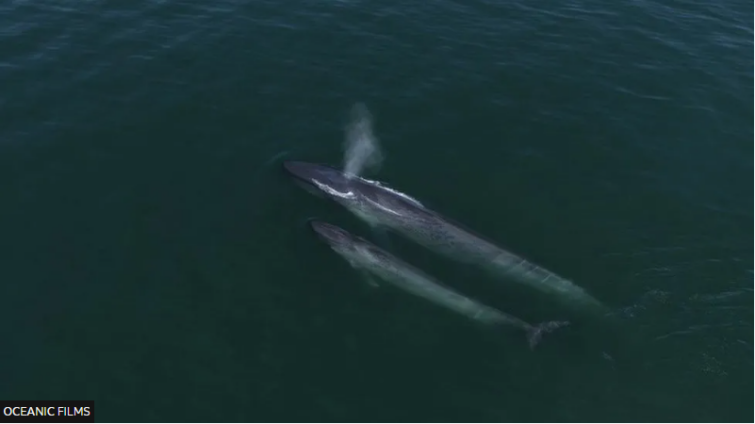
Blue whales - the largest animals on Earth - are making their home in a part of the Indian Ocean where they were wiped out by whaling decades ago.
Researchers and filmmakers in the Seychelles captured footage of the whales in 2020 and 2021. It features in the Imax film Blue Whales 3D.
But a year of underwater audio recording revealed the animals spend months in the region.
This means they could be breeding there, scientists say.
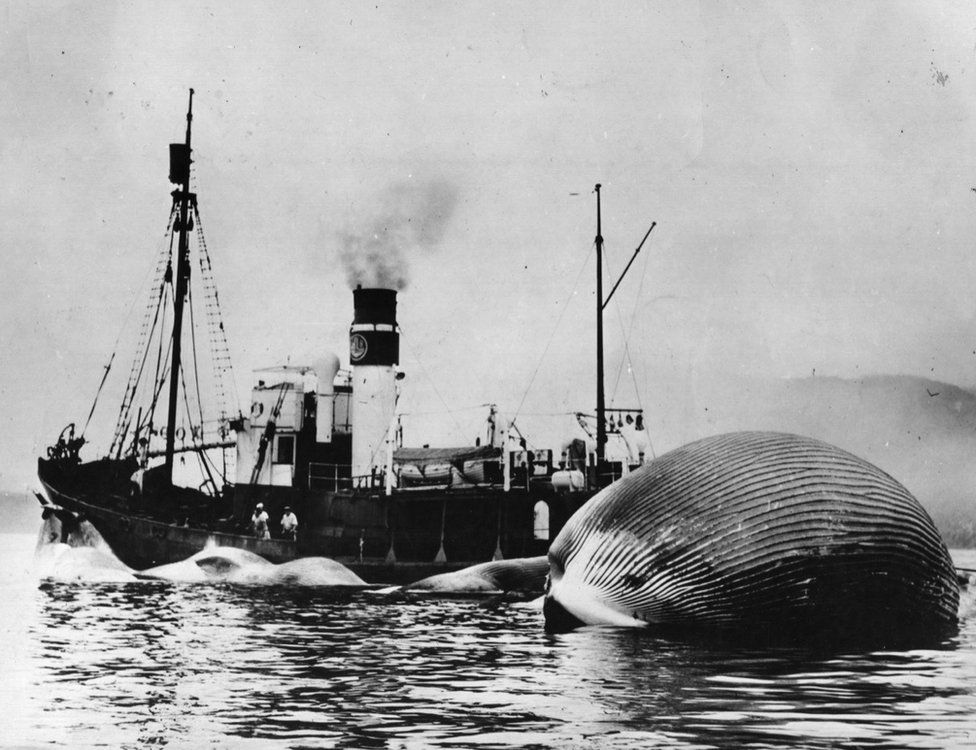
The researchers involved in the mission described their discovery as a "conservation win" after the Soviet whaling fleet decimated the population in the 1960s.
One of the lead researchers, Dr Kate Stafford, told BBC News: "It turns out if you stop killing animals on mass scales and you give them a chance to rebound, they can recover."
Commercial whaling has had a lasting impact. Blue whale numbers are still a tiny proportion of what they were and the species is listed as endangered by the International Union for the Conservation of Nature.
More than 300,000 were killed in the southern hemisphere alone - chased down by modern, fast whaling ships.
"This is the largest animal to ever exist on the planet," Dr Stafford said, adding: "We want to know where they are coming back and knowing there's a population around the Seychelles is incredibly exciting."
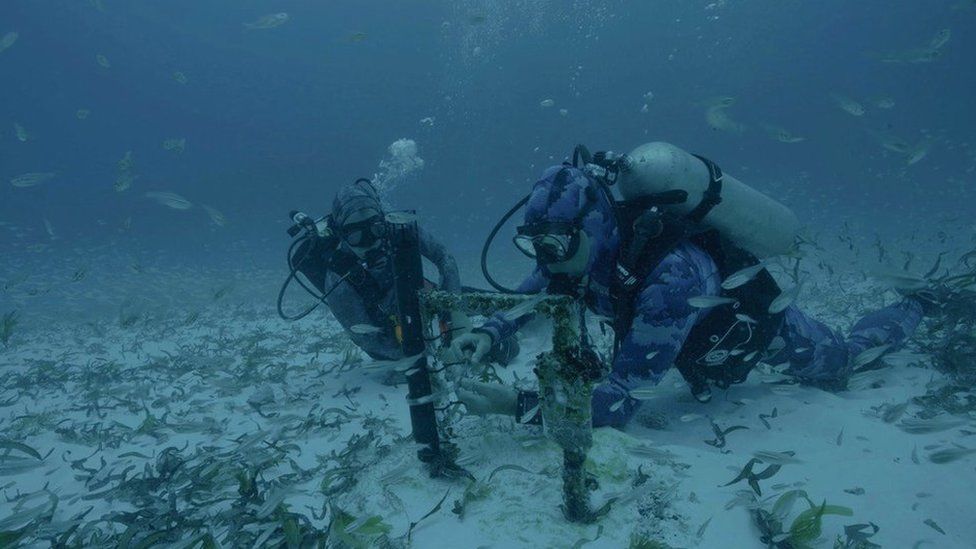
The discovery, published in the Journal of Endangered Species Research, was the result of fixing a "sound trap" to the seabed close to the tiny island nation.
Fitted with underwater microphones, batteries and recording devices, the trap was left in place for a year, recording 15 minutes of every hour, every day.
During the team's month-long expedition, Dr Stafford also spent a few hours each day dangling a hydrophone [underwater microphone] into the water.
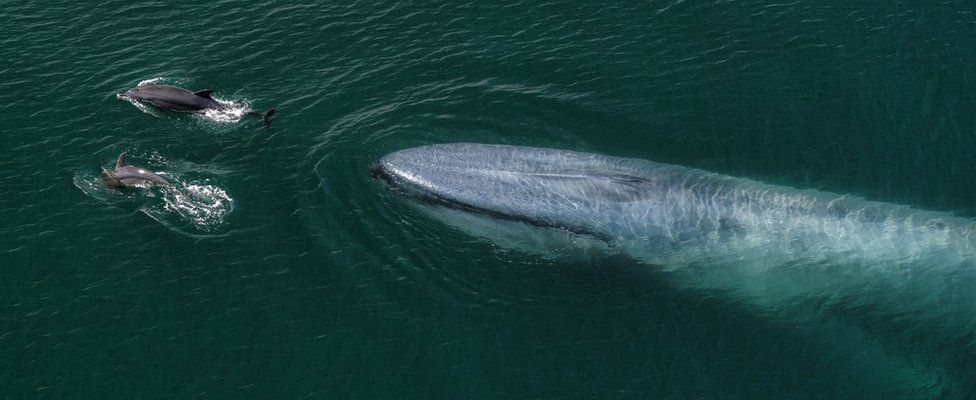
Chris Watson, the wildlife sound recordist on the trip, told BBC News: "We heard remarkable things - the tapping of sperm whales thousands of feet down and dolphins echolocating and communicating but sadly no blue whales."
However, after scientists retrieved their sound trap, painstaking analysis of the recording revealed blue whales were there and communicating when the researchers were not.
The mammals' signature, very low frequency song could be heard primarily during March and April.
"This means the Seychelles could be really important for blue whales," said Dr Stafford, explaining: "They sing during the breeding season and we think it's probably the males who are singing, based on what we know about other whales.
"So there's also potential that the Seychelles is a breeding area or a nursery area."
The scientists were even able to pick out which acoustic population the blue whales in the area belong to.
Dr Stafford said: "You can tell them apart by the sounds they make. In the Seychelles we heard one acoustic population - the one generally associated with the northern Indian Ocean."
The song or fundamental frequency of the blue whale is so deep and such a low frequency that it is beyond the range of human hearing.
But Mr Watson, who has managed to record blue whales in the Sea of Cortez, said we can hear what are called its harmonics - higher frequency sounds that "ring out" when a blue whale sings, explaining: "It's this really low, deep, consistent pulse.
"When I recorded blue whales in Mexico, that was what was resonating in my headphones."
Dr Stafford added: "It's the loudest sustained sound in the animal kingdom. [Their call lasts] 15 to 20 seconds at about 188 decibels, which is the equivalent of a jet engine in air."
Sound travels much faster and further in water, enabling blue whales to communicate over distances of hundreds and even thousands of miles.
A quiet haven
Conservation scientists are keen to understand exactly how important the Seychelles is for blue whales.
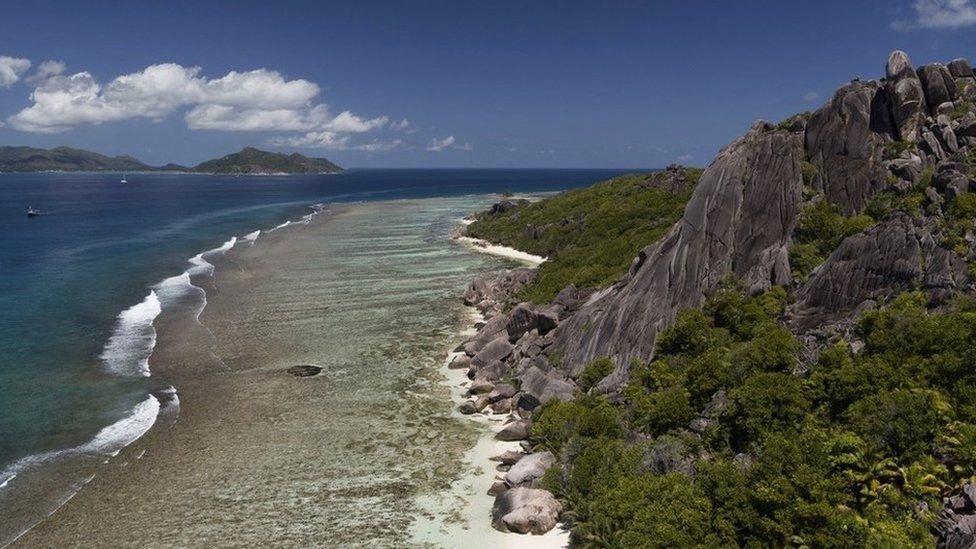
An area around the islands has been formally protected in a unique "debt for nature" swap, where the country had almost £16.8m ($22m) of its national debt written off in exchange for doing more to protect its oceans.
About 400,000 square kilometres (154,000 square miles) of its seas are now protected.
One major concern is protecting important areas for blue whales from noise pollution, which travels equally efficiently through the water.
"There's not a tremendous amount of ship traffic in the Seychelles so perhaps we could think of it as a nice, quiet, safe place for blue whales," said Dr Stafford.
Latest Stories
-
Thomas Partey ruled out of Al-Shabab’s next two matches
13 minutes -
2026 U-20 WWC: Sarah Nyarko targets knockout stages with Black Princesses after victory over South Korea
31 minutes -
President Mahama warns: Poor refereeing, match manipulation are destroying Ghana football
49 minutes -
Businessman rejects GH¢79.7m judgment windfall – He says actual claim was below GH¢10m
54 minutes -
Mahama calls on GFA, clubs to raise standard of domestic football
54 minutes -
Ghana’s Rahim Ibrahim makes Champions League debut in PSG thrashing
1 hour -
Tariq Lamptey suffers another injury setback at QPR
2 hours -
PRESEC, Augusco and Accra Academy battle for 2026 NSMQ crown today
2 hours -
GH₵12 addition to cement price: GPHA clarifies attribution to port congestion
2 hours -
Pythagoras won’t balance your books
2 hours -
Pay me by Sept. 11 or face the court – Kow Essuman demands salary, benefits from Finance Minister
2 hours -
Bawumia’s destiny lies in the hands of God; not you – Muslim Forum for Peace and Unity replies Rev. Owusu Bempah
2 hours -
NPP NEC meets today to discuss and approve party’s position paper on Constitution Review proposals
2 hours -
Today’s frontpages: Thursday, September 10, 2026
3 hours -
Ghana Garden and Flower Show returns on Sept 11 with focus on green jobs, business and wellbeing
3 hours