

Audio By Carbonatix
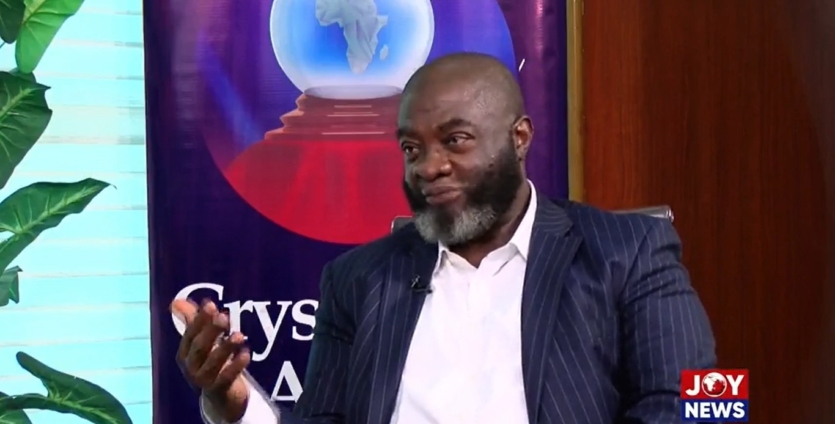
A Senior Partner at AB & David and Business Strategist, David Ofosu-Dorte, has expressed concerns about the conventional approach adopted by governments during challenging economic times.
Speaking on JoyNews' PM Express, he argued that the typical strategy involves restoring financial and macroeconomic stability, but this often comes at the expense of stifling local businesses.
"Anytime we've had challenges with our economy, the typical approach is to restore financial stability and macroeconomic stability. But this approach ends up destroying the micro ones.
"So, we often tend to create macroeconomic stability by overtaxing the micro-economy. That is a big challenge and it constantly prevents businesses from scaling up," he said on Thursday.
Mr Ofosu-Dorte's comments come amid the introduction of new tax policies set to role out this year because the government is currently under an IMF programme to resuscitate the economy.
He highlighted the dilemma faced by micro-enterprises, emphasising that macroeconomic stability is often influenced by external forces, especially when the government resorts to borrowing.
Mr Ofosu-Dorte then urged local businesses to develop strategies that minimise their dependence on government policies for growth.
"The extent that the macro is often dictated by external forces, especially when we go to borrow. So, micro-enterprises should be putting their strategies in a way that, as much as possible, causes them to depend less and less on the policies of the government. This is because the more you depend on the policies of the government, the more they affect you,"he explained.
The Business Strategist encouraged businesses to take a proactive approach and reduce reliance on government policies, suggesting that this would contribute to greater resilience and sustainability in the face of economic challenges.
"In any sector that you find yourself in, you can depend less on government policies or expect government policies to be the basis of your growth, as much as you can depend less on it, the better," he advised.
Latest Stories
-
Power restoration fault suspected in Kumasi Central Market fire
3 hours -
The 7-foot giant of Ngleshie Amanfro: Seven-foot Ghanaian Ephraim Saawa dreams of joining the national basketball team
4 hours -
Government promises support for Kumasi Central Market fire victims
4 hours -
Vibes The Movie: Big Ghun’s Ghanaian film earns five nominations at 2026 REFFA
4 hours -
MamaCare CEO warns unresolved conflicts among health workers could undermine maternal and neonatal care
5 hours -
Health professionals urged to translate medical knowledge into practice to save mothers
5 hours -
Conflicts among care providers linked to maternal, neonatal deaths – Expert
6 hours -
GIS marks 10th TIME conference, champions improved teaching practices
7 hours -
BRICS Or Balance? What Ghana’s bid really means
7 hours -
GPRTU wants full TRAFFITECH-GH implementation to start in 2027
7 hours -
Mahama announces plans to import electric wheelchairs for PWDs
7 hours -
KGL U17 Colts 2026: Western beat Prempeh Elite Academy to set up final final with Greater Accra Region
8 hours -
Late Solanke strike salvages 10-man Spurs draw at Man United
8 hours -
Gender Ministry to monitor welfare of Nana Akua Addo’s children amid domestic violence case
8 hours -
Benedict Okyere Yeboah: Ghana’s football problem goes beyond sacking a coach
8 hours