

Audio By Carbonatix
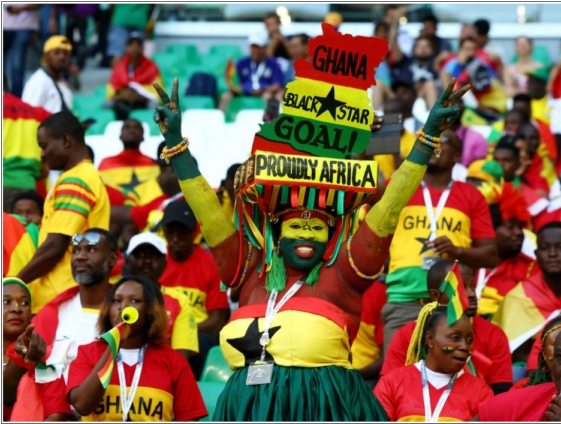
In the last 10 years or so, my enthusiasm for football, particularly for Ghana's national team, the Black Stars, has waned considerably. This decline in interest is not a reflection of the sport itself but a symptom of a deeper societal issue: misplaced priorities.
As a nation, our attention often seems fixated on the world of sports, overshadowing more pressing concerns. For instance, local authorities, such as District Chief Executives (DCEs) and mayors, often escape scrutiny despite the persistent issues of filth and choked drains plaguing our communities. Meanwhile, a missed penalty by a football player like Asamoah Gyan can incite prolonged public outrage. This disproportionate reaction highlights a troubling disconnect.
The issue extends beyond sanitation. Employment ministers, responsible for understanding and planning the country's human resource needs, are rarely held to account, yet we are quick to castigate foreign coaches for the national team's setbacks. This skewed approach to accountability suggests an unsettling comfort with mediocrity and a lack of seriousness in addressing the fundamental challenges that face our nation.
Football, while an important aspect of our culture, should not eclipse critical areas such as food production, sanitation, and resource optimisation. If we look at some of the most developed countries in the world - Japan, Singapore, China, the USA, Switzerland, Luxembourg, the UAE, and Qatar - their achievements are not primarily defined by their prowess in football. This observation should prompt us to rethink our own priorities.
The allure of using football as a tool to showcase Ghana on the global stage is understandable. However, this strategy loses its charm when juxtaposed with the reality of our unkempt streets and markets. The conditions of places like Agbogbloshie, Kaneshie, and Makola are now reasons for personal embarrassment, to the extent that I decline requests from foreign guests to visit these areas. This situation begs the question: have we become desensitized to our own shortcomings?
It is high time for a national introspection and a realignment of our priorities. The path to sustainable development and international respectability demands a focus on areas that yield long-term benefits for the greater good of Ghanaians and the global community. Recognising and addressing our challenges head-on, with the same fervor we reserve for football, could be the first step towards a more prosperous and dignified future.
Latest Stories
-
Jason Arday death ‘tragedy on so many levels’ says PM
55 minutes -
Rotary Club donates phototherapy machine to Ussher Hospital
1 hour -
Analysis: Jason Arday’s death will send shockwaves through a divided academia
1 hour -
CJ’s vacation warrants not limited to politically sensitive cases – Victoria Bright
2 hours -
Parts of Accra to experience power interruption on Sunday for emergency GRIDCo tower restoration
2 hours -
Dafeamekpor defends Ayine’s handling of Aksa case, faults past AGs
3 hours -
Luv FM High School Debate: Afigyaman, OKESS seal Round of 16 spots in style
3 hours -
Dafeamekpor urges Parliament to stay out of Aksa probe, backs expert-led inquiry
3 hours -
The rise and rise of Azigi
3 hours -
Is Angela List being targeted? Government must reconsider the Adamus revocation
3 hours -
Bezos-backed consortium buys a third of Liverpool
3 hours -
Galamsey is becoming a national survival issue – Annoh-Dompreh
3 hours -
Beyond State Funding: NSA Inaugurates Deen-led team to power Ghana’s sports reset
3 hours -
Jason Arday death ‘tragedy on so many levels’ says PM Burnham
3 hours -
NPP has never used nolle prosequi to shield appointees – Baffour Awuah
3 hours