

Audio By Carbonatix
Guinea's military junta has protested to Russia's ambassador after his embassy reportedly warned of possible unrest in the capital, Conakry.
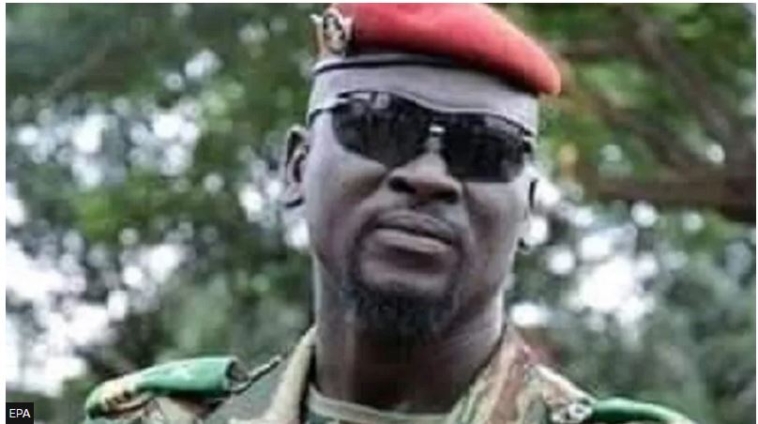
The warning was issued after junta leader Colonel Mamady Doumbouya dissolved the government on Monday, and ordered the closure of all borders.
Ambassador Alexey Popov apologised to the junta for what he called a misunderstanding, Guinean media reported.
Col Doumbouya took power in a 2021 coup.
He dissolved his government on Monday without offering any explanation.
He also ordered the seizure of the passports of sacked ministers, and the freezing of their bank accounts.
Guinean media reported that Col Doumbouya's decision led to the Russian embassy in Guinea advising Russian nationals to be vigilant as there could be unrest in the West African state's capital, Conakry.
The junta reacted angrily, with an official in its foreign ministry summoning Mr Popov to a meeting.
"I explained that it was a misunderstanding, a false translation of what was published. The announcement was published only in Russian for Russian citizens," Mr Popov was quoted as saying by Guinea's state-owned television and radio.
The junta accepted the apology, while Mr Popov said the incident would not affect relations between the two nations.
Guinea is one of several former French colonies in West Africa to be hit by coups in recent years.
The juntas, which seized power in Mali, Niger and Burkina Faso have pivoted toward Russia, while being hostile towards France and the West African regional bloc, Ecowas.
However, Col Doumbouya has tried to maintain good relations with all sides.
He has promised to hold elections to restore democratic rule by the end of 2024.
The junta banned all demonstrations in 2022 and has detained several opposition leaders, and members of civil society groups.
Col Doumbouya overthrew President Alpha Condé in September 2021, saying the army had little choice but to seize power because of rampant corruption, disregard for human rights and economic mismanagement.
Mr Condé was Guinea's first democratically elected president, taking office in 2010 following the end of military rule.
He was re-elected in 2015, but faced protests four years later when he changed the constitution to run for a third term.
Latest Stories
-
The source of cedi appreciation matters more than the appreciation itself
4 minutes -
Ashanti cocoa farmers welcome new COCOBOD Bill, back key reforms
7 minutes -
‘GoldBod is a very big scandal awaiting us’ – Afenyo-Markin
8 minutes -
‘GoldBod is failing’ – Afenyo-Markin cites IMF report on $1.7bn losses
9 minutes -
Fire destroys ICT lab at Gushegu Midwifery Training School, threatens licensure exams
11 minutes -
Defence Ministry welcomes Kenneth Gilbert Adjei as new Defence Minister
11 minutes -
Bawumia charges NPP executives to rebuild party for 2028 victory
14 minutes -
Unite the region and deliver victory in 2028 – Dr. Bawumia to new Greater Accra NPP executives
14 minutes -
Ukrainian strikes kill six in Russia, acting governor says
14 minutes -
The goal is to win 2028 polls – Bawumia
15 minutes -
GoldBod secures 30% of large-scale gold output for Ghana’s strategic reserves
15 minutes -
FDA warns against unauthorised chemicals for ripening plantain
16 minutes -
‘If you sell gold at a loss, you’re not a good trader’ – Afenyo-Markin jabs Sammy Gyamfi
19 minutes -
Dr. Bawumia meets new Greater Accra NPP executives; charges them to bring all talents on board
23 minutes -
Before the Next Jason: When seniority becomes a weapon against young academics
36 minutes