

Audio By Carbonatix
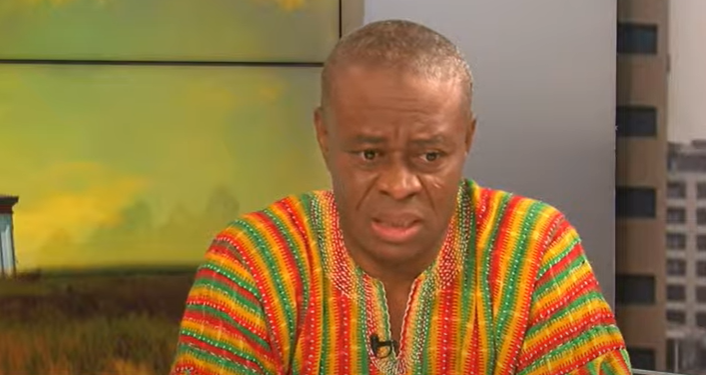
Ranking Member on Parliament's Trade and Industry Committee, Yusif Sulemana, firmly believes that government can do more to reduce the cost of cement rather than "illegally" issuing demands to manufacturers.
Speaking on PM Express on JoyNews on Monday, he explained that levies are factors contributing to the pricing of cement, delays in clearing goods, and other areas government can intervene.
“The government has imposed what they call a fumigation levy for clinker (the backbone of cement production). But, when the clinker arrives there is no fumigation, but the manufacturers pay the levy, and ultimately it will be built into the pricing of cement,” he said.
“Why are you charging somebody for a service you are not rendering? Is it not possible for the government to remove this? I have also heard of issues with levies and taxes everywhere, which is a fact.
"We are taxing them so much they have to factor that into the cost of production and ultimately that would affect the prices of cement. That is why I am saying some of the factors can be handled by the government,” Mr Sulemana noted.
Furthermore, he noted that cement manufacturers are restricted to using only terminal three at the harbour for offloading clinker, and this he said causes traffic at the ports.
As a result, manufacturers pay demurrage (a charge payable to the owner of a chartered ship on failure to load or discharge the ship within the time agreed) on their goods with each delay, adding to the overall cost, he said.
Mr Sulemana noted that “last time I checked the manufacturers pay between $35 and $45 per day as demurrage and this again will be factored into the pricing. So if you do this, why will you tend to say that they should reduce the prices of cement when in fact, you could have given them enough space to clear their goods?”
“The reason given was that they are trying to prevent pollution but there should be a way out. The minister and government should be willing to sit with manufacturers of cement to negotiate and ensure that some of the factors are resolved,” he added.
The Ranking Member on Trade and Industry Committee’s comment comes following the recent increases in cement prices across the country.
A few weeks ago, Trade Minister K. T. Hammond, took decisive action to address the recent surge in cement prices by directing the Cement Manufacturing Development Committee (CMDC) to intervene immediately.
Mr Hammond called for a halt to the price increases and emphasised the need for cement manufacturers in Ghana to reverse the recent price hikes promptly.
Additionally, he urged the CMDC to ensure transparency by mandating the publication of retail prices by all cement companies.
According to the Minister, the measure aims to curb arbitrary increases in cement prices burdening consumers.
Furthermore, the Minister reiterated his call for the adoption of a unified cement pricing mechanism across the nation.
He proposed a model akin to the Unified Petroleum Pricing Fund (UPPF), which regulates fuel retail prices in Ghana. Such a system would promote price consistency and fairness in the cement market.
However, Mr. Sulemana believes that the order by the Trade Minister was illegal, especially since the government had not done much to help manufacturers offset the cost of production.
He admitted that although other internal factors affect pricing, the government addressing some of the earlier highlighted issues can go a long way to reducing cement prices.
“if you ask me the Minister should be willing to sit with them and negotiate with them what government can do to reduce the cost. For instance, there is no need to charge them for a service when you are not rendering that service to them, you can take it off.”
“When you do, you can now tell them that they should also reduce the price of their cement. If you give them space to clear their goods very quickly and will not pay demurrage they won't add to the cost of production and so you can tell them, reduce prices.”
“In any case, if the minister wants to do that he has to come to parliament with a legislative instrument, let's look at it well and when there is a need for us to bring about the restriction of the prices of cement or give them a range, then we begin to do that. But it is unlawful for him to sit in his office and just issue a fiat and think that the next day the manufacturers should agree.”
Latest Stories
-
Mohammed Kudus drops out of Ghana squad for AFCON 2027 qualifiers against Côte d’Ivoire and Gambia
17 minutes -
Africa World Airlines unveils first Embraer E190 as part of 10-aircraft fleet expansion
1 hour -
Civilian hospitalised after alleged machete attack by prison officers, inmates
2 hours -
Toobu rejects calls to recall Parliament over 3.9-tonne cocaine shipment
2 hours -
Residents in 5 Northern Regions warned of approaching rainstorm
2 hours -
Constituency Games still a work in progress – Sports Minister
3 hours -
Team Ghana set for historic Karting Africa Showrun in Angola
3 hours -
52-year-old South African arrested with suspected heroin after arriving from Accra
3 hours -
Shatta Wale challenges UPSA students to build entrepreneurial mindsets
4 hours -
Finance Minister advises African governments to strengthen regional tax cooperation
5 hours -
NPP accuses NDC of master-minding demolition of Ho regional office fence
5 hours -
Ghana plans stronger regional power trade with Nigeria
5 hours -
GRA Commissioner-General calls for stronger tax cooperation to boost regional revenue mobilisation
5 hours -
NACOC needs more personnel to tackle drug trafficking – Toobu
5 hours -
Railway workers resist KMA eviction order, demand consultation
5 hours