

Audio By Carbonatix
President of the African Development Bank Group, Dr. Akinwumi Adesina, has revealed that the International Monetary Fund (IMF) Board has approved Special Drawing Rights (SDRs) amounting to some $20 billion, which will now be rechanneled to the African Development Bank and other multilateral financial institutions.
Although SDRs serve as a supplementary international reserve asset for countries worldwide, only 20 organizations have been designated as 'prescribed holders' of the reserve, excluding African development institutions and other private organizations or individuals from drawing directly on these funds.
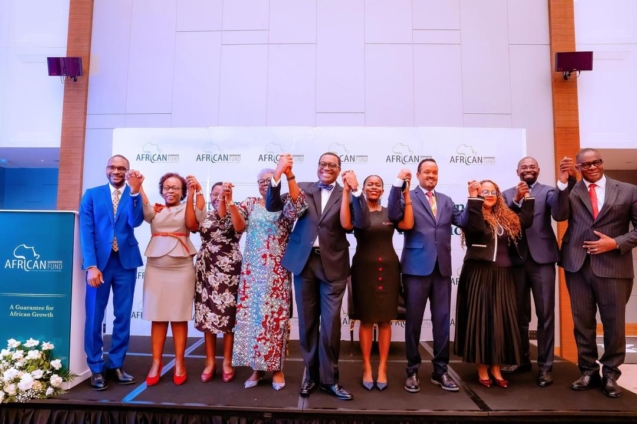
However, speaking at a media cocktail organized on the sidelines of the 59th Annual Meetings of the African Development Bank in Nairobi, Kenya, Dr. Adesina disclosed to reporters that after several years of advocacy and requests to the IMF for reforming the global financial architecture, a new framework has been approved by the IMF Board.
This framework will now allow the African Development Bank Group and other financial institutions to receive more capital from the international reserves.
“I'm pleased that their board approved $20 billion as a limit for the rechanneling towards hybrid capital for use by multilateral development banks, for example and it's just this simple, those SDRs can be leveraged by four times, and that $20 billion will become $80 billion and just tells you the resources you need faster for development”.
The top banker further explained that In collaboration with the Inter-American Development Bank and the IMF, the board approval given by the IMF will serve as a hybrid instrument that will allow the stretching of those SDRS to be able to lend more to developing countries.
Despite these interventions, Dr. Adesina believes that other forms of domestic Resource mobilization must be on the priority list for African governments as he argues that prevention of losses and the efficient use of public funds will yield positive impacts on the economy of Africa.
The 59th annual meeting of the African Development Bank is focusing on “Africa's Transformation, the African Development Bank Group, and the Reform of the Global Financial Architecture” which AfDB believes will create a platform for dialogue on the issues confronting the many African economies while examining the structural reforms required in the International Financial Architecture.
Being the statutory meeting of the African Development Bank, stakeholders are also expected to examine the performance of the Bank in the previous year as it positions itself for a new outlook while making relevant decisions backed by resolutions.
Latest Stories
-
Billionaire Leon Black sues US congressional panel over Epstein subpoena
2 minutes -
Parliament probes child rights challenges in Abuakwa South
6 minutes -
Daily Insight for CEOs: Performance accountability at the executive level
15 minutes -
Parliament’s Human Rights Committee begins four-day visit to Eastern Region
16 minutes -
Cultural diplomacy amid Ghana-SA tensions as South African tourism leaders wear Ghanaian Kente
18 minutes -
GoldBod, EOCO strengthen collaboration to fight gold smuggling
20 minutes -
It is scandalising for Chief Justice to tour, commend state institutions – Alhassan Tampuli
25 minutes -
NAFCO warns public against fraudsters selling school food contracts
25 minutes -
Zanetor Agyeman-Rawlings takes over Environment Ministry
27 minutes -
‘Keep off the arena of politics and allow us politicians to play there’ – Tampuli to CJ
43 minutes -
Putin cites chance of peace deal, Ukraine sees ‘new dynamic’
46 minutes -
Thousands flood Kumasi streets to give Asantehene rousing welcome from USA
49 minutes -
GPRTU, GRTCC request review of public transport fares
55 minutes -
Up to 10% of places in top SHSs reserved for protocol – CSSPS
1 hour -
Sekondi Prisons trains officers in Ghanaian Sign Language
1 hour