

Audio By Carbonatix
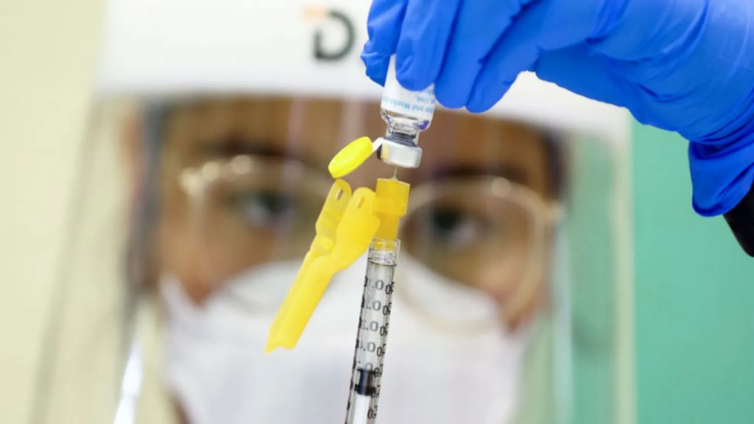
Nigeria has received 10,000 doses of a vaccine to combat mpox, making it the first African country to receive a batch amid the current outbreak of a disease that used to be called monkeypox.
The country began the process to secure the vaccines well before it was declared a global health emergency by the World Health Organization (WHO) earlier this month.
Africa has been hit hardest by the recent rapid spread of mpox - and international agencies have called for a speedier response to such emergencies.
Nigeria - which has confirmed 40 mpox cases this year but says the true number could be more than 700 - received its vaccine doses as a donation from the US.
The West African nation has not recorded any deaths from the virus. It has also not recorded any cases of Clade 1b, a new variant in the east of the Democratic Republic Congo that has also spread to neighbouring countries.
DR Congo, located in central Africa, has recorded more than 18,000 suspected cases of mpox and 615 deaths this year.
There are still no mpox-specific vaccines but smallpox ones work against the disease - and are being manufactured by two pharmaceutical companies.
Nigeria says it will prioritise health workers and at-risk communities in the 13 affected states during the vaccination campaign.
The Africa Centres for Disease Control and Prevention (CDC) estimates that 10 million doses are needed across the continent, with DR Congo being the most in need.
Clade 1b has caused concern among governments, scientists and international health bodies, but it is currently unclear just how deadly and contagious the variant is.
Mpox can be fatal if left untreated and causes symptoms such as fever, muscle aches and lesions across the body.
The process of getting the first jabs to Africa has been slow, with critics saying the WHO's regulatory process poses a major challenge.
Many low- and middle-income countries rely on the WHO, rather than their own drug regulators, to judge which medications are safe and effective.

But the WHO is "painfully risk-averse" and "concerned with a need to protect its trustworthiness", the New York Times recently reported.
Although two years have passed since the onset of the last outbreak driven by the Clade 2 variant prevalent in Nigeria, the WHO has not officially approved the two available vaccines, saying it does not have the data it requires to do a full review.
Professor Helen Rees, an adviser to the WHO and the Africa CDC, told the BBC the WHO's regulation process was "not fit for purpose in an emergency".
She said international health bodies needed to "really look" at how they were conducting approvals when medical products were needed urgently.
Only this month did the WHO ask vaccine manufacturers to register their interest in receiving an emergency licence for mpox jabs. This would allow WHO to fast track its approvals.
That could have begun years ago, numerous public health officials and scientists told news agency Reuters.
WHO is expected to grant its mpox emergency licences in September.
Africa's first 10,000 vaccines went to Nigeria and not DR Congo as a result of an early campaign from Nigerian health officials following the onset of the 2022 outbreak.
At a press conference held in the capital, Abuja, to mark Wednesday's arrival of the vaccines produced by Danish pharmaceutical company Bavarian Nordic, US Ambassador Richard Mills praised Nigeria for “leading a co-ordinated effort to respond to the outbreak before it escalates”.
The US Agency for International Development (USAid) said it had also donated 50,000 doses to DR Congo but a delivery date had not been released.
Although Africa has finally received its first delivery, the delay could have been shorter if a larger number of wealthy countries had donated jabs like the US had done, Ms Rees told the BBC's Newsday programme.
"After 2022 many of the countries that were affected by the [mpox] outbreak… many of them have stockpiles with millions of vaccines collectively stored," she said.
"Those stockpiles are obviously from a country perspective to protect their own citizens. But when you have a global emergency like this, every country should look at its stockpile and say 'can we actually help globally?'"
Latest Stories
-
GNFS contains fire outbreak at Teshie Lekma Road near Lekma Hospital
3 hours -
Samia Nkrumah rejects the narrative that Ghanaians were happy after Nkrumah’s overthrow
4 hours -
A Mother’s pain: Tribute by Ivan Baidoo’s mother
4 hours -
‘Forgive us for staying away’ — Samia Nkrumah leads family back to Nkroful, pledges to preserve Nkrumah’s legacy
5 hours -
Ernest Nuamah scores twice as Lyon beat Rennes
5 hours -
‘My dear Ivan’ – A father’s tribute to a son tragically killed
5 hours -
GNPC Explorco advances Voltaian Basin drilling preparations with 13.5km access road
5 hours -
Cabinet approves facility manager for Borteyman Sports Complex – Kofi Adams
6 hours -
Sanitation is improving; critics may be ‘living in another world’ – Salaga South MP replies Bekwai MP
6 hours -
Government must do more to tackle sanitation crisis – Bekwai MP
6 hours -
World Cleanup Day: GFF begins sanitation education in local communities
6 hours -
EU Ambassador, IGP discuss stronger cooperation on policing and security
6 hours -
Africa Nations Volleyball Championship: Ghana set up quarterfinal clash with Cameroon after beating Chad
6 hours -
Meet Dr Benjamin Appiah Osei — Ghana’s three-time tourism awards winner
7 hours -
UEFA & CONCACAF demand Fifa pays $10m to all 211 members
7 hours