

Audio By Carbonatix
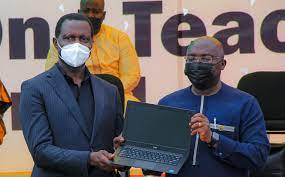
In Ghana, the conversation around quality education is ever-present, and Vice President Bawumia's recent proposal to provide laptops to high school freshmen and sophomores has sparked considerable discussion.
At first glance, this initiative may seem promising, especially in the context of our digital age. Yet, skepticism lingers among many citizens, particularly as this announcement emerges close to election season.
There’s a growing sentiment that such grand promises may not align with past experiences. For instance, the "one teacher, one laptop" initiative faced significant challenges and ultimately did not meet its goals.
If the management of a smaller group proved problematic, one might wonder about the feasibility of extending similar support to a much larger student population.
This pattern of ambitious announcements often leads to disappointment. While the government seeks to capture public attention with bold initiatives, the follow-through tends to lack the necessary substance.
There are critical foundational issues in our education system—like outdated facilities, inadequate resources, and the need for better teacher training—that often go unaddressed in favor of more visible, yet superficial, projects.
The recent laptop initiative appears to be another example of this approach, drawing focus away from pressing issues within our educational framework. Questions arise about the transparency of the procurement process and the logistics involved in distribution.
Such concerns could hint at deeper systemic challenges that may undermine the effectiveness of this program.
Moreover, there’s an ongoing need for solutions that are sustainable and genuinely address the long-term needs of students and educators alike.
Quick fixes, while appealing in the short term, may not contribute to the kind of substantive improvement that Ghanaian students deserve.
As we examine the motivations behind these initiatives, it’s essential to look beyond the headlines. While the prospect of digital tools for education is exciting, the real measure of progress lies in the strategic planning and genuine investment in our schools.
Ghanaians aspire to more than just well-intentioned proposals; they seek actions that lead to meaningful change.
Ultimately, it’s crucial for our leaders to focus on building trust through consistent and effective governance.
The people of Ghana deserve a commitment to deep, lasting reforms that prioritize the needs of students over mere political gains.
It is time to elevate the conversation around education and ensure that initiatives truly reflect a dedication to progress rather than a fleeting spectacle.
Latest Stories
-
Asutifi North Police arrest 7 in crackdown on suspected drug activities
1 second -
Who is Attijariwafa Bank, the Moroccan Group set to take over majority stake in SG Ghana?
4 minutes -
University Librarians Ghana honours past leaders for distinguished service
10 minutes -
Seychelles President leads high-level dialogue on Africa’s digital future at FALS Global Conversations in New York
11 minutes -
24-hour economy requires faster justice for commercial cases – Chief of Staff
18 minutes -
Five Agric Colleges receive digital tools to drive climate-smart farming
22 minutes -
GPL 2026/27: Kotoko face Karela test as Hamza Obeng takes temporary charge
42 minutes -
Morocco strike late to overcome 10-man Black Starlets
1 hour -
Nyaho-Tamakloe calls on Kurt Okraku to resign amid Black Stars struggles
1 hour -
Societe Generale Group agrees to sell Ghana subsidiary to Attijariwafa Bank
1 hour -
Accra: Fire breaks out in North Industrial Area at Avenor
1 hour -
Measure food systems progress not only by productivity but also ability to deliver healthy diets – AGRA
2 hours -
Black Stars: Seven years of decline while hashtagging love
2 hours -
Today’s front pages: Thursday, October 1, 2026
2 hours -
Gov’t to suspend GH¢1 D-Levy on diesel for October and November
2 hours