

Audio By Carbonatix
The Ghana Health Service (GHS) has called for local resource mobilization and empowerment of indigenous pharmaceutical companies to produce medications for the treatment of Neglected Tropical Diseases (NTDs) in Ghana.
Dr Joseph Kwadwo Larbi Opare, Programme Manager of the NTD Programme at GHS, said there was a need for local resources to support the treatment of NTDs, especially as international funding may eventually cease.
In an interview with the Ghana News Agency (GNA), Dr. Opare explained that the NTD programme had historically lacked local support, particularly in the Mass Drug Administration (MDA).
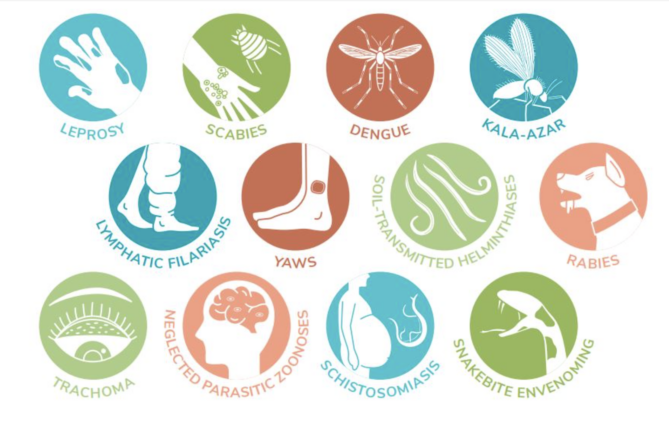
NTDs are a diverse group of 21 health conditions caused by viruses, bacteria, parasites, fungi, and toxins.
Some of these diseases cause severe disfigurement or blindness (as seen in onchocerciasis), leading to significant disability, stigma, and poverty in affected individuals.
These diseases are primarily found in poor communities, where they contribute to a cycle of poverty.
According to the World Health Organization (WHO), over one billion people globally suffer from NTDs, and Ghana is endemic for 14 out of the 21 conditions.
Over the past two decades, the NTD programme has made significant progress, particularly through Mass Drug Administration.
Some diseases have been eliminated, and their prevalence has reduced.
Currently, Lymphatic filariasis infection transmission is found in three districts—Ellembelle, Nkoranzah South, and Wenchi—out of 116 districts, while Onchocerciasis remains endemic in 142 districts.
Dr. Opare stated that while donors currently provide medicines like Praziquantel, Ivermectin, and Albendazole free of charge, Ghana should work towards locally supporting these efforts, as the continuation of donor funding was uncertain.
He stressed the need for local resource mobilization and ownership, which would enable pharmaceutical companies in Ghana to produce these medicines locally.
Dr. Opare acknowledged that while there has been progress in recent years, many challenges remained.
“We are not done yet. We have challenges with what we are doing. The major challenge is local support for mass drug administration and volunteers’ motivation,” he said.
Dr. Opare advocated for the registration of NTD patients under the National Health Insurance Scheme (NHIS) to ensure they received free treatment and had better access to necessary healthcare services.
“Many affected persons stay in their house with their condition, hide from everybody and come out in the worst condition. So, when you suspect you have big legs, go to the health facility for treatment,” he added.
Dr. Opare expressed concern that many individuals affected by NTDs were neglected and heavily stigmatized, which forced them to stay at home due to financial constraints and their remote locations.
He said that the cost of hospital visits and treatment was often unaffordable for them, making it difficult for them to seek help.
Many affected individuals do not seek treatment early enough, which worsened their condition.
“With onchocerciasis, there is intense itching of the skin, and there can be visual impairment. So, when you experience this condition, do not stay in the house, go to the hospital.
Dr. Opare said that most NTDs could be prevented through mass drug administration.
He said that the goal of the programme was to reduce the prevalence of neglected tropical diseases in Ghana to a level where they no longer posed a public health threat.
Latest Stories
-
Restaurant portions, surplus food worsening Ghana’s food waste problem — Food Scientist
13 seconds -
NPP extends 2026 National Officers Elections filing deadline to August 29
7 minutes -
NDC has not shown it can manage power sector effectively — Fiifi Boafo
11 minutes -
Ghana secured US$2.6bn FDIs in 2025 – GIPC Report
12 minutes -
GRIDCo restores power nationwide after August 20 blackout, says grid strengthening measures ongoing
25 minutes -
Journalism must prioritise public interest over attention — Kwesi Pratt
1 hour -
Ghana Mineworkers Union demand suspension of contract mining directive, threaten industrial action
1 hour -
ADB Ghana Medicals constructing and equipping new Cardiothoracic Centre at Komfo Anokye
2 hours -
AFREIKH Summer School challenges Africa to harness critical minerals
2 hours -
Government plans 2,000-acre pharmaceutical innovation park in Osudoku to boost local drug production
2 hours -
Partey undergoes medical ahead of Al Shabab move in Saudi Arabia
2 hours -
Today’s front pages: Friday, August 21, 2026
2 hours -
Power outages could drive up cost of digital services — NITA
2 hours -
Patients face basic sanitation gaps in West African health facilities — WHO / UNICEF
2 hours -
Competence has no age; let’s stop punishing new businesses
3 hours