

Audio By Carbonatix
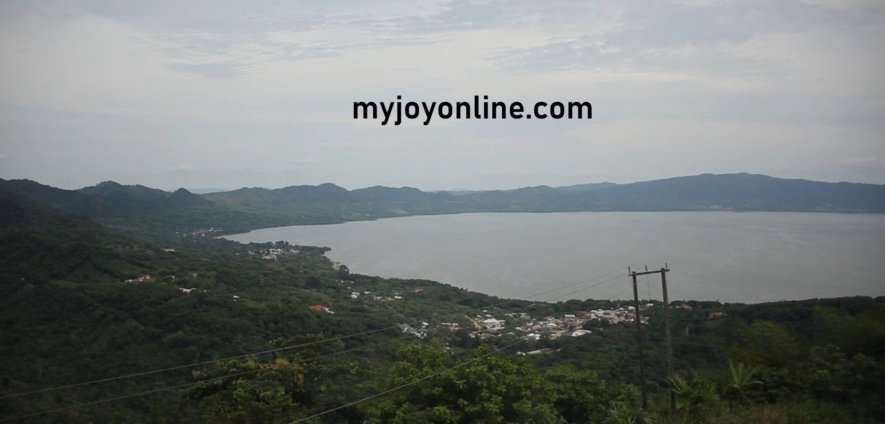
Some scientists at the University of Energy and Natural Resources have appealed to the Asantehene to declare a 'state of emergency' over Lake Bosomtwe, as human activities lead to the drying up of the biggest natural lake in West Africa.
A study by the local scientists and their foreign counterparts from three institutions has discovered that the lake has receded more than 100 metres over a 20-year period.
This means the lake that has turned warm is not only putting aquatic lives in danger but has also lost almost 2 football pitches of its original size.
Believed to have been formed by a falling meteorite some 1.2 million years ago, Lake Bosomtwe measures about 8 kilometres in diameter, covering a surface area of about 52 square kilometres.
But over time, the lake has seen its depth decrease from 800 metres to 78 metres maximum, with the surface area reduced from 52 kilometres in 1986 to 46 kilometres in 2020.
Scientists from the University of Energy and Natural Resources (UENR), the University of Ghana, and two other foreign institutions supported by Danish Development Agency - Danida – have spent 20 years researching developments on the lake.
The “Building Resilience of Lake Bosomtwe to Climate Change" (RELAB) project also discovered fish stocks have, over the years, reduced, resulting in few catches for communities along the lake whose mainstay is fishing.
This development is blamed on the impact of climate change and human activities such as harmful farming practices and human settlement developments.

Dr Peter Sanful, the project coordinator, is shocked to see the lake recede more than 10 metres in less than 5 months.
“In November I visited this same site for some field works and all this area was covered with water. All this area was covered by water. We did some sampling; they were covered by water. This platform, this wooden platform was in the water. But in 5-months, all this water is gone.”
Traditional authorities who attended a meeting with the scientists were shocked to learn of the recession of the lake.
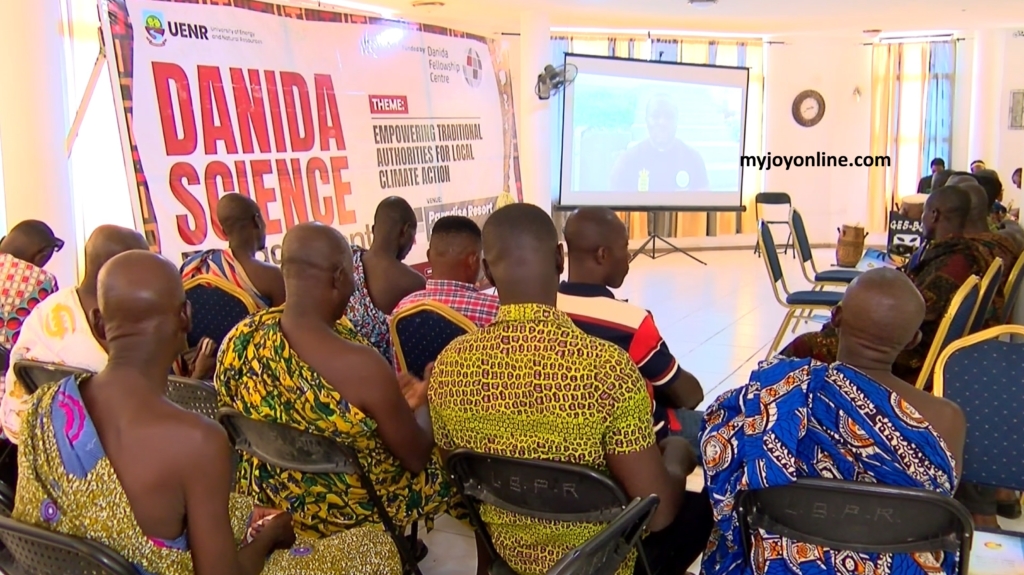
Traditional authorities from Bosomtwe and Bosome Freho at a dissemination meeting of the RELAB project
Benkumhene of Ogbo, one of the 22 communities surrounding Lake Bosomtwe, put the recession of the lake partly at the doorsteps of some traditional leaders and residents close to the dam.
Nana Adomako Pemsan, who is equally surprised at the rate of recession of the lake, believes destruction of buffer zones by private developers in the name of development and practices by residents which until now were banned are to be blamed.
“Growing up, around the lake, there was no development around the lake. You could see only two or three hotels around probably around all the 22 communities. So all these areas were forests. We were doing farming on the mountains. But these days, you could see a whole lot of development going on around the banks of the lake which was not like that. So these forests that were protecting the lake are all gone.”
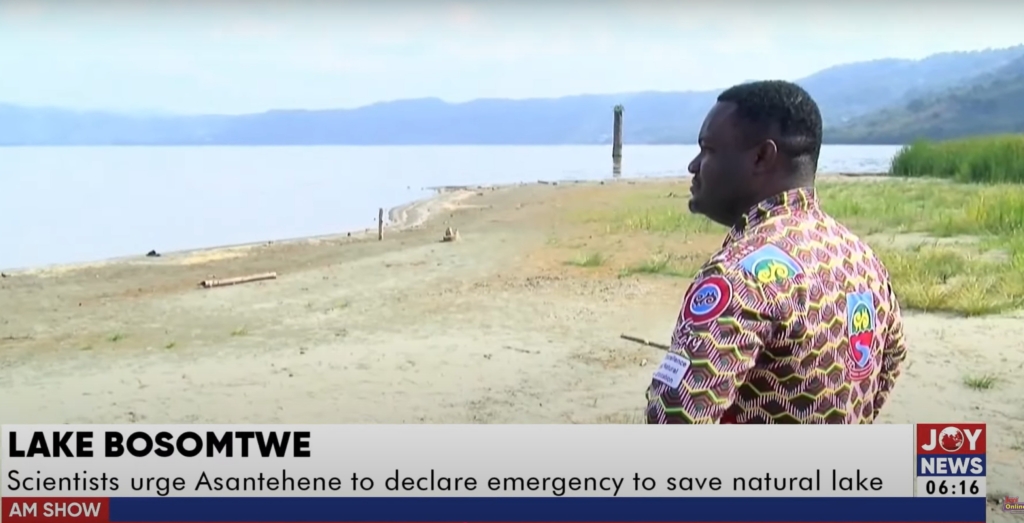
Dr Peter Sanful is shocked at the rate of the lake's recession
Speaking at a dissemination meeting of the project for authorities from Bosomtwe and Bosome Freho, Dr Sanful said it is time for the Asantehene, Otumfuo Osei Tutu II, to take urgent action to put a halt to human activities that endanger Lake Bosomtwe.
“If you look at the repercussions of climate change, how rapidly the lake is receding, how distressed the local communities are and are struggling to cope with the worsening situation through indiscriminate land use practices; intensification of agriculture, indiscriminate building activities and non-compliance to bye-laws, you can clearly see that the lake is heading towards a collapse.”
“As a national asset and also the lake that is important to the Ashanti people, just like Galamsey and any other environmental problem that the nation is grappling with, I think that we need to extend the same level of seriousness to the lake. That’s why in my remarks, I made a call for His Majesty Otumfuo Osei Tutu to consider declaring a state of emergency over the Lake Bosomtwe so that we can bring all stakeholders on board to take a radical action to address the complexity and gravity of issues within the Lake Bosomtwe”.
The RELAB project is based on Goal 2 of the Sustainable Development Goals of the United Nations. It envisions the world could end hunger whilst achieving food security, improving nutrition, and promoting agriculture.
Latest Stories
-
Ghanaian filmmakers urged to tell local stories and take them to the world
3 minutes -
Educated but unable to communicate? The missing link in Ghana’s University education
6 minutes -
Informant demanded $20 million from NACOC for information on major drug consignment – Muntaka
12 minutes -
Gov’t introduces mental health and drug tests for security recruits amid suicide concerns – Interior Minister
12 minutes -
DVLA generates GH¢27.14m from dealer plates between January and September 2026
16 minutes -
DVLA registers over 7,700 excavators in Ghana under new tracking initiative
20 minutes -
DVLA introduces six Ghanaian languages for driving theory tests
21 minutes -
DVLA prints 440,000 licences to clear backlog dating to 2023
21 minutes -
Yagaba chief calls for sanitation officers as Mamprugu Moagduri prepares to enforce bylaws
23 minutes -
One Million Coders programme shifts focus to third- and final-year university students
28 minutes -
Former EC Finance Director and KNUST Law Lecturer Dr Joseph Kwaku Asamoah appointed Deputy Chair
46 minutes -
Ashanti cocoa farmers welcome new COCOBOD Act
50 minutes -
Muntaka vows not to compromise in prosecuting drug suspects despite political pressure
2 hours -
Cannabis traffickers using ambulances and bullion vans – Interior Minister
2 hours -
Over 90% of people displaced by Savannah conflict back home – Muntaka
2 hours