

Audio By Carbonatix
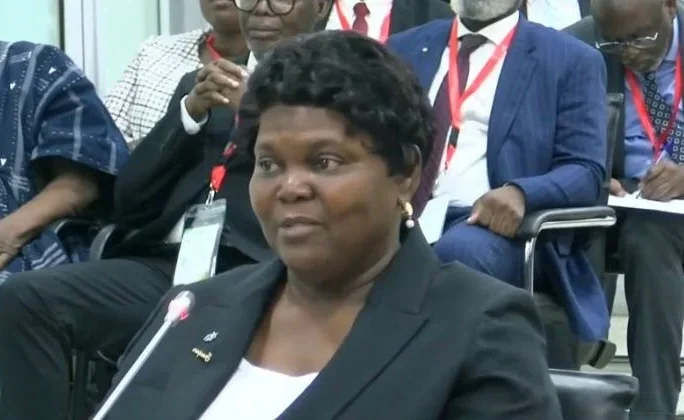
Supreme Court judge nominee Justice Janapare Adzua Bartels-Kodwo has weighed in on the contentious disparity between Ghana's age of sexual consent and the legal age for marriage, proposing that robust education for the girl child serves as a "natural contraceptive" against the challenges arising from this legal gap.
The insightful comments of the Court of Appeal judge came to light during her vetting before Parliament's Appointments Committee on Tuesday, June 17, 2025.
Responding to questions about the legal inconsistency, where a 16-year-old can legally consent to sexual activity but not marry, Justice Bartels-Kodwo, one of only two females nominated by President John Damani Mahama to the Supreme Court, acknowledged the long-standing nature of the problem, recalling that "this gap was even bigger when I was a junior judge."
"It has to do with the law, and it has to do with morality," she observed, highlighting the difficulty in legislating purely moral issues.
She underscored the inherent dangers of the current situation: "If somebody can have sex at 16 but cannot marry, what is the whole point? All the dangers are there."
Instead of solely relying on legislative adjustments to close the gap, Justice Bartels-Kodwo advocated for a societal shift driven by education.
"I think education is a natural contraceptive," she declared.
She explained her reasoning: "The longer the girl child stays in school, the longer it will get to the point of settling down to have a family."
Her vision for education extends beyond formal academic pursuits.
"It doesn't mean that I'm not saying that everybody should go to school and become a judge or a doctor or a lawyer or something, but even if a girl child grows up to become a young lady, she has to do some training to learn cookery or sewing; all those are training times and they keep you rooted and focused," she elaborated.
Justice Bartels-Kodwo expressed scepticism that merely adjusting the legal age through legislation would resolve the issue.
"If we move the gap and we even make it 18, 21, I am sure we'll come back and have the same conversation. So, you cannot keep on legislating," she stressed.
She called for a broad societal effort focused on sensitisation and education, targeting families, brothers, uncles, teachers, and granduncles.
The core message, she emphasised, is: "We must leave the girl child to grow up and become the woman that we expect them to be."
Justice Bartels-Kodwo's comments offer a nuanced perspective on a sensitive legal and social issue, suggesting that while law has its place, comprehensive societal education and cultural change are paramount in protecting young girls and guiding them towards a more secure future. Her vetting continues before the Appointments Committee.
Latest Stories
-
Joseph Kobinah Esibu elected NPP Central Regional Chairman
6 minutes -
Fernandez booed by Chelsea fans as Alonso offers glimpse of blueprint
13 minutes -
PSG sign World Cup winner Torres from Barcelona
21 minutes -
Odeneho Kwaku Appiah beats former EPA boss Kokofu, to emerge NPP Ashanti chair
25 minutes -
TDC defends statutory mandate, says its authority to develop Tema predates TMA
27 minutes -
Ignatius Kwesi Afrifa elected NPP Western Regional Chairman
31 minutes -
Galamsey will be a key issue for NPP’s 2028 campaign – Annoh-Dompreh
37 minutes -
Makafui Woanyah retains NPP Volta Regional Chairmanship
41 minutes -
Ghana Law Society announces maiden annual Bar conference for September 30
44 minutes -
Abronye DC retains NPP Bono East Regional chairmanship
59 minutes -
NSMQ 2026: Check out the 147 schools battling in 49 preliminary contests
1 hour -
NPP rebuilding to reclaim parliamentary seats lost in 2024 – Annoh-Dompreh
1 hour -
GoldBod has not made GH₵1.7bn loss – Prof Ebo Turkson
2 hours -
Legal vacation trials involving politicians raise fair play concerns – Baffour Awuah
2 hours -
‘It should have been negotiated’ – Dafeamekpor on lawyers’ dispute with CJ over vacation hearings
2 hours