

Audio By Carbonatix
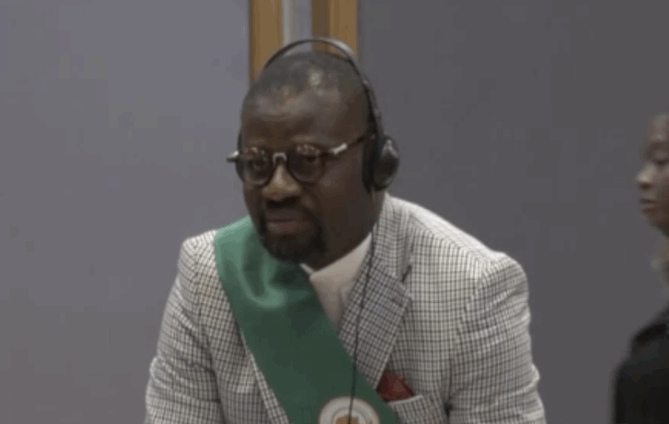
Minority Chief Whip Frank Annoh-Dompreh says the Pan-African Parliament’s discussion of a Model Law on factory marks a powerful turning point in Africa’s economic narrative, if it goes beyond rhetoric.
The Nsawam Adogyiri MP urged his colleague lawmakers to let their countries take full advantage of existing frameworks like the Africa Continental Free Trade Area (AfCFTA).
“Mr President, on the Model Law on factory, let me commend you highly,” Annoh-Dompreh began.
“I’m sure our torch-bearers today will be shaking in their graves. Kwame Nkrumah, Robert Mugabe, Julius Nyerere, all of them will be shaking in their graves that the very views and vision of the continent is beginning to find expression in our fundamental narratives as a continent.”
He hailed the very idea of the model law as historic.
“So for PAP to be talking about Model Law on factory, my day is made, and I feel proud as a son of the soil,” he said.
But he warned that leaving out the AfCFTA would be a major omission.
“Ghana is proud that we are hosts to the African Continental Free Trade Area. We cannot talk about the Model Law on factory without the input or bringing in work on the relevance and the importance of the continental free trade area.
"At least, it’s one of the biggest Free Trade Agreements, after the WTO, and we as a continent moving forward should find a way we can appropriate this into our forward march.”
He urged the Parliament not to repeat historical missteps by ignoring foundational principles.
“Market sources are all important. We’ve also read about the Marshall Plan, what the World Bank and the IMF had done to Europe when Europe was zeroed down. We don’t need to reinvent the wheel.”
“The question is: this concept of Model Law on factory, what are we fashioning it on? Are there best practices? Of course, I concede that we may have a unique challenge.
"But are there best practices globally that we can fashion on — concept of market sourcing, concept of branding, banks, and SMEs? These are fundamental rules of origin, and these are fundamentals that we need to agree on.”
He also stressed the importance of making the law practical, not symbolic.
“Now this model law, Mr. Speaker, as you do know, is rather going to be a persuasive law passed. However, when it is persuasive, then we must also up our activity in terms of convincing member states to buy into the concept and also adopt it. So that it doesn’t become one of the laws that we pass, and it’ll get dusty on shelves.”
Latest Stories
-
Muzic Mensah selected for Boomplay’s inaugural ‘NEXT WAVE’ Programme
4 hours -
Prime Insight to tackle legal vacation controversy and $1million AKSA bribery case
4 hours -
Ghanaian evacuee from South Africa dies on arrival in Accra
5 hours -
POS Foundation raises alarm over student cohabitation, sexual harassment on university campuses
6 hours -
Nandom NPP primary heats up as four candidates enter 2028 race
6 hours -
Mangione admits killing healthcare CEO and pleads guilty to federal charges
6 hours -
The Invite to The Odyssey: 12 of the best films of 2026 so far
6 hours -
Ayra Starr on her secret relationship and teasing Stevie Wonder
6 hours -
NPP Ashanti holds vigil in support of Wontumi as lawyers appeal conviction
6 hours -
TCDA targets higher crop yields as farmers receive inputs
6 hours -
Kofi Amoako Attah inducted into 11th Corporate Ghana Hall of Fame
7 hours -
Newsfile to discuss AKSA energy deal, legal vacation and GoldBod losses
7 hours -
Gushegu MCE says slain Yiidana was targeted as police investigate killing of chief and son
7 hours -
President Mahama reiterates commitment to link regional capitals with good roads
7 hours -
Ex-Cambridge professor at centre of plagiarism row found dead
8 hours