

Audio By Carbonatix
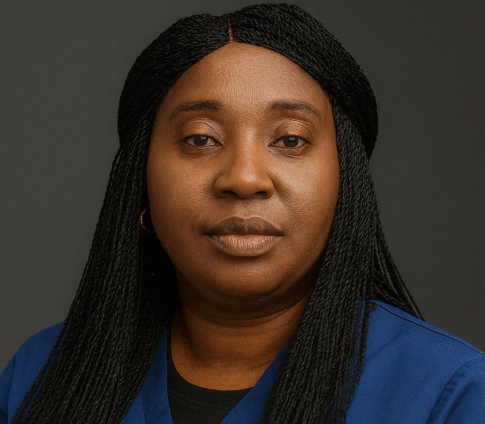
Mrs Christianah Oluwabunmi Ayodele, a celebrated U.S.-based Nigerian nurse and fellow of the National Institute of Professional Engineers and Scientists (NIPES), has discussed her trailblazing career and her perspectives on emerging specialisations in nursing.
Mrs Ayodele, who is licensed to practice in Nigeria and the United States, has played a pivotal role in clinical and public health advancement in Africa.
In this enlightening conversation, she shares her journey and her thoughts on the future of nursing in a virtual interview session, titled “Emerging Specialisations: Nurse Practitioners, Informatics, Geriatrics.” The discussion attracted health professionals, educators, and policymakers from across West Africa and the United States.
With a career spanning more than twenty years, Mrs. Ayodele’s credentials are impressive by every standard. She has worked at renowned state medical centres such as Lagos State University Teaching Hospital and UNIOSUN Teaching Hospital. Her leadership roles, ranging from perioperative nursing in complex procedures like kidney transplants to spearheading rural health system reforms, set her apart as a global force for healthcare excellence.
During the interview, Mrs. Ayodele highlighted the urgent need for nurses to embrace advanced specialisations.
“The future of healthcare is multidisciplinary and technology-driven. Specialisations such as nurse practitioners, informatics, and geriatrics not only broaden the scope of nursing but directly address the pressing shortages in expert care for ageing populations, digital health solutions, and advanced clinical practice,” she noted. Drawing from her own career, she stressed the transformational impact that nurse practitioners can have by forging direct, primary-care relationships in both urban and rural communities.
When asked how the new fields like nurse practitioner roles, informatics, and geriatrics are shaping the future of healthcare, she explained that, “Nursing is evolving rapidly. Nurse practitioners, for example, fill critical gaps in primary care, manage patient loads, especially in underserved communities, and deliver preventative care. Informatics is transforming how we use data for patient safety and decision-making; it’s essential for nurses to be tech-savvy and leverage digital tools.
As for geriatrics, it’s becoming increasingly vital: with ageing populations in both Africa and the diaspora, specialised geriatric nurses are essential for complex, compassionate eldercare. Embracing these specialisations allows nurses to expand their impact, lead interdisciplinary teams, and respond dynamically to healthcare trends.
MJO: What message do you have for young nurses and policymakers seeking to innovate within healthcare?
CA: Remain passionate, adaptable, and committed to lifelong learning. Don’t limit yourself to traditional roles; explore technology, policy, community practice, and research. For policymakers, investing in nursing specialisations pays off in better patient outcomes and system resilience. Ultimately, nurses are frontline innovators and community change agents—we must be empowered and prepared to lead.
In the fast-evolving field of nursing informatics, Mrs. Ayodele emphasised the crucial role of data and technology in patient safety and health system strengthening. “From digital documentation to predictive analytics, informatics empowers nurses to deliver safer and more efficient care. In the wake of pandemics and global health crises, investing in informatics is now non-negotiable for both African and international health institutions,” she remarked. Her insights were particularly relevant for young nurses and health workers seeking to upskill and stay competitive in a tech-driven era.
In discussing geriatrics, Mrs. Ayodele pointed to the demographic shifts happening not just in the West but increasingly across Africa. “Our ageing populations deserve compassionate, expert care. Geriatric nursing is not just a specialisation—it is a calling and a public health imperative,” she said, citing her own leadership in launching community-based eldercare initiatives, which have dramatically improved health outcomes in resource-limited settings.
The interview closed with a Q&A in which Mrs. Ayodele urged healthcare policymakers to invest in nurse education, interdisciplinary mentorship, and global research exchanges. “I am honoured to be a bridge between continents and to demonstrate what is possible when nurses pursue leadership, research, and advanced practice on the world stage,” she concluded.
Her story exemplifies the extraordinary heights that African nurses can attain through dedication, continuous learning, and a commitment to global health transformation.
Latest Stories
-
SSNIT says La Beach clearance was to protect hotel investments, beaches to remain public
33 minutes -
APSU congratulates St Augustine’s College after back-to-back National Investment Quiz wins
37 minutes -
Renewed flood intervention at Mallam Junction raises hopes among residents, businesses
1 hour -
St Augustine’s College retain National Investment Quiz title after nail-biting grand finale
1 hour -
Education infrastructure investment will drive Banda’s development – Ahmed Ibrahim
2 hours -
Teacher unions strike: Gov’t presents fresh proposals as talks end inconclusively
2 hours -
51,000 teachers’ promotion arrears to be validated for October payment – Education Minister
3 hours -
Kwabena Boamah appointed Board Chair for Impact Investing Ghana
3 hours -
Striking teacher unions to meet Fair Wages and Salaries Commission on October 6
3 hours -
EOCO working with AG to arraign Nana Baffour Awuah before weekend court
3 hours -
Duraplast reassures customers after fire, announces October 5 reopening
3 hours -
Call off strike, gov’t will not renege on promotion arrears pledge – Haruna Iddrisu to teacher unions
3 hours -
Committee set up to validate teachers eligible for 20% deprived-area allowance – Education Minister
3 hours -
Five-member committee to search for new Black Stars coach after Sports Ministry-GFA meeting
4 hours -
Pinktober: Breast cancer survival exceeds 90% when detected early – Breast Society of Ghana
4 hours