

Audio By Carbonatix
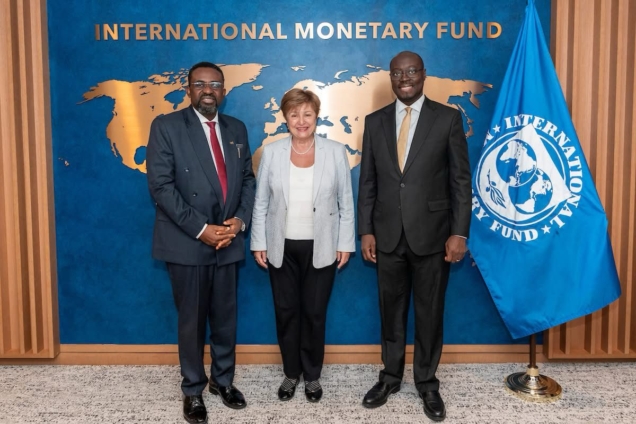
The International Monetary Fund (IMF) will today, September 29, begin its fifth review of Ghana’s performance under the Fund Programme.
The full team, led by Mission Chief Stéphane Roudet, arrived in Accra over the weekend. The team will be in the country for two weeks, engaging the technical staff of the Ministry of Finance and the Bank of Ghana.
They will also meet the Governor of the Bank of Ghana, Dr Johnson Asiama, and the Minister of Finance, Dr Ato Forson.
Sources tell Joy Business that unresolved arrears clearance issues will be a key focus. Government is yet to finalise its audit on how much was spent on construction and projects last year.
Concerns are also expected about whether the Bank of Ghana’s recent policy rate cuts are adequate given the sharp fall in inflation, as well as questions on its reserve build-up and dollar interventions.
This review is the penultimate one before Ghana concludes the IMF programme in May 2026.
The final review is scheduled for April 2026. Analysts describe the current review as crucial, warning that Ghana may struggle to maintain fiscal discipline once the programme ends.
Some donor partners are therefore pushing for “shock absorbers” to ensure stability beyond the programme.
Government insists there is no cause for alarm. It maintains that measures are already in place to ensure markets of disciplined expenditure after the IMF exit.
If Ghana passes this review, it is expected to receive about $360 million in October 2025. The country has so far received about $2.3 billion since signing the programme.
Joy Business understands the review will assess Ghana’s economic data up to June 2025. Discussions will focus on inflation trends, reserve sustainability, arrears audits, weak private banks requiring recapitalisation, the state of state-owned banks, revenue shortfalls, arrears build-up in statutory funds, and gaps in social spending.
The IMF Executive Board approved Ghana’s $3 billion Extended Credit Facility in May 2023.
The programme aimed to restore fiscal sustainability through revenue mobilisation and efficient spending, protect the vulnerable, implement structural reforms in tax and energy, and preserve financial stability.
It also sought to curb inflation, rebuild reserves under a flexible exchange rate regime, and create conditions for private investment, growth, and jobs.
Latest Stories
-
Sista Afia reveals fears about becoming a single mother
29 seconds -
Gov’t 24-Hour Economy markets programme is an afterthought – Minority
2 minutes -
Minority wants traders, residents heard before 24-Hour Market projects
2 minutes -
Minority demands review of 24-Hour Market programme over ‘poor planning’
4 minutes -
GIPS calls for strategic procurement to drive inclusive industrial growth
6 minutes -
Ato Forson leads NDC 2028 flagbearer poll with 32% support – Global InfoAnalytics
9 minutes -
Daily Insight for CEOs: The CEO’s role in building leadership capability
14 minutes -
AG to introduce Legal Practitioners Standard Board Bill in Parliament
23 minutes -
AG proposes Bar Welfare Fund to provide social protection for lawyers
27 minutes -
No conditions attached: Rethinking Ghana’s duty of care for citizens in crisis abroad
29 minutes -
GES opens applications for non-teaching staff promotion; here’s who qualifies
43 minutes -
What Is Wrong With Us: We fly halfway around the world to admire discipline, then fly home to tolerate chaos
45 minutes -
Discipline must not become abuse in raising children – ARK Foundation
52 minutes -
Photos: Culture, technology and cuisine take centre stage at Russia’s youth festival
53 minutes -
‘Who approved Laboma structures?’ – Victoria Bright calls for review of permitting system
59 minutes