

Audio By Carbonatix
The International Monetary Fund (IMF) says it remains optimistic about Ghana’s economic outlook as the country prepares to exit its current programme in August 2026, but cautions that sustaining fiscal discipline will be critical to preserving recent gains.
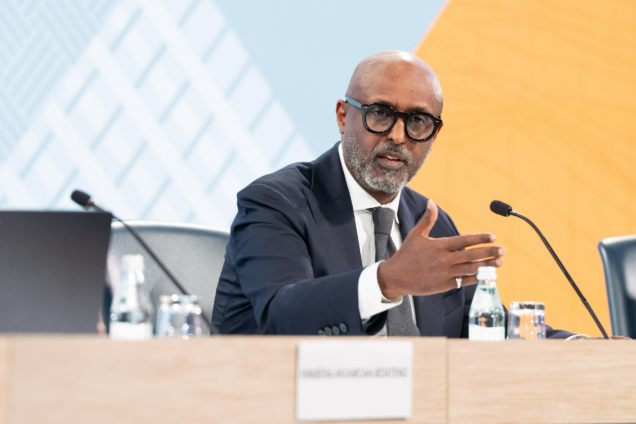
Speaking to JoyBusiness in Washington, D.C., during the release of the Africa Economic Outlook, Abebe Aemro Selassie, Director of the IMF’s Africa Department, said the Fund is encouraged by the structural reforms implemented over the past three years.
“We are encouraged by the reforms Ghana has undertaken and how these will shape the economy when the programme ends,” he noted, adding that the country has made significant progress compared to where it stood prior to the programme.
Addressing concerns about the sustainability of Ghana’s current macroeconomic stability, Mr. Selassie stressed the importance of maintaining a careful balance between development spending and fiscal prudence.
“It is critical to ensure a continued balance between addressing development needs and avoiding a return to the sustainability challenges that necessitated the programme,” he explained.
On what safeguards have been put in place to prevent a relapse, Mr Selassie emphasised that responsibility ultimately lies with domestic stakeholders.
“This is for the people of Ghana, the government, the private sector, and civil society. It is not for the IMF,” he said, while expressing hope that lessons from the recent past will guide future policy decisions.
IMF Considers Support for Countries Hit by Middle East Crisis
Meanwhile, IMF Managing Director Kristalina Georgieva has disclosed that the Fund is considering a support package of between $20 billion and $50 billion to assist countries affected by ongoing developments in the Middle East.
Speaking at the launch of the Global Policy Agenda on the sidelines of the IMF/World Bank Spring Meetings, she noted that early assessments indicate that African and other low-income countries are among the hardest hit.
Providing further details, Mr Selassie explained that discussions are ongoing on how best to support affected countries, particularly those requesting financial assistance.
“We are exploring options to provide additional financing through existing instruments or by rephasing access under current programmes,” he said, adding that new programme requests are also being considered.
Ghana’s IMF Programme
Ghana secured a $3 billion Extended Credit Facility (ECF) programme with the IMF in May 2023 to stabilise the economy.
So far, the country has received approximately $2.8 billion following the successful completion of the fifth programme review.
The IMF has described Ghana’s programme implementation as broadly satisfactory, noting that all end-June 2025 performance criteria and indicative targets were met during its recent assessment.
Three prior actions required for the fifth review were also completed, including:
- An audit of 2024 payables
- Cleansing of the taxpayer registry and ledger data
- Submission of the 2026 budget to Parliament in line with programme objectives
The Fund also reported progress on previously missed structural benchmarks. Notably, the strategy for state-owned banks—initially due in April 2024—was eventually implemented in September 2025.
Out of eleven structural benchmarks under the current review:
- Four were met
- Two were implemented with delays
- One was completed as a prior action
- One is expected to be implemented by December 2025
- Three were missed
Programme Extension to August 2026
In its latest staff report, the IMF announced a three-month extension of Ghana’s ECF programme—from May to August 2026—to allow completion of the sixth and final review.
According to the Fund, the extension will provide sufficient time to finalise policy discussions and prepare Board documentation.
“The extension through August 16, 2026, will help reach an understanding on policies supporting completion of the sixth review,” the report noted.
IMF Resident Representative to Ghana, Dr Adrian Alter, later clarified in an interview with JoyBusiness that the extension is purely technical.
He explained that the additional time is needed to assess full-year 2025 data and first-quarter 2026 outcomes as part of the final programme review.
Latest Stories
-
International Day of the Girl: Central Region Education Directorate calls for action to tackle child marriage, teenage pregnancy
6 minutes -
The Eyes of Ghana: iShowSpeed joins Obamas as producers of Chris Hesse documentary
17 minutes -
FirstBank Ghana pledges action on customer feedback at service week forum
48 minutes -
Sahara Group urges journalists to look beyond fuel prices in energy reporting
56 minutes -
Today’s front pages: Friday, October 16, 2026
1 hour -
Ashanti Region: ECG urges customer cooperation with franchise officers
1 hour -
Ghana’s research fund faces a test of turning funding promises into scientific breakthroughs
1 hour -
Dîner en Blanc Accra returns on December 28 for second edition
1 hour -
20% digital tax: Government hiding behind technicalities to cheat Ghanaians – Dr Boako
2 hours -
David Selassie Anthony declares bid for NDC Deputy National Organiser
3 hours -
Amin Adam proposes 13 measures to strengthen Ghana’s debt transparency and market confidence
3 hours -
Mahama announces $2bn annual investment to accelerate industrialisation
3 hours -
Amin Adam urges monthly disclosure of Sinking Fund as Ghana prepares for DDEP repayments
3 hours -
Stronger banks will fuel business growth and jobs – ADB MD
3 hours -
Galamsey: ‘Rivers that fed our grandparents now run the colour of chocolate milk’ – Sam Jonah
4 hours