

Audio By Carbonatix
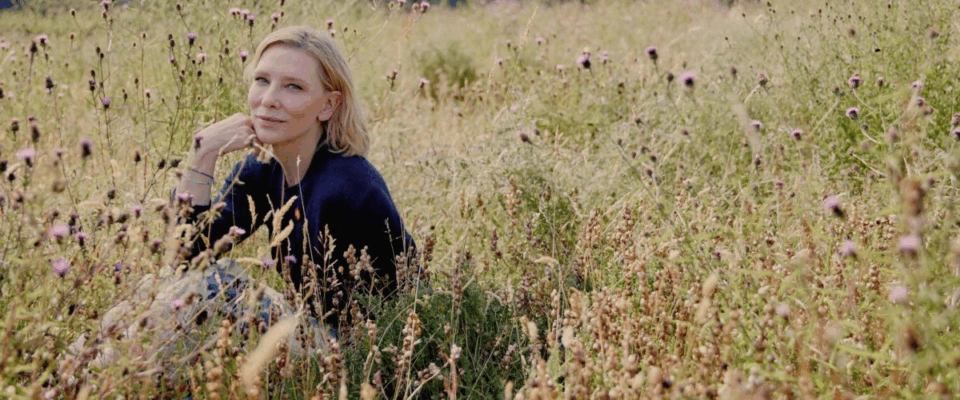
She's a Hollywood A-lister, with a mantelpiece groaning under the weight of awards. But Cate Blanchett has taken an unexpected diversion from her day job to immerse herself in the world of the humble seed.
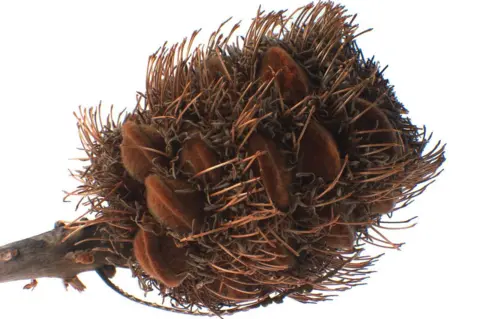
Her eyes light up as she enthuses about the banksia species from her native Australia.
"It's quite a brutal-looking seed pod that only releases its seed in extremely high temperatures," she tells us.
"It does look like a cross between a mallet and a toilet brush. So they're not always pretty, but what comes out of them is so spectacular."
We meet her at Kew's Millennium Seed Bank (MSB) at Wakehurst Botanic Garden in Sussex. She lives locally and teamed up with the project as it celebrates its 25th anniversary.
"Really, I stumbled upon Wakehurst. I was just in awe of the landscape, and I always feel regenerated by being in the natural world," she says.
"And then I discovered the seed bank, and I literally had my mind blown by the work that goes on here… and I thought, anything I can do to be connected to it - I found it so inspiring."
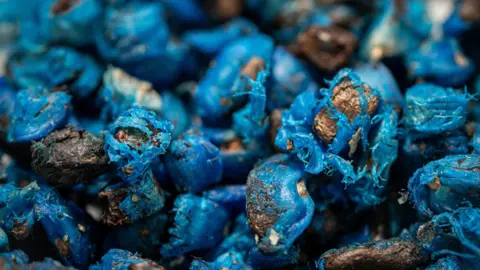
The MSB is home to more than 2.5 billion seeds collected from 40,000 wild plant species around the world.
The seeds, which come in every shape, size and colour, are carefully processed, dried and then stored in freezers at a chilly -20 °C.
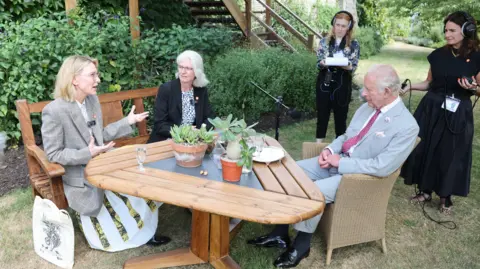
The conservation project was opened by The King - then the Prince of Wales - in 2000. He's taken part in a special episode of a Kew podcast about the project called Unearthed: The Need For Seeds with Cate Blanchett.
In the recording he talks about his concerns that many plant species are being lost.
"I know how absolutely critical it all is, and the destruction of rainforests, the extinction of endless species, which have very likely remarkable properties," he tells the podcast.
When the seed bank first opened, it was seen as a doomsday vault - a back-up store of seeds to safeguard wild plants from extinction.
But 25 years on, the collection is being used for a different purpose: to restore environments that are under threat.
"We want those seeds to be back out in the landscape," explained Dr Elinor Breman from the MSB, who's been showing Cate Blanchett the team's work.
"We're just providing a safe space for them until we can get them back out into a habitat where they can thrive and survive."
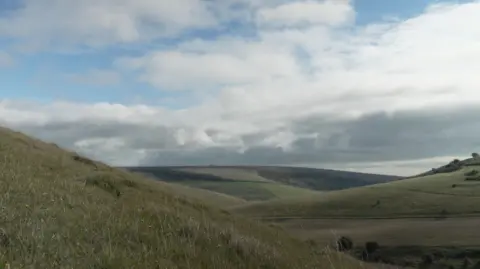
This includes projects like one taking place on the South Downs. A special mix of seeds from the MSB are being sown to help restore the rare chalk grasslands there.
And this restoration work is being repeated around the world.
"We've been to every kind of habitat, from sea level to about 5,000m, and from pole to pole - literally," explained Dr Breman.
"And we're involved in restoring tropical forest, dry deciduous forest, grassland, steppe - you name it - we're trying to help people put those plants back in place."
The seed bank also helped to restore plants after intense wildfires swept across Australia in 2019. Cate Blanchett says this meant a lot to her.
"There are almost 9,000 species of Australian plant that are stored [at the MSB]. And we know that bushfires are getting increasingly more intense. And it's sad to say - but knowing that insurance policy exists, is of great solace to me."
Working as an ambassador for Wakehurst has meant that the actor has had a chance to get hands on with the seeds.
"Have I got dirt under my fingernails? Well, I'm trying to turn my brown thumbs green," she laughs.
"You know, living in Sussex, you can't not but become a passionate gardener. So I've had a lot of questions about how one stores seeds as a lay person, and I've learned a lot about that. My seed management has definitely, definitely improved."
And after spending so much time with the researchers at the MSB, is she at all tempted to swap the film set for the lab?
"I wish I had the skill - maybe I could play a scientist," she laughs.
Cate Blanchett describes the seed bank as the UK's best-kept secret - and believes that over the next 25 years its work will continue to grow in importance.
"You often think, where are the good news stories? And we're actually sitting inside one," she tells us.
"You come here, you visit the seed bank, you walk through such a biodiverse landscape, and you leave uplifted. You know change is possible and it's happening."
Latest Stories
-
The Traffitech-GH SMS spot-fine system: The good, the sad, and the funny – Bright Simons writes
8 minutes -
Hawa Koomson pledges experienced and mature leadership of NPP women’s wing
1 hour -
Young woman found dead at Kasoa Peace Town
2 hours -
Playback: The Law examined lawful arrest in Ghana
2 hours -
Mahama urges African governments to treat healthcare as an investment, not budget cost
3 hours -
Bawumia congratulates John Boadu and new NPP executives, pledges support ahead of 2028
3 hours -
‘No talent should be left out’ – Bawumia pledges inclusive NPP campaign for 2028
3 hours -
Prof. Mike Oquaye recounts how he blocked the Special Prosecutor’s attempt to arrest Bawku Central MP
3 hours -
Make health sovereignty a priority for Africa – Mahama
3 hours -
Dorimon Naa, Wa West DCE lead massive clean-up exercise; threaten sanctions against recalcitrant residents
4 hours -
Photos from Adom FM Y2K Jam
4 hours -
Praye Tiatia steals the show at Adom FM Y2K Jam [Watch]
4 hours -
Boakye Agyarko congratulates John Boadu, pledges support for NPP leadership
4 hours -
Antwi HiMight thrills fans with Antwi ne Antwi hits at Adom FM’s Y2K Jam [Video]
4 hours -
Amb. Edward Boateng congratulates Boadu, Kodua on election wins
5 hours