


Audio By Carbonatix
The Country Director of PharmAccess, Dr Maxwell Antwi, has cautioned that hypertension and diabetes are now consuming such a large share of Ghana’s national healthcare budget that the future stability of Ghana’s health financing is at risk if the rising silent epidemic is not dealt with.
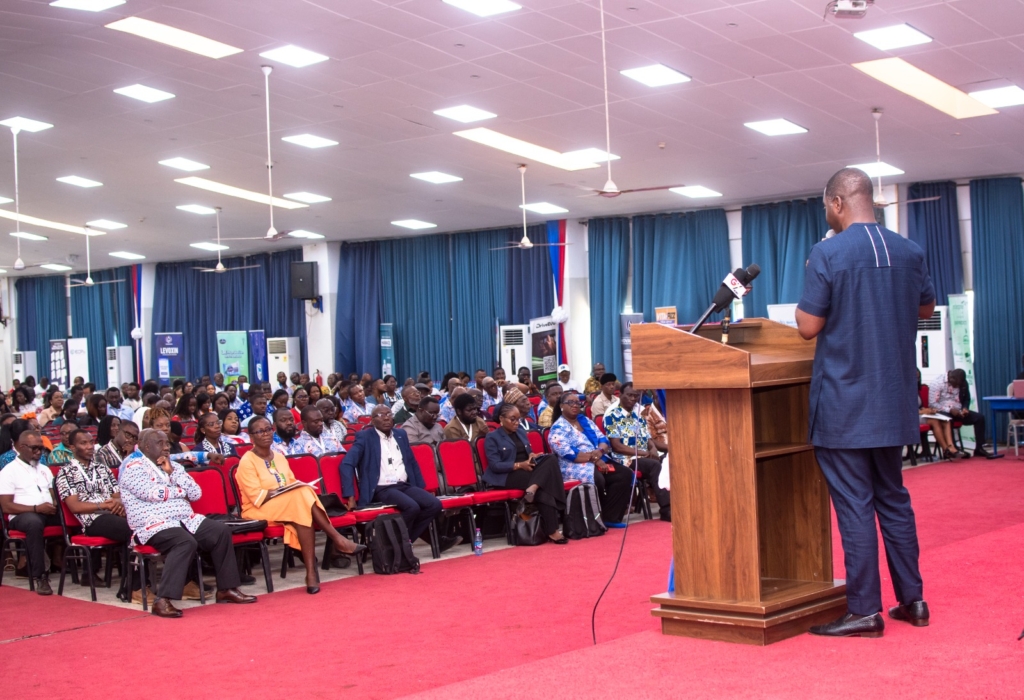
Presenting on Innovative Financing Models for Healthcare Sustainability at the 2025 Annual General Meeting of the Ghana Medical Association (GMA), he noted that the NHIS now spends about 25 percent of its budget on these two diseases and related conditions alone.
“This will threaten the national health budget and the future sustainability of the NHIS if health promotion and preventive lifestyle measures are not prioritised now by health professionals in caring for patients,” he warned.
Dr Antwi added that the situation has wider economic consequences, revealing that approximately 30 percent of the adult population lives with hypertension or diabetes. “Better disease control means preserved productivity. We must protect our fragile domestic and national economy,” he told the GMA.
He explained that while the financing pressure is severe, there is also a growing pool of private capital inflows that could support Ghana’s health system and boost medical tourism if doctors and health entrepreneurs adopt the right partnership models.
Dr Antwi presented detailed profiles of several financing institutions, including Oasis Capital, Golden Palm Investments, the Investment Funds for Health in Africa, and Medical Credit Fund, among others, showing investment offerings ranging from small health-SME loans to multimillion-dollar equity for hospitals, diagnostics and pharmaceutical infrastructure. These financiers, he said, “are ready to invest where there are bankable projects and efficient models.”
To unlock that capital, Dr Antwi outlined partnership options such as Build – Finance – Operate - Transfer arrangements, management contracts, lease or concession models for laboratories and imaging centres, joint ventures for new hospitals and pharmaceutical plants, and performance-based outsourcing for services like maintenance and diagnostics.
He stressed that these models help revive dormant public-sector assets and improve efficiency while maintaining government ownership. “These are not privatisation schemes; they are pathways to efficiency, strengthened services and shared risk,” he emphasised.
He also highlighted how the NHIS's digital transformation, starting with credentialing tools (2008–2010), biometric enrollment, and the digitisation of over 90 percent of claims, has positioned the Scheme to make better health purchasing decisions for Ghanaians.
With an established Data Analytics Unit within the NHIA, Ghana is now exploring value-based care reforms that depend on near real-time data. He argued that this creates an opportunity to “pay for outcomes rather than utilisation,” shifting the system towards greater efficiency.
A major part of Dr Antwi’s presentation focused on the ongoing value-based care (VBC) initiative for hypertension and diabetes being implemented with NHIA and the Christian Health Association of Ghana (CHAG). The programme covers 22 facilities, with 2,534 out of 2,750 targeted patients already enrolled—representing a 92 per cent achievement.
Regional data show varying baseline blood pressure levels, with Ahafo recording an average systolic BP of 191 mmHg, far higher than the other regions. According to Dr Antwi, consistent BP monitoring and adherence to standardised protocols are already yielding promising improvements, with about 54% of patients having consistently controlled blood pressure compared to 6% in the normal population.
“A combination of virtual and in-person care achieves faster hypertension control for patients and helps avoid costly complications,” he said.
He acknowledged several challenges—staff turnover, policy gaps, the need for compliance with quality of care protocols and incentives that empower patients, but insisted that the investment case for health remains compelling. With hypertension now the leading cause of adult deaths in Ghana and health resources stretched thin, he argued that value-based care “is no longer optional; it is essential for efficiency, outcomes and sustainability.”
Dr Antwi ended with a call for deeper collaboration between government, private investors and health professionals. “We cannot solve Ghana’s health financing crisis by working in silos. Partnerships, data and innovative models are the only way forward,” he said, urging the GMA to champion these reforms.
Latest Stories
-
The ungodliness and unrighteousness underlying the National Cathedral mess!
9 minutes -
T-bills auction: Government fails to achieve target; yield on 91-day-bill remains unchanged
20 minutes -
It’s Ghana’s shame to denigrate Nkrumah when the whole world honours him as African of the Century – Asiedu Nketiah
28 minutes -
No other nationalist can compare to Nkrumah – Asiedu Nketiah
35 minutes -
Collateral Registry: Foreign banks accounted for GH¢19.9bn of secured credit in quarter 2, 2026
35 minutes -
This government should expect scrutiny – Asiedu Nketiah
1 hour -
Two-year-old girl dies in domestic fire at Cantonments
2 hours -
Asiedu Nketiah urges better working conditions for journalists
2 hours -
JoyNews’ Precious Semevoh wins climate change reporting award at Bono GJA Awards
2 hours -
Kumasi Central Market phase 2 to begin in October after years of abandonment
2 hours -
Sentuo offers fuel supply reassurance as NPA sees steady output through December
3 hours -
Ghanaian smock showcased at Lesotho Tourism Summit
4 hours -
Four pupils to one desk: The painful plight of schools in New Juaben North
4 hours -
Ipswich launch investigation into racist abuse of Abdul Fatawu
4 hours -
Arrest of Techiman nurse is purely political persecution – ‘Ghana Jollof’
4 hours