

Audio By Carbonatix
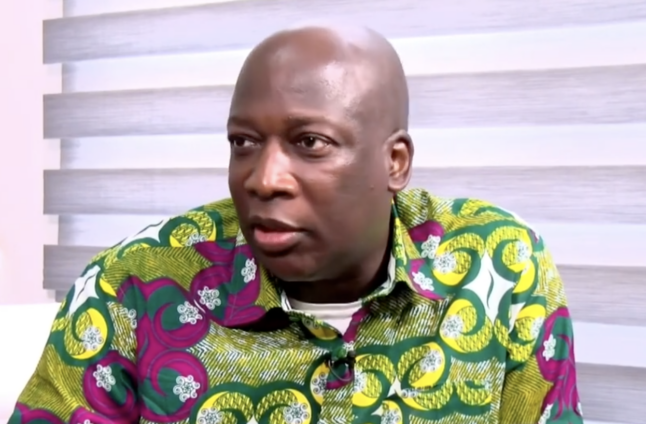
Business executive and former Unilever Executive Vice President Yaw Nsarkoh has called for a reset of the reparations debate.
He is urging African leaders to focus on identity and solidarity rather than what he describes as unrealistic expectations of financial windfalls.
Speaking on Joy News’ PM Express on Tuesday, he acknowledged the moral basis of the argument.
“The moral justification for that injury was done through the process; it’s unassailable,” he said.
But he questioned how the campaign is being framed and what it ultimately seeks to achieve.
“But then you must also place what we are trying to do in the real world to whom, as the return from reparations goes, why shouldn’t it be given to the people in the diaspora, who, in a sense, were the most dislocated.”
He also raised concerns about the capacity of nations being targeted.
“Are the economies that we are demanding this from, even in a position to pay those sorts of monies that we are talking about?”
For him, clarity is missing, stressing, “So what exactly the reparations campaign wants needs to be articulated much better.”
Mr Nsarkoh argued that there are alternative paths that go beyond cash payments.
“There are different ways in which you can structure things so that you benefit from knowledge systems and so on.”
He dismissed the idea that reparations would come in the form of a large payout to fund infrastructure projects.
“But to merely, as one person said to me, sit down and think that there’s a box of money that is going to be handed over you so you build handed over to you, so that you build railways and so on. Is, in my view, in 2026 exceedingly utopian.”
When it was put to him that many African countries support the campaign because they believe there is “some cool cash” to be gained, he responded bluntly.
“Well, they should show us the route to that cool cash, if we are not careful, this becomes an escapist route.”
Instead, he sees value in using the debate to deepen shared history and unity.
“There are many elements of the discussion on repatriations that can lead to cultural identity, more solidarity amongst people of Africa and people of African descent, tracing exactly what happened, what binds us.”
He lamented how the issue has been handled in public.
“We have now allowed, because the media has not properly harnessed the resources of true historians, to tell the story.”
According to him, the conversation has drifted into blame.
“We have allowed the discussion around this thing to be about guilt tripping people in the diaspora, saying, you sold us.”
He stressed that those involved in indigenous slavery were a minority.
“This is a minority of people who were involved in indigenous slavery and who did this.”
For Nsarkoh, the path forward lies in reframing the debate.
“So if you’re talking about reparations in that way, telling the story properly, bringing the global African society together.”
He warned against reducing centuries of trauma to a price tag.
“But if it becomes this neoliberal discussion about, how have you been putting the price tag? You went through the humiliation of disruption, and your people were captured in tens of thousands. Who is going to sit down and say that, if you give me $50 million for that, that then solves the issue?”
He concluded that the conversation must broaden.
“So they are very complex dimensions, and the reparation discussion itself must open up, become much more democratic, be willing to be challenged and contested, and then the people of Africa must themselves articulate this is what we think is the way forward.”
Latest Stories
-
GCB Bank denies robbery at Labone branch, assures customers of safety
19 minutes -
30 new E-blocks to target high-population areas under Star J Project – Mahama
19 minutes -
Kingsley Agyemang denies scholarship corruption allegations, says investigations will vindicate him
29 minutes -
Mahama promises to complete Upper East Airport within 24 months
31 minutes -
Mahama allocates funds to complete 35 Agenda 111 hospitals this year
34 minutes -
We will finish abandoned E-Blocks to end waste of taxpayers’ money – Mahama
45 minutes -
Civil Service must drive investment, jobs under Reset Agenda – 24-Hour Economy Secretariat
57 minutes -
Deloitte West Africa to anchor Africa Oil Week 2026 in Accra, reinforcing commitment to Africa’s energy future
58 minutes -
Ghana’s economy expands 5.1% in May 2026; services drive expansion, agriculture slows
1 hour -
Ghana won’t pay South Africa for repatriation of nationals – Foreign Affairs Ministry
1 hour -
Mahama to provide Paga school with new bus, challenges students to achieve 100% WASSCE results
1 hour -
Dr Kokofu pledges historic homecoming conference to drive construction of NPP Ashanti office complex
1 hour -
Mahama announces plans to complete 30 abandoned E-block school projects across Ghana
1 hour -
Daily Insight for CEOs: Digital customer experience and business growth
1 hour -
Opposite-sex friendships: Where should couples draw the line?
1 hour