

Audio By Carbonatix
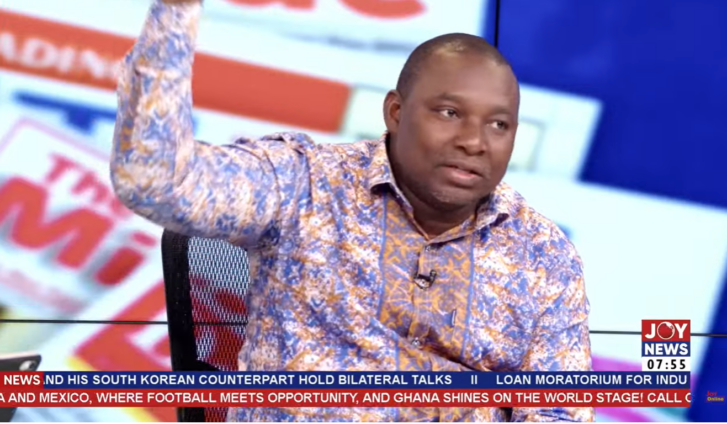
Director of Communications for the United Party, Solomon Owusu, has criticised Iran over its approach to the escalating conflict with the United States and Israel, describing the strategy as misguided and likely to create more enemies in the region.
Speaking on the AM Show on Thursday, 12 March, Mr Owusu argued that Iran’s current approach could further destabilise the region rather than resolve the crisis.
According to him, responding directly to military strikes from Israel and the United States with further retaliation risks escalating the conflict.
“I believe the strategy that has been adopted by Iran is very wrong. If Israel and the U.S. are striking you and you strike them back, it only escalates the conflict,” he said.
Mr Owusu noted that in the Gulf region, countries such as Qatar and Oman traditionally play mediating roles when tensions rise.
However, he believes Iran’s actions are instead creating greater hostility among neighbouring countries.
“You are creating more enemies around you, and you are surrounded by these countries,” he stated.
He further suggested that recent strikes may have disrupted Iran’s military leadership, particularly within the Islamic Revolutionary Guard Corps (IRGC), potentially leading to a breakdown in command structures.
According to him, such disruptions could result in uncoordinated actions by individuals within the system.
“Probably the command structure has broken, and people are doing anything. That is what we are seeing,” he said.
Mr Owusu also claimed that the United States has gained significant intelligence advantages, allowing it to strike strategic targets within Iran with precision.
He argued that the destruction of key leadership, naval assets and communication systems has significantly weakened Iran’s military capability.
“When your leadership is destroyed, your navy damaged and communication cut out, it becomes very difficult to organise a structured response,” he explained.
Despite the intensity of the conflict, Mr Owusu expressed confidence that the situation would not escalate into a prolonged global war.
“I believe this war will not travel that far. There has to be peace quickly,” he added.
Latest Stories
-
Fuel prices set to rise again from Sept 1; petrol could hit GH¢16.21 – COPEC
16 minutes -
REGSEC restricts Akwasidae celebrations in Denkyira amid security concerns
21 minutes -
Eric Adjei distributes free fertiliser to farmers in Jaman North
28 minutes -
Akufo-Addo urges NPP factions to unite behind Bawumia for 2028 victory
39 minutes -
NDC mourns Western Regional Elections Director Papa Assan
46 minutes -
Minerals Commission warns against fake job recruitment schemes
53 minutes -
10 recruits dismissed for defying phone ban – Interior Minister
59 minutes -
IEAG commends GoldBod, BoG for improving forex stability
1 hour -
Bawumia donates GH¢50,000 to St Jude Catholic Church at Weija
1 hour -
Mahama calls for faster mobilisation of AU Peace Fund resources
1 hour -
Improved roads bring new vehicle options to Tumu-Bolga, Tumu-Tamale, Tumu-Wa routes
1 hour -
Cedi records 7.9% depreciation against US dollar in first half of 2026
2 hours -
GIS launches operation on anti-human trafficking and exploitative street begging
2 hours -
Awutu-Senya District Assembly organises clean-up ahead of Awubia Festival
2 hours -
Vice President Opoku-Agyemang receives Democracy Cup
2 hours