

Audio By Carbonatix
The Ghana Statistical Service (GSS) has reported that 2,087 children aged between 10 and 14 years are engaged in mobile business activities across the country.
The findings, contained in the Integrated Business Establishment Survey (IBES I), revealed that about 80 per cent of those involved were girls, raising concerns about child labour and school retention.
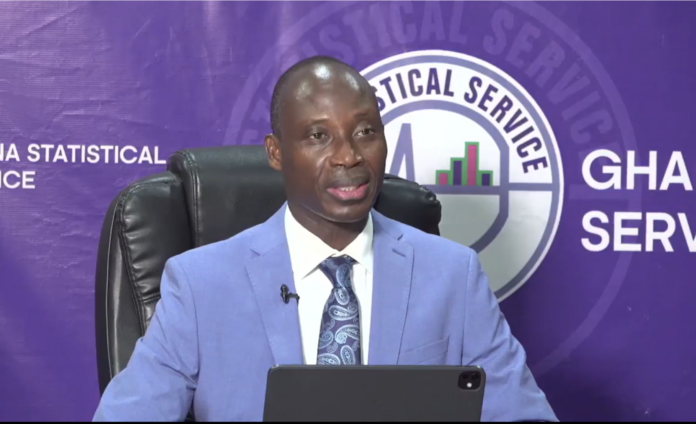
Presenting the findings in Accra on Thursday, Dr Alhassan Iddrisu, Government Statistician, said 14.7 per cent of children aged 10 to 14 owned the goods they sold, exposing them to risks and highlighting gaps in social protection.
“Social protection interventions can help reduce the economic pressures that lead to child participation in trading activities,” he explained.
Mobile businesses, defined as those operating without fixed locations, include head porterage, hawking and trading with motorised vehicles.
While they provide goods and services directly to households and communities, the Children’s Act (1998) and the Worst Forms of Child Labour Act (2020) prohibit exploitative child labour and mandate compulsory education.
The survey observed that 57 per cent of mobile traders earned less than GH¢100 per day, with more than one‑third working at least nine hours daily, creating household economic pressures that drew children into work.
Dr Iddrisu noted that mobile businesses contributed to the achievement of Sustainable Development Goals one, eight and 11 by providing income for vulnerable populations, promoting decent work and supporting inclusive urban planning.
He, however, expressed concern about children’s involvement, citing risks of lost educational opportunities, exposure to traffic and weather hazards, exploitation and early initiation into economic activities.
Dr Iddrisu urged government institutions to intensify enforcement of child labour laws and expand programmes supporting school attendance for vulnerable children.
He also encouraged agencies responsible for enterprise development to target youth engaged in mobile trading with vocational training, business development services and start‑up support.
Dr Iddrisu called on financial institutions to collaborate with authorities to provide micro‑credit, mobile savings schemes and digital payment tools tailored to informal businesses to support their formalisation.
The IBES I identified 2.64 million businesses operating nationwide, covering all regions and divided into 10,240 enumeration zones based on the 2021 Population and Housing Census.
Latest Stories
-
PKO trio eye victories at Odwira Festival
1 hour -
346 Ghana Navy recruits pass out after 26 weeks of intensive training
1 hour -
Newsfile to discuss EOCO-MP arrest, drug trafficking, speech arrests and $235m water debt
2 hours -
JoyNews gets results as listeners raise GH¢40,000 to help 17-year-old student with cerebral palsy attend SHS
2 hours -
Vice President calls for stronger local pharmaceutical production to reduce medicine imports
2 hours -
The brewing tension at KNUST; Beware the Ides of October….
3 hours -
Health Ministry moves to integrate traditional medicine into mainstream healthcare
3 hours -
550 pupils in Kintampo South get educational lifeline as ‘Seeds of Hope’ reaches farming communities
3 hours -
Opoku Mensah urges Christian Council, House of Chiefs to speak up on democratic freedoms
4 hours -
Teacher unions’ strike: Minority demands immediate payment of teacher arrears, 20% deprived area allowance
4 hours -
The Accra-Kumasi Expressway: Building it right
4 hours -
Beyond gold exports: Building value and economic resilience from Ghana’s gold
4 hours -
2027 AFCONQ: Ghana under pressure as Gambia beat Somalia 2-1
4 hours -
Eastern NPP Women’s Organiser calls on AG, Police to secure bail for Salomey Baffoe
4 hours -
Poverty, illiteracy driving acceptance of vote-buying among women – Damongo Queen Mother
5 hours