

Audio By Carbonatix
The World Food Programme (WFP) and the United Kingdom’s Foreign, Commonwealth & Development Office (FCDO) are urging Ghana to introduce fortified rice into the Ghana School Feeding Programme, describing it as a practical and cost-effective way to address malnutrition among children.
The call follows a cost-benefit analysis, which found that rice fortification is an affordable, high-impact intervention capable of improving children’s nutrition and boosting learning outcomes.
Speaking on behalf of the WFP Country Director, Steven Ordatefio said micronutrient deficiencies remain a major public health concern in Ghana, with anaemia affecting nearly half of children under five and more than 40 per cent of women of reproductive age.
He noted that poor nutrition continues to undermine children’s health, cognitive development and academic performance.
WFP is therefore calling on the Government of Ghana to make fortified rice a mandatory component of meals served under the school feeding programme.
Supporting the proposal, FCDO Representative Dr Tristan Eagling said results from a pilot initiative show that rice fortification is both feasible and impactful.
“Fortification is affordable, smart and high-impact,” he said, adding that the intervention is particularly important at a time when rising food prices and economic pressures are affecting the quality of meals served in schools.
Dr. Eagling noted that with the right systems in place — including reliable supply chains and strong institutional backing — the initiative could be expanded nationwide.
Director of Operations at the Ghana School Feeding Programme, Esther Z. Mahama, also reaffirmed the programme’s readiness to collaborate with partners to improve the nutritional quality of meals provided to pupils.
She said the GSFP remains committed to working with stakeholders to strengthen the programme and enhance the nutritional value of food served in schools.
The initiative, which involves collaboration between government and private sector millers, is also expected to support local food systems by creating opportunities for farmers and food processors.
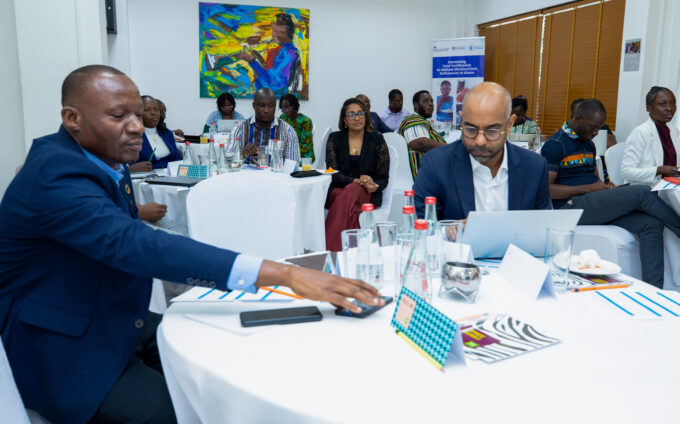
Representatives from the Food and Drugs Authority, Ghana Standards Authority, Ghana Education Service and Ghana Health Service attended the meeting, alongside international partners including UNICEF and the World Health Organisation.
Stakeholders say Ghana is well-placed to scale up rice fortification, pointing to the country’s previous success with salt iodisation and other food fortification initiatives.
Latest Stories
-
One million coders programme records 141,954 registrations, 27,782 active learners
4 minutes -
Gov’t moves to upgrade rural 2G, 3G networks to 4G – Sam George
5 minutes -
Akaa Assembly Member appeals for telecom mast over poor network coverage
10 minutes -
Cybersecurity Authority responds to 3,363 incidents in six months – Sam George
11 minutes -
Ghanaians now get more data for less money- Sam George
12 minutes -
MTN commits US$1.1bn to Ghana network expansion after 5G reforms – Communications Minister
14 minutes -
Ahafo Clergy call for stronger action against galamsey and Tano river pollution
15 minutes -
GMSA calls for protection of Muslim students’ religious rights in mission schools
18 minutes -
MTN cuts 100 Mbps fibre package from GH¢987 to GH¢299 – Sam George
19 minutes -
Sam George touts lower data costs, enhanced DStv value under Mahama
21 minutes -
Women’s Football: Sharon Sampson, Evelyn Badu and top performers from the weekend
21 minutes -
NACOC warns of rising cannabis addiction among children in Volta through toffees, soft drinks
22 minutes -
3,372 BECE candidates without results to get second chance to resit exam
22 minutes -
Elsie Appau-Klu calls for Cosmetology Council, formalisation of beauty and wellness sector
27 minutes -
Government to deploy sovereign virtual platform for secure high-level meetings – Nana Oye Bampoe Addo
27 minutes