

Audio By Carbonatix
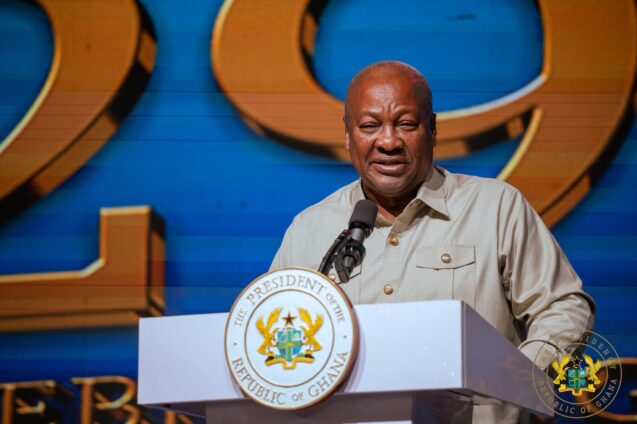
President John Dramani Mahama has jokingly cautioned Ghanaians against eating heavy meals late at night, using humour to encourage healthier lifestyles.
Speaking at the launch of the Free Primary Healthcare Initiative on Wednesday, April 15, the President linked the growing burden of non-communicable diseases (NCDs) to changing dietary habits and increasingly sedentary lifestyles.
He painted a familiar picture of long workdays ending with heavy late-night meals, warning that the practice could negatively affect health.
“Stop eating banku at night,” he said jokingly, drawing laughter from the audience, before advising that dinner should ideally be taken earlier in the evening.
“If you are the kind of person who likes eating heavy foods, you are not physically active, you are sitting at one place, and yet when they give you your fufu or banku, you say it's too small. You want a big bowl of fufu, and you want to eat it every day.
Sometimes you eat it at night before you go to sleep. Please, by 7 PM, eat your dinner and don’t eat again. If you are hungry, just pick a cup of tea or something. Don’t eat any heavy food. You come from work in the evening, your wife is tired, but you force her to come and get you banku at 10 PM, why?” he quizzed.
President Mahama also compared past and present lifestyles, noting that earlier generations combined their diets with physically demanding activities such as farming, unlike today’s largely sedentary routines.
“Our fathers used to eat banku and co in the night, but they were physically active; they used to go to the farm, and they expended energy. Now we don’t do any physical activity. You wake up in the morning, eat breakfast, drive to work, sit behind the desk from 8 am to 5 pm, drive back home, and when you come home, you ask for your banku. What physical activity did you do to deserve banku?” he jokingly questioned.
The President’s remarks formed part of a broader call for lifestyle changes under the Free Primary Healthcare Initiative, which emphasises public education as a key strategy to address the rising prevalence of non-communicable diseases.
Latest Stories
-
GES urges government agencies to end blame game over teacher payments
2 hours -
GES sets Oct. 5 deadline to resolve teachers’ payment dispute
3 hours -
GES working around the clock to get teachers back to class, says Daniel Fenyi
3 hours -
French PM warns against escalation of school protests after 164 arrested
3 hours -
UK tries to stop Trump’s diesel export ban
4 hours -
Late Olise goal gives France win over Belgium
4 hours -
Mancini enjoys first win since return as Italy boss
4 hours -
Interest payments to average a high 20% of government revenue over next 4 years
4 hours -
Anthropic warns AI may pose ‘existential risks to humanity’ in IPO filing
4 hours -
Joe Hart trusts Man City chair Al Mubarak over ruling
4 hours -
Strategy of accumulating foreign reserves, gold carries high fiscal cost – S&P Global
4 hours -
Weak institutional arrangements, high debt servicing constrain Ghana’s rating – S&P
4 hours -
Man City CEO defiant over Premier League charges
4 hours -
Infantino makes bigger cash pledge to Fifa members
5 hours -
Bond market: Turnover declined by 28% to GH¢1.56bn
5 hours