

Audio By Carbonatix
Young people in Ghana have been urged to think critically and act responsibly online, as concerns grow over the spread of misinformation and disinformation in the digital space.
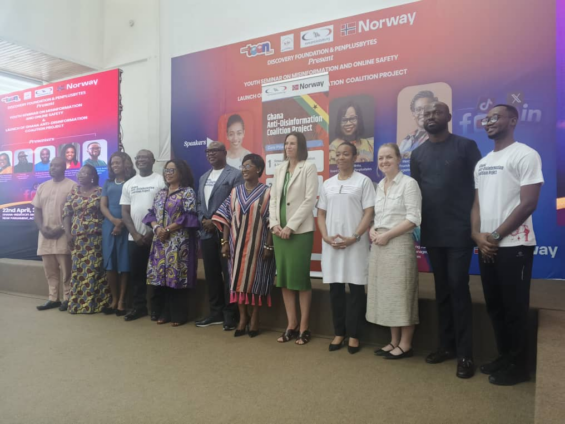
The call was made at a youth seminar organised by the Discovery Foundation in collaboration with Pensplusbytes at the Ghana-India Kofi Annan Centre of Excellence in Accra on Wednesday, April 22.
The event, held under the theme “Fake News, Real Consequences: Empowering Young Minds to Combat Misinformation and Stay Safe Online”, brought together 300 students from junior high, senior high and tertiary institutions.
Opening the seminar, the Founder of Discovery Foundation, Mrs Mercy Catherine Adjabeng, said the widespread use of mobile phones among young people means they are constantly exposed to online information.
“If you look around, you will see that something is clear… almost everybody has a phone. Everybody is online,” she said.
“We practically live online, especially the Gen Zs. You are connecting, you are laughing, you are arguing, you are creating.”
She warned, however, that the same platforms that offer opportunities for learning and connection can also be used to spread falsehoods.
“The same feed that can teach you can also trick you with fake news. The same click that connects you to a friend can also share a lie that harms someone’s life,” she said.
Mrs Adjabeng said that the aim of the seminar was not to discourage internet use but to promote responsible behaviour.
“The internet is a good resource… but we believe that we must use it responsibly. We believe that you can stop the fake, start the facts, and stay safe online.”
Speaking on behalf of the Norwegian Ambassador to Ghana, Deputy Ambassador Ingrid Skjølaas said the issue of misinformation is not new, but has taken on a different dimension in recent years.
“Disinformation is nothing new. But what is new is the speed, the scale, and the intensity in which it is now spreading, facilitated by rapid technological changes and especially AI,” she said.
She explained that misinformation affects individuals and societies at every level, and called for a collective response.
“To fight disinformation is not the responsibility of only one person or one group… it will take the work of everyone. Digital literacy… is now as vital as learning to read and write,” she said.
Delivering the keynote address, Member of Parliament for Korle Klottey, Dr Zanetor Rawlings, drew a clear distinction between misinformation and disinformation.
“Disinformation is when you deliberately put together some kind of data or information that is wrong with the intention to mislead. Misinformation is when you are just passing on wrong information because that’s what you believe,” she explained.
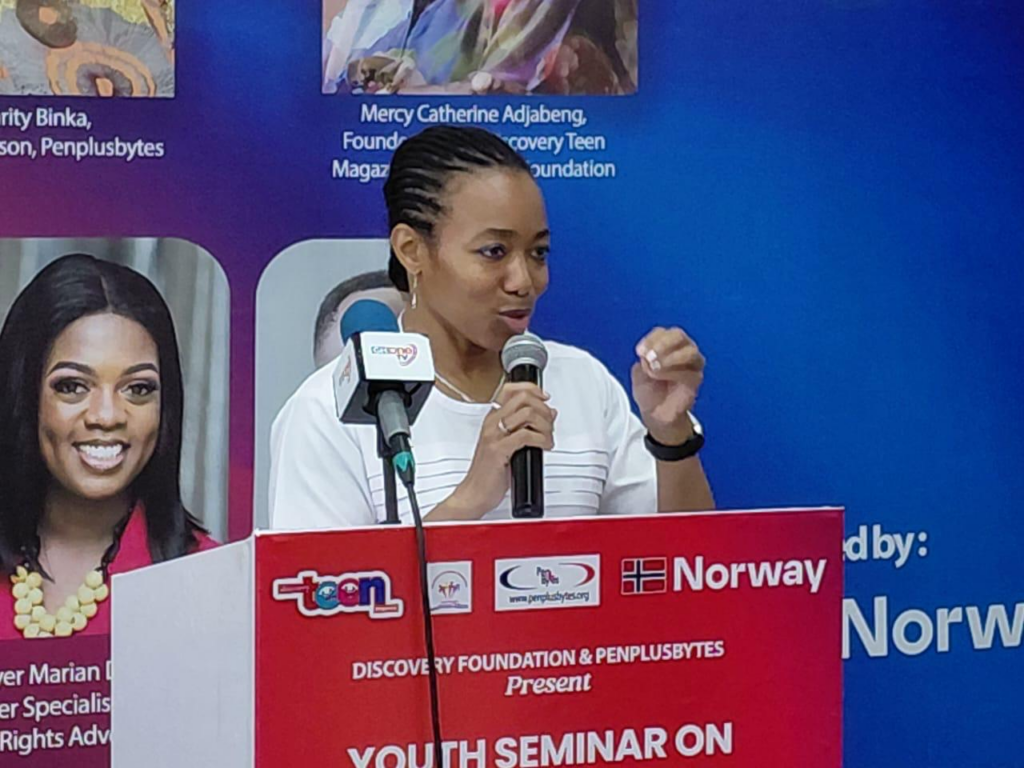
Dr Rawlings warned that young people face new challenges in the digital age and must be equipped to deal with them.
“You have access to the internet, and unless you are able to discern truth from fiction, you stand the risk of being a victim… and a potential participant in the dissemination of misinformation,” she said.
She urged participants to question the content they encounter online and verify information before sharing it.
“When you see something online, you should ask yourself: who posted it? Can I trust the source? Is there proof? Can I find the same information somewhere else?” she advised.
Dr Rawlings also highlighted the risks associated with cyber threats and online manipulation, noting that users can unknowingly expose themselves to harm.
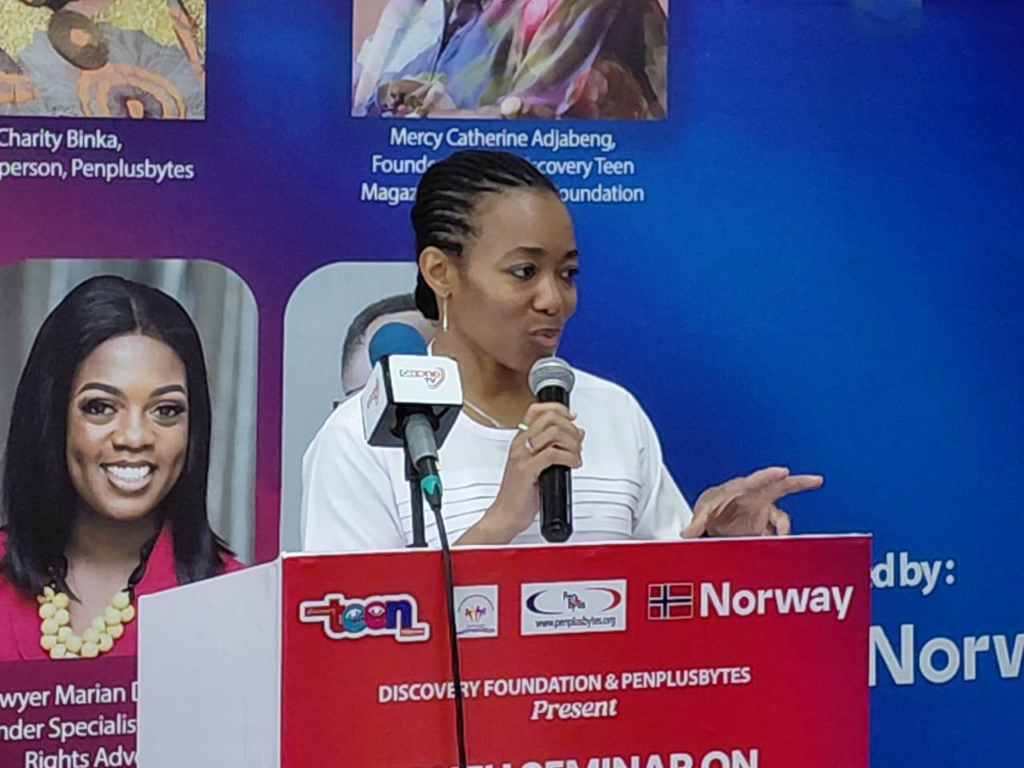
“Sometimes, the link you click on gives access to your phone… your phone can be used as part of an attack,” she cautioned.
She further reminded participants of Ghana’s laws on digital content, particularly the illegality of sharing intimate images without consent.
The Executive Director of Penplusbytes, Mr Jerry Sam, officially launched the Ghana Anti-Disinformation Coalition (GADC) Project.
The initiative, supported by the Government of Norway, is a three-year national effort aimed at reducing the spread and impact of disinformation.
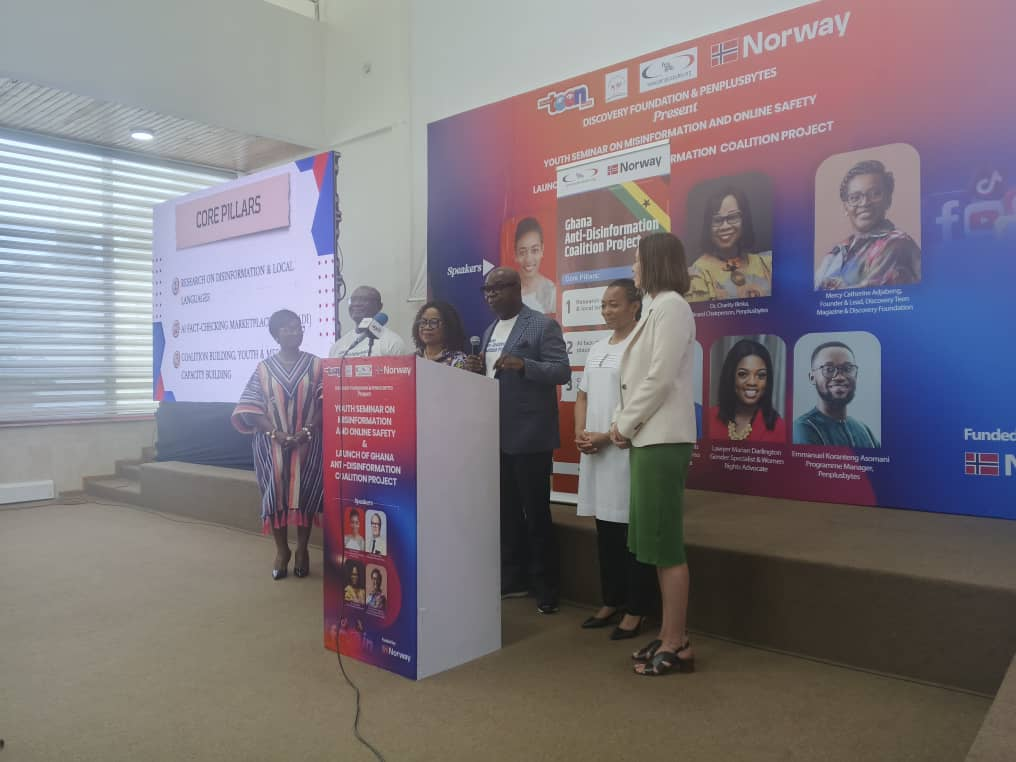
The project will focus on research, the development of AI-driven fact-checking systems in local languages, and strengthening the capacity of communities, especially young people and the media, to share accurate information.
Organisers said the seminar formed part of activities to equip participants with practical skills to identify false information, think critically, and engage responsibly online. It also addressed the emotional and social effects of misinformation.
Students from Accra Academy, Presbyterian Senior High School (Presec) in the Ashanti Region, the University of Ghana, UniMAC-IJ and members of the Canfed Alumni network attended the programme.
Participants were encouraged to see themselves as ambassadors of responsible digital behaviour and to share the knowledge gained with their peers.
“Think. Question. Verify,” Dr Zanetor Rawlings told the students. “Do not believe everything you see. Do not believe everything you hear. And don’t share anything unless you verify it.”
Latest Stories
-
Ghana qualifies for quarterfinals of Africa Volleyball Nations Cup after beating Zambia
58 seconds -
WAFU B WCLQ: Ampem Darkoa Ladies come from behind to beat Edo Queens
23 minutes -
Photos: National Youth Authority Festival
34 minutes -
Bawumia commissions St Jude’s Catholic Church he funded to completion at Weija
49 minutes -
Government defends new beer exercise rates; sliding scale has not been abolished
49 minutes -
Bolgatanga Assembly denies blanket ban on events beyond 8pm
1 hour -
Photos: Ghana Immigration Service removes 1,055 street beggars from Accra, Kumasi streets
1 hour -
‘He always comes to our aid’ – Fr. Campbell recounts Bawumia’s support for Church, poor
1 hour -
Remittances drop marginally year-on-year to US$3.65bn in half-year 2026
2 hours -
T-bills: Government exceeds target by 139%, interest rates tumble
2 hours -
Why Chelsea need more than a new goalkeeper to be title challengers
2 hours -
Outlook of Ghana’s external sector remains positive for second-half of 2026 – BoG
2 hours -
Prisoners freed early are returning to jail at rapid rate, governors tell BBC
2 hours -
Two charged after €2.3 million worth of drugs seized in Dublin
2 hours -
Head teacher evacuated 900 children minutes before Nepal floods hit school
2 hours