

Audio By Carbonatix
A total of 518 people died in Tanzania from "unnatural causes" in the wake of widespread protests that followed last year's general election, the commission of inquiry set up to investigate the violence has announced.
However, commission chairman Mohamed Chande Othman did not say who was responsible for the deaths and recommended further investigations.
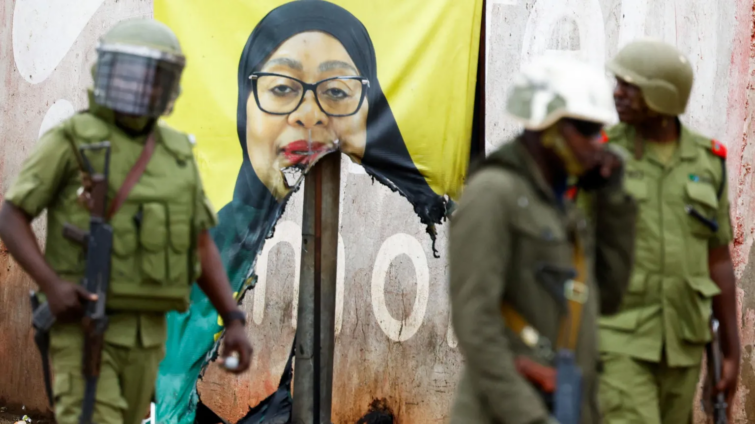
Opposition parties and human rights groups had previously accused the security forces of unleashing a brutal crackdown on anti-government protesters.
President Samia Suluhu Hassan was declared the winner of the 29 October poll with 98% of the vote - which the opposition described as a "mockery" of democracy.
At the time, the president said the election was fair and transparent and blamed foreigners for the violence saying it was part of a plot to overthrow her.
International observers, however, last year raised concerns over the lack of transparency in the vote, with the African Union and the southern Africa bloc Sadc saying the election had fallen short of democratic standards.
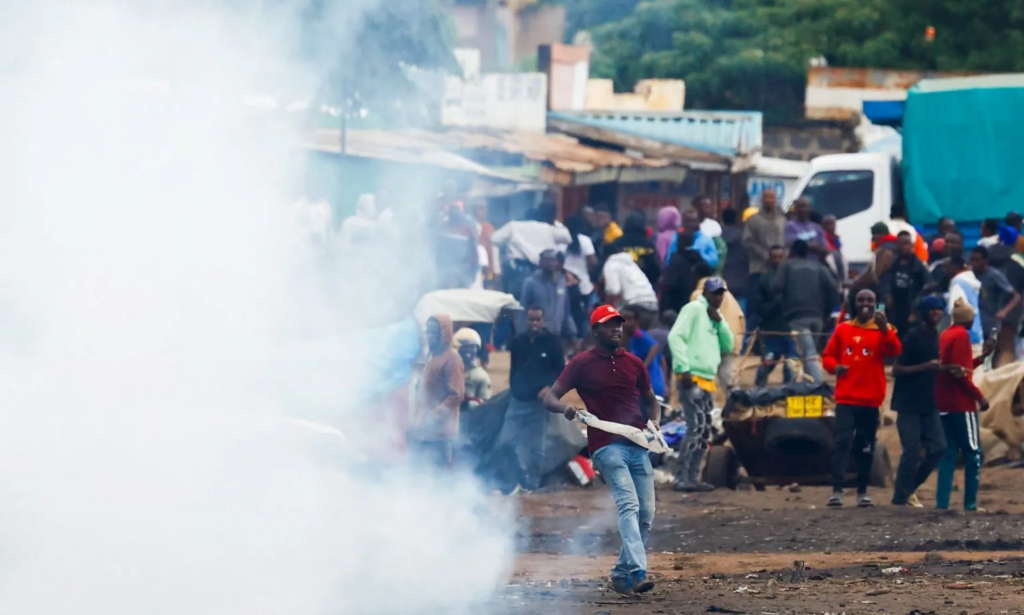
Last year, the BBC verified multiple videos of police shooting towards groups of protesters. Footage posted online showed that demonstrators were confronted by heavily armed police units blocking their progress and firing tear gas to disperse crowds. In many of the videos, gunfire can clearly be heard as people scatter in the ensuing chaos.
The scale of Tanzania's election violence was shocking for a nation that had cultivated an image of calm, consensus and order for nearly six decades.
Speaking after receiving the report on the violence, Samia said it "shook our nation" and the government would take lessons from it.
She also defended the actions of the security agencies, saying they had prevented the state from sliding into anarchy.
"We have learnt. The commission has told us that all the violence was planned coordinated, financed and executed by people who were trained and given equipment for committing crimes," she said.
She believed that the objective of those involved was "to create a leadership vacuum" and make the country "ungovernable", adding that they would be held accountable.
The main opposition party, Chadema, told the AFP news agency that the report was a "cover-up" and described it as "an attempt to whitewash the regime's crimes".
This is the first time the authorities have said how many people died.
Among the 518 dead, 490 were male, 21 were children and 16 were security officers, Othman said, adding that 197 had died from shotgun wounds.
But he explained that the death toll could be higher as some victims had been buried without the authorities being told.
More than 2,000 people were injured, including 120 security officers, he added.
Opposition and religious groups had said thousands of people were killed, with reports of bodies being taken from hospitals and some allegedly buried in mass graves.
Othman said the claims of the existence of mass graves "could not be substantiated", alleging that AI was used to manipulate some images.
The commission identified several underlying causes of the violence, citing economic, political and social issues, including demands for political reforms, unemployment and "lack of patriotism".
It said politicians and activists used these issues to persuade citizens to take part in protests. It added that the demonstrations were neither peaceful nor lawful and would not qualify for legal protection.
After the nine‑member commission was appointed by President Samia, opposition parties had raised concerns.
They said the inquiry "cannot be independent or impartial, especially in a situation where the government is the primary suspect in the crimes being investigated".
The commission had a mandate to determine the root causes of the violence, who was involved and for what purpose.
It was also tasked with examining the consequences of the unrest, the response to it and make recommendations on the way forward.
It collected evidence from across the country from ordinary citizens, victims, political leaders and security agencies. Some of its sessions were held in private.
The protests started in Dar es Salaam on 29 October and spread across the country over the following days.
The demonstrations were largely organised by young people angered by what they saw as a political system dominated by one party since Tanzania gained independence in the 1960s.
The two main opposition leaders were blocked from contesting the poll. Tundu Lissu is still in detention on treason charges, which he denies, while Luhaga Mpina's candidacy was rejected on technical grounds.
The commission made several recommendations including free medical treatment and psychosocial support for victims and that a national day of mourning be set aside in honour of those who died.
It also proposed setting up a commission of criminal inquiry to determine who is to be held accountable.
Besides, it recommends that a new constitution should be in place by 2028, before the next general election, as well as a new commission to foster reconciliation.
Latest Stories
-
School headscarf ban sparks rare protests in Azerbaijan and row with Turkey
4 minutes -
Ghana explores underwater sightseeing and shipwreck tourism
4 minutes -
Association of Women Lawyers calls for national sexual offenders register to protect school children
6 minutes -
Soaring commodity prices influenced our 2026 revised growth forecast of 5.7 % for Ghana – IMF
8 minutes -
Government urged to recruit more speech therapists to support children with language disorders
10 minutes -
Chef Abbys: Feeding 50,000 people, putting food security on Ghana’s agenda
39 minutes -
Ho set to host Republic Bank–JoyNews Habitat Fair as multiple firms prepare to showcase housing solutions
46 minutes -
NPP demands public inquiry into alleged $600,000 World Cup visa fraud, wants Sports Minister, GTA CEO summoned
53 minutes -
I want my brand to be bigger than just music – Yaw Wazinga
57 minutes -
Houthi missile attack on Yemeni presidential palace kills two, minister says
58 minutes -
I hoped to win an award; I worked hard – 2026 Best Graduating Law Student
1 hour -
Fraudsters increasingly target bank customers instead of banking systems – Fraud detection expert
1 hour -
44 teacher sexual abuse cases tracked since 2015; school heads feature in 40% of recent cases — JoyNews Research
1 hour -
Unchecked imports and the Middle East crisis threaten Ghana’s fragile food inflation anchor
1 hour -
Ecobank Junior Saver Big Pitch to reward 10 winners with GH¢2,000 each
2 hours