

Audio By Carbonatix
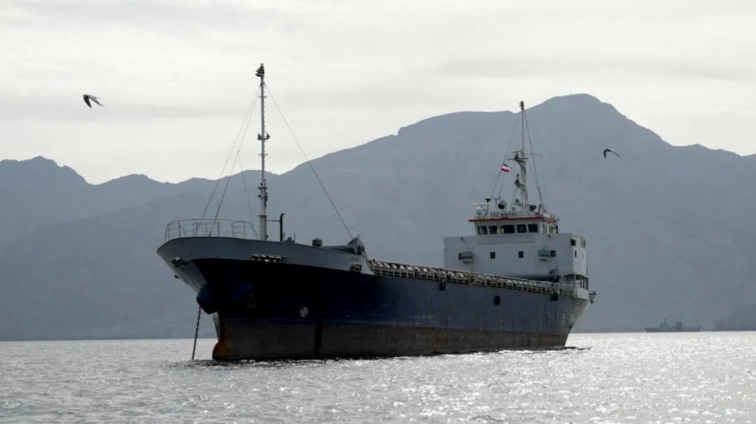
The US operation to guide stranded vessels through the Strait of Hormuz will be paused for a "short period of time", President Donald Trump announced on Tuesday evening.
Trump said that "Project Freedom", which began days earlier, would be halted by "mutual agreement" because "great progress" had been made toward a deal with Iran.
Iranian state media characterised it as a victory, saying the pause demonstrated that Trump "retreated" after "continued failures" to reopen the vital waterway for global shipping.
The US president's announcement came as Secretary of State Marco Rubio said the initial US-Israeli offensive in Iran - Operation Epic Fury - was over after achieving its objectives.
In a post on social media, Trump said that he had made the decision "based on the request of Pakistan", which has acted as an intermediary between the US and Iran. He added that the US blockade of Iranian ports would remain in place.
Trump's announcement may surprise some. It undercuts a day's worth of messaging from Rubio, Defence Secretary Pete Hegseth and Joint Chiefs chairman Gen. Dan Caine - all of whom vowed that the operation would ensure freedom of navigation and commerce in the Strait of Hormuz and Persian Gulf.
"We would prefer the path of peace. What the president [Donald Trump] would prefer is a deal," Rubio told reporters on Tuesday.
What happens next is unclear. The administration had stressed that Project Freedom was a "separate and distinct" campaign from the blockade, which is meant to pressure Iran economically.
Project Freedom was meant to help restore the flow of oil from the region and the global economy's eventual return to normalcy by guiding stranded ships out of the Gulf through the largely closed waterway.
But if, during the "pause", global shipping firms and the insurance companies working with them are stymied by Iranian interference, it will be difficult for Trump to claim that the objective has been achieved.
On the other hand, the administration may hope that freezing Project Freedom - which the Iranians strongly objected to - helps bring them to the negotiating table again.
Rubio's comments earlier in the day came after a spate of attacks in the Strait of Hormuz raised fears the ceasefire between the US and Iran was in jeopardy.
Tehran did not comment on Rubio's statement, but Iran's parliamentary speaker Mohammad Ghalibaf earlier said: "We know well that the continuation of the status quo is intolerable for America, while we are just getting started."
Ghalibaf, Iran's top negotiator in last month's talks with the US, said, "Shipping security and energy transit have been jeopardised by the US and its allies with the ceasefire violations and blockade. However, their evil acts will fail".
Late on Tuesday, the UK Maritime Trade Operations (UKMTO) said a verified source had told it that a cargo vessel had been struck "by an unknown projectile" in the Strait of Hormuz. Further details were not immediately available.
Earlier in the day, the UAE said its air defences were engaging missiles and drones from Iran for a second day in a row. On Monday, it accused Iran of firing missiles and drones, including a strike on an oil port in the emirate of Fujairah, which is located outside the Strait of Hormuz, calling it a "dangerous escalation".
Iran on Tuesday denied launching any attacks on the UAE, with a military spokesman saying that, "If such an action had been taken, we would have announced it firmly and clearly".
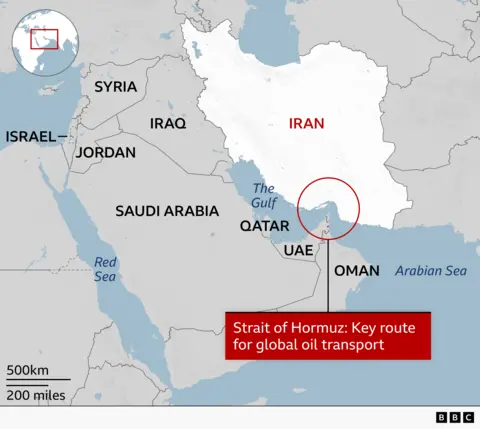
Operation Epic Fury began on 28 February when the US and Israel launched a wave of air strikes on Iran. Tehran responded by blocking the crucial waterway through which 20% of the world's oil and liquefied natural gas usually passes.
In early April, the US and Iran announced a ceasefire under which Iran ended its drone and missile strikes on Gulf countries, including the UAE, but few vessels have been able to transit the strait since then. The US also imposed its own blockade on Iranian ports.
On Monday, the US said it had attacked seven Iranian fast boats in the strait while Iran said it had fired warning shots at a US vessel. Both sides denied the respective claims. Two commercial ships reported attacks, and one said it had successfully exited the strait under a US military escort, as part of Donald Trump's plan to unblock the strait.
Speaking at the White House, Rubio said that while Trump wanted a deal, "That is so far not the route that Iran has chosen", adding: "What that may lead to in the future is speculative."
He said US and Israeli attacks on Iran had caused "generational destruction to their economy" and the country's leaders should "check themselves before they wreck themselves in the direction that they're going".
Hegseth said the ceasefire with Iran was "not over".
"Right now the ceasefire certainly holds, but we're going to be watching very, very closely," Hegseth said during a press conference on Tuesday.
Caine said that while Iran had attacked US forces 10 times since a ceasefire began, these attacks were "below the threshold" of resuming fighting "at this point".
Trump was later asked by reporters what would constitute a breach of the ceasefire by Iran. "You'll find out because I'll let you know," he responded. He also said he believed a negotiated settlement with Iran to end the conflict was still possible.
The various comments from American officials suggest that the US has little appetite to return to full-scale operations, further disturbing markets, sending prices skyrocketing, and meeting opposition from large swathes of Americans.
Trump also has said he is discussing the Strait's reopening with Japan and expects to have a positive conversation with Chinese President Xi Jinping about it when he visits China next week.
Latest Stories
-
GIPA CEO calls for stronger coordination to provide a clearer picture of investment activity
35 minutes -
Afenyo-Markin’s lawyers reject claims he is avoiding service on Sammy Gyamfi
43 minutes -
Photos: Mahama swears in Ayariga, Zanetor as new Ministers
60 minutes -
Check out the list of 100 universities not recognised by GTEC as of August 2026
1 hour -
Mahama in Luanda for 21st AU Extraordinary Session on conflict resolution
1 hour -
Mahama tasks Zanetor with pursuing job creation without harming environment
2 hours -
We will deliver on government’s commitments to Ghanaians — Ayariga assures Mahama
2 hours -
Restore order to Ghana’s cities and stop encroachment on public spaces — Mahama to Ayariga
2 hours -
Ayuda CEO Benjamin Cyriaano, Vida Adotey Akweley shine at JoySports CEO penalty shootout
2 hours -
Mahama tasks Zanetor to put science, technology at the centre of national development
2 hours -
JoySports Invitational 2026: The Luckiest make a splash, sweep 1st and 2nd in swimming
2 hours -
Make decentralisation meaningful and assemblies accountable – Mahama charges Ayariga
2 hours -
Protect freedom of worship, prevent faith-based discrimination — Mahama charges Ayariga
2 hours -
Ghana’s response to climate change must become practical and urgent — Mahama
2 hours -
We’ll act firmly against those profiting from destruction of forests and water bodies — Mahama
2 hours