

Audio By Carbonatix
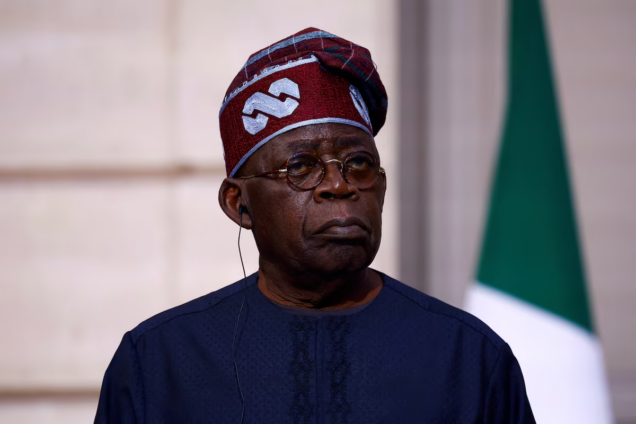
Nigerian President Bola Tinubu has ordered the immediate establishment of a crisis notification unit within Nigerian diplomatic missions in South Africa, responding to a surge in xenophobic attacks and escalating anti-foreigner tensions that have targeted African nationals. The directive serves as a formal government response to a climate of hostility that has left Nigerian nationals vulnerable across several provinces.
Nigeria’s Minister of Foreign Affairs, Bianca Odumegwu-Ojukwu, announced the measure following high-level discussions with her South African counterpart, Ronald Lamola. The unit is designed to provide a direct lifeline for citizens facing immediate threats. The Nigerian government has specifically advised its citizens in high-tension areas like Durban to temporarily shut their businesses and remain indoors for their own safety.
Nigeria had earlier summoned South Africa’s Acting High Commissioner, Lesoli Machele, to demand accountability over the deaths of Nnaemeka Matthew Andrew Ekpeyong and Kelvin Chidiebere Amaramiro, both of whom were allegedly assaulted by South African security personnel.
Escalating Tensions and Evacuation Priorities
The diplomatic friction between Abuja and Pretoria intensified as Minister Odumegwu-Ojukwu defended Nigeria’s right to protect its people. During her dialogue with Minister Lamola, she noted South African reservations regarding Nigeria’s potential evacuation plans. However, she emphasised that the Federal Government would not remain passive.
"I maintained that our government cannot stand by and watch the systematic harassment and humiliation of our nationals resident in SA as well as the extra-judicial killings of our people, and that the evacuation of our citizens who want to return home remains our government’s priority at this time," she stated.
Demands for Judicial Accountability
Nigeria is pressing South Africa for more than just physical protection. The foreign ministry is calling for a systemic overhaul in how crimes against Nigerians are prosecuted. Odumegwu-Ojukwu urged the South African police and justice systems to address extrajudicial killings with greater urgency.
"I also highlighted the need for their police and justice systems to take the cases on the ground of extra-judicial killings of Nigerians in South Africa more seriously and that there should be clear and immediate consequences for such acts," she added.
From Xenophobia to Afriphobia
The Nigerian government has introduced a shift in terminology to describe the current climate. Minister Odumegwu-Ojukwu questioned whether the term "xenophobia" accurately captures the nature of the violence. She noted that the hostility appears selectively targeted at fellow Africans rather than all foreigners.
"What is worrisome to our citizens, both in Nigeria and those resident in South Africa, is that the demand that all foreigners leave South Africa appears to be targeted only towards black Africans, which makes one wonder whether what is happening should not be more accurately defined as ‘Afriphobia’ rather than xenophobia," she said.
She warned that the "violent and indiscriminate rhetoric and actions" of anti-foreigner political groups like Operation Dudula could "have the effect of jeopardising the safety of South African interests in Nigeria."
Impact on the Next Generation
A particularly distressing aspect of the crisis involves the treatment of children. Reports indicate that Nigerian students and "Sougerians"—children of mixed Nigerian and South African heritage—are facing bullying in schools. These children are reportedly being told to "return to their country" by peers.
Odumegwu-Ojukwu described these incidents as "reprehensible and capable of causing trauma to young minds for whom such incidents may remain etched in memory." While Minister Lamola acknowledged the responsibility to protect children and promised to work with educational bodies, the Nigerian government remains concerned that hostility on the ground has not yet abated.
Ghana and the Pan-African Response
The crisis has sparked a unified diplomatic reaction from the West to East Africa. Ghana’s government has officially written to the African Union (AU) to demand an urgent continental discussion on the safety of Africans in South Africa. Accra described the current climate as a "serious risk to the safety and well-being" of all continental nationals.
Ghana’s intervention followed viral footage showing a Ghanaian national being harassed by vigilante groups and told to "fix his country." In response, the Ghanaian government has already facilitated the safe return of targeted citizens. This collective alarm is shared by Mozambique, Kenya, Malawi, and Zimbabwe, whose leaders have met with President Cyril Ramaphosa to call for calm and the preservation of "African brotherhood."
Regional Alarm and Economic Fallout
Nigeria is not alone in its concern. Regional neighbours have all issued warnings to their citizens in South Africa. Ghana has formally lobbied the African Union to intervene, citing a serious risk to continental unity.
In Abuja, the House of Representatives has condemned the attacks and proposed economic sanctions. Lawmakers have recommended a temporary suspension of business permits for South African companies operating in Nigeria. This move reflects a growing sentiment that diplomatic patience is wearing thin as South Africa grapples with its recurring history of anti-migrant violence, previously seen in 2008, 2015, and 2019.
South African Government Defense
Pretoria has pushed back against the international narrative. Minister in the Presidency Khumbudzo Ntshavheni dismissed reports of widespread xenophobic attacks, characterising the violence as general criminality. She also condemned the circulation of "fake videos and images", which she claimed were "intended to undermine the good reputation of South Africa."
While South African officials acknowledge the public’s right to protest "the spiralling illegal immigration challenge," they maintain that the country remains a welcoming environment. Despite these assurances, at least 130 Nigerians have already registered for voluntary evacuation, choosing to leave the continent's most industrialised economy for the safety of home.
A Delicate Path Toward De-escalation
Despite the sharp rhetoric regarding "Afriphobia" and the threat of economic sanctions, both nations have pledged to maintain diplomatic channels to prevent further escalation. While President Cyril Ramaphosa’s administration continues to reject the xenophobic label, the successful protection of vulnerable populations—including the "Sougerian" children—will likely determine the future of the relationship between Africa’s two largest economies. For now, the "commendable restraint" noted by Nigerian officials remains the thin line preventing a broader social and diplomatic crisis.
Latest Stories
-
KNUST assures staff, public over statute review process amid UTAG concerns
5 minutes -
CLOGSAG Executive Secretary Dr Isaac Bampoe Addo passes on
6 minutes -
Take post-flood disinfection seriously to prevent disease outbreaks – Environmental Health Officer backs Zoomlion
18 minutes -
Zoomlion launches fumigation exercise across 14 MMDAs in Western Region
25 minutes -
UTAG-KNUST votes to retain elections for Pro-Vice Chancellors and Deans
30 minutes -
Newsfile to discuss nationwide blackouts, GoldBod controversy, galamsey and water quality
34 minutes -
Adamus must settle GRA, MIIF and financial institutions liabilities under new turnaround roadmap
54 minutes -
Big Chef Season Five returns with Gari Fotor Challenge this Sunday
1 hour -
Gov’t to form 6-member team to supervise Adamus mine turnaround
1 hour -
Wontumi is not Mandela, NPP must be realistic about chairmanship bid – Musa Danquah
1 hour -
Government gives Adamus Resources reprieve, orders 12-month turnaround plan
2 hours -
Road Ministry to report two people to EOCO for influencing property owners affected by road constructions
2 hours -
NSMQ 2026: Kadjebi-Asato SHS holds off Ahantaman Girls’ SHS to book one-eighth spot
2 hours -
The Law 101: A critique of the injunction ruling for trials in the legal vacation
2 hours -
Don’t be an agent of misinformation — Opoku Mensah warns Education Minister’s spokesperson
2 hours