

Audio By Carbonatix
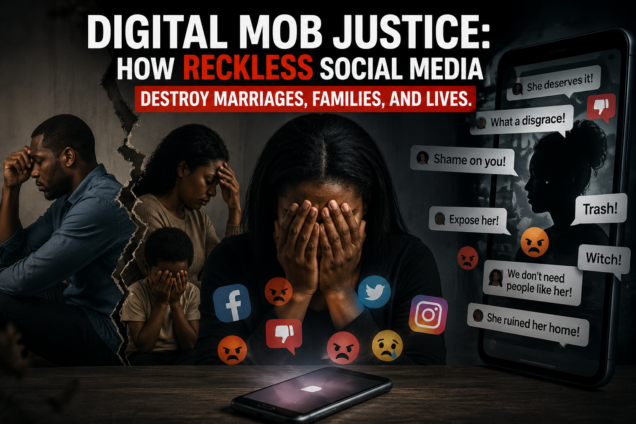
When truth becomes a casualty, and privacy dies at the hands of reckless broadcasters, bloggers, self-styled prophets, and social media opportunists, society itself stands in danger.
Across many African and Ghanaian communities in North America today, a disturbing culture is growing rapidly, a culture where anyone with a smartphone, internet connection, microphone, or social media account suddenly assumes the role of a “journalist,” judge, investigator, and executioner of reputations.
The consequences are devastating.
Marriages are collapsing. Families are breaking apart. Innocent people are being publicly humiliated. Children are growing up in broken homes because falsehoods, gossip, fabricated prophecies, and malicious online accusations are being spread daily without evidence, accountability, or legal consequences.
And the painful question many victims continue to ask is this:
Why can’t I sue you for defamation?
The Dangerous Rise of Reckless Blogging
Social media has undoubtedly transformed communication across the world. It has given ordinary citizens a voice and created opportunities for information sharing faster than ever before.
To be fair, there are many responsible bloggers, broadcasters, and online journalists who work professionally, ethically, and within the boundaries of journalism law. They inform, educate, and entertain audiences while respecting facts, fairness, and the dignity of others.
But alongside these professionals has emerged another dangerous group, fake bloggers, reckless commentators, and attention-seeking online personalities who thrive on scandal, lies, and emotional manipulation.
These individuals invade people’s private lives, marriages, businesses, and family affairs. They publish half-truths, fabricate stories, circulate private photographs, and create sensational narratives simply to attract followers, likes, donations, and online relevance.
In many cases, they become prosecutors in the court of public opinion without evidence, without legal authority, and without concern for the emotional destruction they leave behind.
If one blogger can file complaints for trespassing and insecurity after another blogger allegedly published photographs of her house online, then why should ordinary citizens not also have the legal right to seek justice when false stories and damaging lies about their marriages, families, or reputations are circulated publicly?
Surely, reputational destruction is also a form of harm.
When Privacy Was Respected
When Canadian music icon Celine Dion lost her husband, René Angélil, in 2016, global media organisations rushed to cover the heartbreaking story.
But before grief could become entertainment, the family issued one simple request:
Respect our privacy while we mourn.
And remarkably, the world listened.
Mainstream media organisations respected boundaries. There were no fabricated prophecies. No invented conspiracy theories. No reckless bloggers are manufacturing lies about the couple’s marriage or private affairs simply to gain attention online.
That is what responsible journalism looks like.
Unfortunately, many Ghanaian and African online platforms in North America are increasingly moving in the opposite direction.
Today, even death, divorce, sickness, or family misunderstanding is quickly transformed into social media content. False prophets, gossip bloggers, and reckless commentators now exploit pain for clicks and publicity.
This growing culture is dangerous not only to individuals but to society itself.
Understanding Defamation
According to legal and journalistic standards, defamation occurs when false statements are published that damage another person’s reputation.
The Oxford Dictionary defines defamation as the act of damaging someone’s good reputation through false statements.
Meanwhile, McNae’s Essential Law for Journalists explains that a statement becomes defamatory if it exposes a person to hatred, ridicule, contempt, or causes them to be shunned or avoided by reasonable members of society.
This is precisely what many victims of online abuse experience today.
Some bloggers falsely accuse individuals of infidelity, criminal activity, domestic abuse, financial fraud, or marital collapse without evidence. Others circulate edited voice recordings, private messages, family photographs, or confidential information purely to disgrace people publicly.
In some situations, self-styled pastors and online commentators even manufacture “prophecies” about people’s marriages, health, or deaths.
This is not journalism.
It is reputational violence.
The Real-World Consequences
The emotional and social consequences of online defamation are often ignored.
But behind every false publication is a real human being.
A husband falsely accused online may lose his marriage, job opportunities, friendships, and mental peace. A wife publicly shamed through fabricated stories may become emotionally traumatised. Children from affected families may suffer confusion, bullying, and emotional instability.
Some families never recover.
The tragedy is that many of these stories are later discovered to be false, exaggerated, or completely fabricated — but by then, the damage has already been done.
Unfortunately, social media rarely apologises with the same energy it uses to destroy.
Case Studies from Around the World
Several countries have already demonstrated that defamation, privacy invasion, and unauthorised publication of private information carry serious legal consequences.
The Robbie Williams Defamation Case – United Kingdom
British singer Robbie Williams successfully sued a publication after false claims were made about his private life and sexuality.
The publisher later apologised publicly, paid damages, and covered legal expenses.
The lesson was clear: false reporting about a person’s private life can attract severe legal penalties.
Privacy Breach Scandal – Ontario, Canada
In Ontario, two investment advisers were punished after illegally obtaining confidential medical information for business purposes.
The offenders received penalties that included probation, fines, and professional restrictions.
The message was unmistakable: private information belongs to individuals, not opportunists.
Rouge Valley Health Information Breach – Canada
In another Canadian case, several individuals faced criminal consequences after accessing and distributing confidential medical records involving thousands of patients.
Even without social media publication, the unauthorised use of private information was treated as a serious offence.
If such actions attract punishment in professional settings, then society must also begin taking social media abuse seriously.
The Crisis Within Our Communities
The painful reality is that this culture of online humiliation is becoming deeply rooted within some Ghanaian and African communities abroad.
Marriage disputes are livestreamed publicly.
Family disagreements become Facebook discussions.
Unverified allegations spread across WhatsApp groups.
People are condemned without investigation.
In many cases, those attacking marriages and families online are individuals who themselves reject the institution of marriage, have unresolved personal grievances, or simply profit from controversy and division.
Freedom of speech does not mean freedom to destroy innocent people with lies. Rights come with responsibilities.
A democratic society survives not merely on free expression but on responsible expression.
Time for Stronger Laws and Accountability
Governments, legal institutions, media regulators, and technology companies are increasingly recognising the dangers of unchecked online defamation.
Across the world, conversations are growing about stricter cyber laws, stronger privacy protections, and greater accountability for social media abuse.
Technology companies are also investing in systems designed to identify defamatory, misleading, or harmful content before publication.
But until stronger enforcement mechanisms fully emerge, victims are likely to begin turning increasingly to the courts.
Lawyers may soon see a sharp rise in lawsuits involving cyber defamation, privacy invasion, false publication, impersonation, and online harassment.
And rightly so.
No society can survive if lies become entertainment and reputational destruction becomes business.
A Call to the Courts
The judiciary must now draw a firm line.
Courts must send a clear message that online recklessness carries consequences.
Those who deliberately spread falsehoods, circulate stolen information, invade privacy, or use fabricated stories to destroy marriages and families must face the law.
This is not an attack on journalism.
It is a defence of responsible journalism.
Professional journalism is built on verification, balance, fairness, evidence, and ethics.
What many reckless bloggers engage in today is not investigative reporting; it is digital mob justice.
Conclusion: Choose Truth Over Chaos
The rise of defamation, gossip blogging, fabricated prophecies, and online character assassination represents a growing moral and social crisis.
No public figure, professional, married couple, or ordinary citizen should live in fear of becoming tomorrow’s false headline.
Society must protect both freedom of expression and the dignity of individuals.
We must demand integrity in journalism, responsibility in broadcasting, accountability on social media, and respect for human privacy.
And above all, we must remember that behind every viral post is a real human life that can be permanently damaged.
Truth matters.
Privacy matters.
Human dignity matters.
And those who recklessly destroy reputations online must eventually answer one unavoidable question:
What if it happened to you?
Latest Stories
-
GPL 2026/27: Hearts held by Bechem as Kotoko, Samartex share spoils
11 minutes -
My Story (Kwaku Antwi-Boasiako)
17 minutes -
We expect growth rate to re-accelerate in second-half of 2026 – IC Insights
20 minutes -
The ungodliness and unrighteousness underlying the National Cathedral mess!
32 minutes -
T-bills auction: Government fails to achieve target; yield on 91-day-bill remains unchanged
43 minutes -
It’s Ghana’s shame to denigrate Nkrumah when the whole world honours him as African of the Century – Asiedu Nketiah
51 minutes -
No other nationalist can compare to Nkrumah – Asiedu Nketiah
58 minutes -
Collateral Registry: Foreign banks accounted for GH¢19.9bn of secured credit in quarter 2, 2026
58 minutes -
This government should expect scrutiny – Asiedu Nketiah
1 hour -
Two-year-old girl dies in domestic fire at Cantonments
2 hours -
Asiedu Nketiah urges better working conditions for journalists
2 hours -
JoyNews’ Precious Semevoh wins climate change reporting award at Bono GJA Awards
2 hours -
Kumasi Central Market phase 2 to begin in October after years of abandonment
2 hours -
Sentuo offers fuel supply reassurance as NPA sees steady output through December
3 hours -
Ghanaian smock showcased at Lesotho Tourism Summit
4 hours