

Audio By Carbonatix
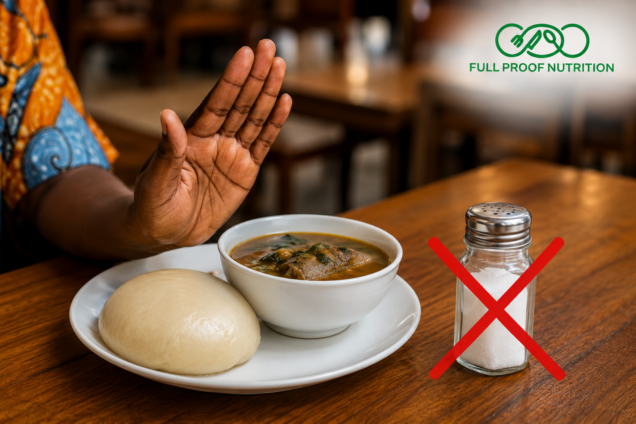
May 11th–17th is observed globally as Salt Awareness Week - a campaign aimed at drawing attention to the health risks associated with excessive salt intake and the need for healthier food environments. Interestingly, a couple of months ago, a headline on MyJoyOnline (Kumasi Metropolitan Assembly (KMA) bans open display of salt in eateries to curb rising hypertension cases) sparked conversation around an important public health concern that deserves more attention in Ghana.
According to KMA, an observational study conducted across 156 food service establishments in Kumasi revealed that 62% openly displayed salt on dining tables, a practice believed to encourage customers to add extra salt to meals. The survey also identified chop bars as the biggest offenders of the practice, which the assembly has now declared illegal.
The hidden salt in our daily meals
Salt is an essential ingredient in cooking, but the problem arises when we consume too much of it. In many homes and food outlets, salt is added during cooking. When it is also placed on the table, people often add even more without thinking. Over time, this habit can significantly increase the amount of salt we consume each day.
According to the World Health Organization (WHO), adults should consume no more than 5 grams of salt per day, which is about one teaspoon. For children the recommendation is even less: 2 grams of salt a day. However, studies suggest that many people consume almost double that amount. This excess salt intake is strongly linked to hypertension, also known as high blood pressure.
Why hypertension is a serious concern
Hypertension is sometimes called the “silent killer” because it often develops without obvious symptoms. Many people may live with high blood pressure for years without knowing it. Yet the condition significantly increases the risk of:
- Heart disease
- Stroke
- Kidney disease
These conditions are among the leading causes of illness and death in Ghana today. Reducing salt intake is one of the most effective ways to lower blood pressure and reduce the risk of these diseases.
Changing the food environment
The KMA’s decision is based on the idea that our environment influences our habits. When salt is placed on every table, people are more likely to add extra salt instinctively. Removing it encourages diners to first taste their food before deciding whether they actually need more seasoning. It is a simple nudge towards healthier behavior. Cities around the world are increasingly adopting similar approaches to help reduce non-communicable diseases. Small environmental changes can sometimes produce large public health benefits over time.
What this means for all of us
Although the rule currently applies to food establishments in Kumasi, the lesson extends far beyond one city. Many of us may not realize how much salt we consume each day. The habit of adding salt at the table is just one example of how small behaviors can quietly increase health risks.
Simple steps that can help reduce salt intake
- Taste food before adding salt
- Use natural spices, herbs, and vegetables to enhance flavor
- Limit processed foods that are often high in sodium
- Prepare more meals at home when possible
Over time, these small changes can have a big impact on heart health and overall wellbeing.
The Bigger Picture
The ban on the open display of salt highlights an important shift in thinking about public health. Preventing diseases like hypertension does not always require complex solutions. Sometimes, it starts with changing everyday habits and food environments in simple but meaningful ways. By encouraging people to reduce excess salt consumption, Kumasi is taking a step toward creating a healthier community. What is particularly encouraging is that the decision appears to have been informed by evidence and public health concerns rather than mere opinion. As Ghana continues to battle rising rates of hypertension and other non-communicable diseases, evidence-informed actions such as these deserve attention and constructive discussion. And perhaps the next time we sit down to eat, we might pause before automatically reaching for the saltshaker. Kudos to the Kumasi Metropolitan Assembly!
Written by Dr. Laurene Boateng (PhD, RD)
Dr. Laurene Boateng is a Registered Dietitian and Senior Lecturer in the Department of Dietetics, University of Ghana. She is the founder and editor-in-chief of Full Proof Nutrition, a Nutrition Consultancy committed to providing reliable, evidence-based, and practical healthy eating advice through its website www.fullproofnutrition.com. Click here to join Full Proof Nutrition WhatsApp channel to receive more educative content. Send us a mail on fullproofnutrition@gmail.com. Grab a copy of my book on healthy eating – available now on Selar (Buy HEALTHY EATING MADE SIMPLE by Laurene Boateng on Selar) and Amazon (https://amzn.eu/d/6i9OeVb).
References
Latest Stories
-
AFCON 2027Q: Black Stars open campaign with defeat to Ivory Coast in Bouaké
4 minutes -
From construction site to top of class: Daniel Doe emerges Legon’s best Computer Engineering student
20 minutes -
Mahama: Peaceful political transitions prove democracy can work in Africa
23 minutes -
“The law must work” – NDC rejects claims Salomey Baffoe’s bail denial is diversion from cocaine scandal
33 minutes -
Police arrest two suspects over murder of Senegalese goalkeeper
34 minutes -
TVET Service, Bank of Ghana explore partnership to boost skills development
1 hour -
Ghana TVET Service, OR Foundation partner to promote sustainable fashion
2 hours -
Achimota, Accra Academy, PRESEC Osu qualify for next stage of National Public Speaking Event
2 hours -
NCPTA challenges GES directive on PTA dues, cites High Court injunction
2 hours -
Majority opposes parliamentary probe into cocaine busts while investigations continue
2 hours -
Salomey Baffoe detention is a facade to divert attention from cocaine scandal – Weija-Gbawe MP
2 hours -
Francis-Xavier Sosu is doing well after GIMPA incident – Office
2 hours -
Deputy Minority Leader appeals to First Lady, Vice President over Salomey Baffoe’s detention
2 hours -
Ecobank Group commits US$2.6bn to women-led businesses and agribusinesses across Africa
2 hours -
Ghana to host high-level conference on scaling education initiatives in emergencies
3 hours